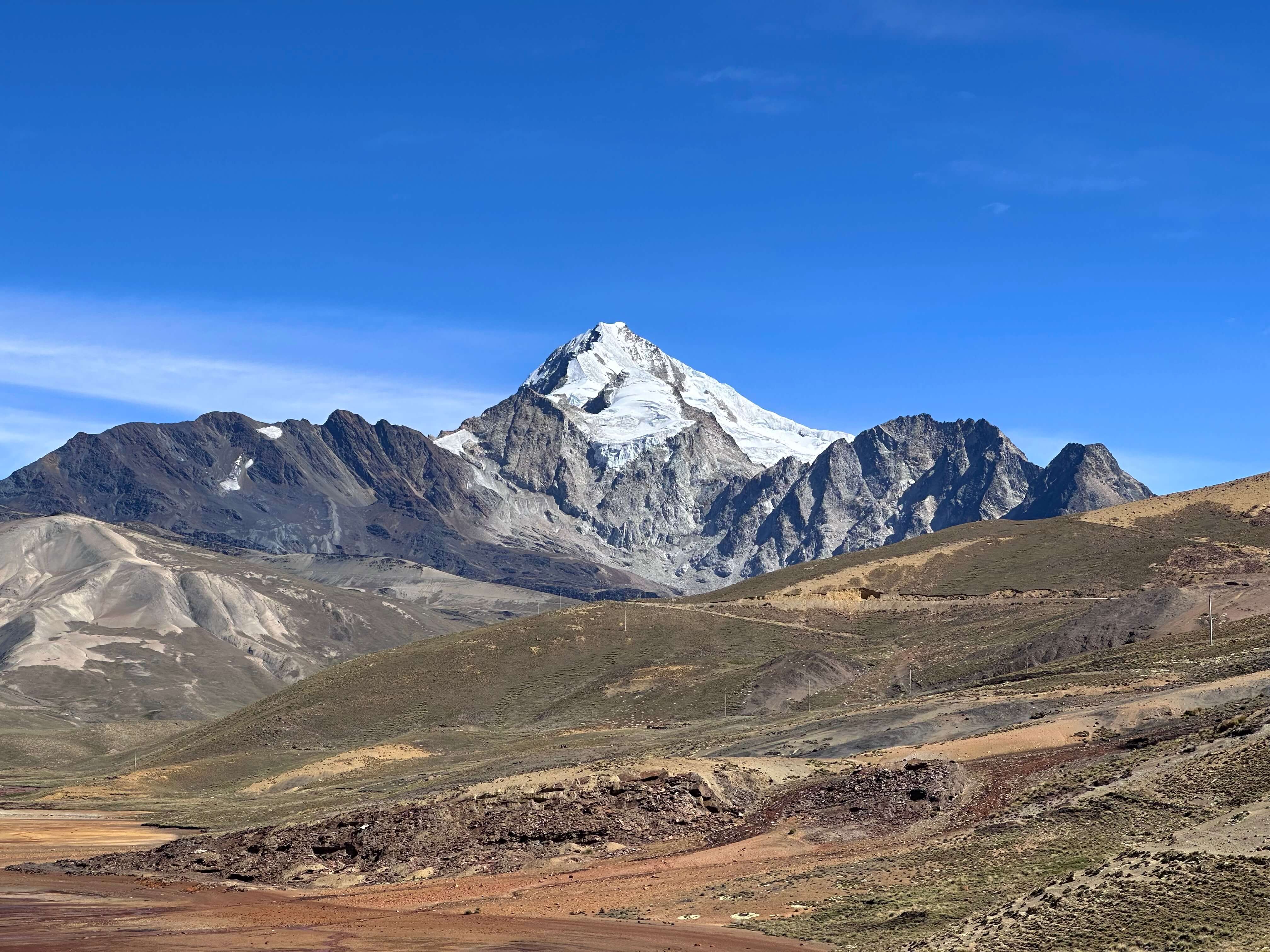
Huayna Potosí is a popular high-altitude climb in Bolivia, just outside the world’s highest capital city; La Paz. It’s often called the easiest 6,000m peak, but in reality is more strenuous and technical than most people suggest. The glacier brings real risks with crevasses, rockfall, and avalanches that you won’t find on a more accessible alternative like Chachani (6,075m). However, having climbed a lot of mountains I think Huayna Potosí is the single best high altitude experience in the world.
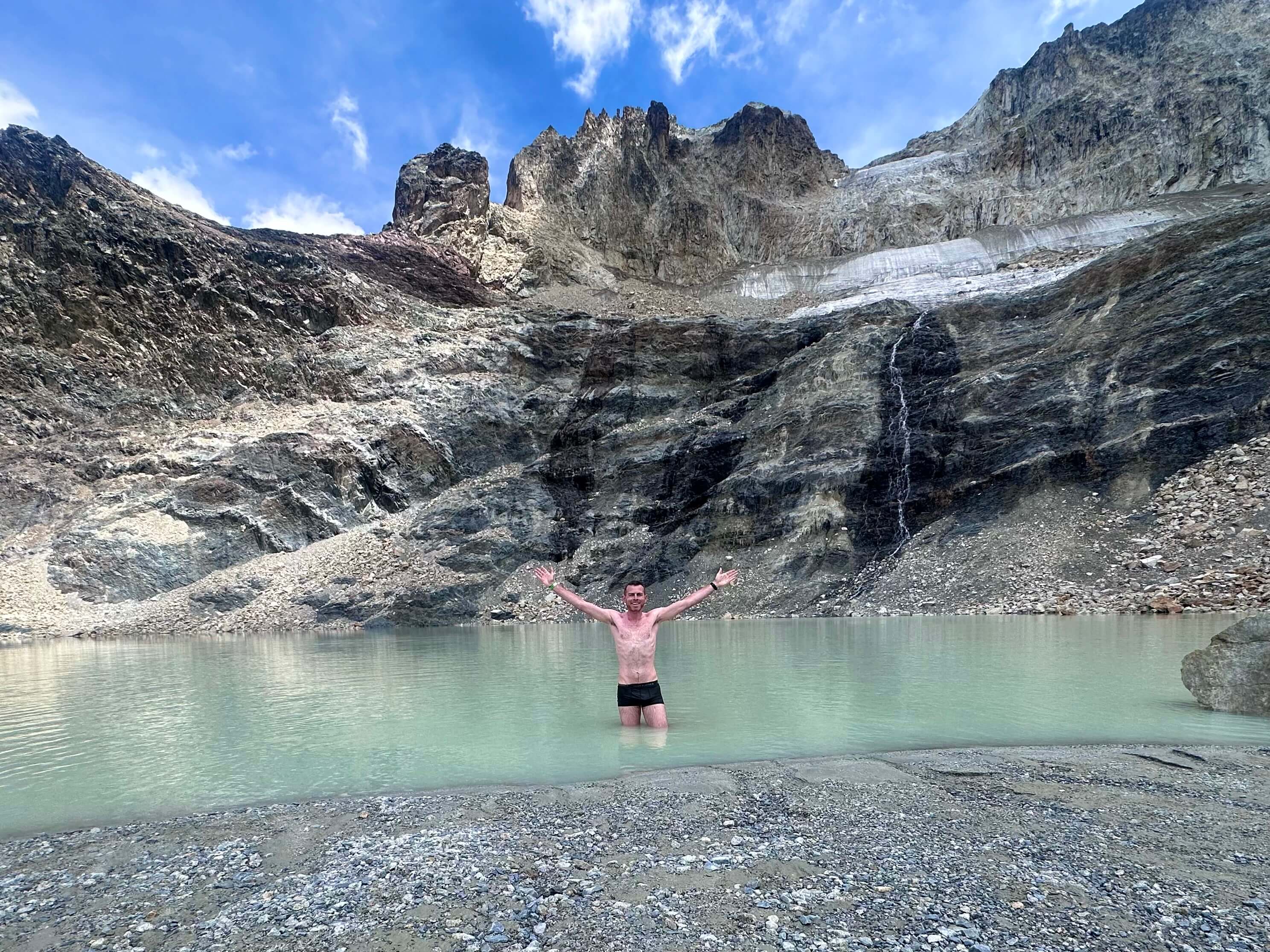
Kevin & I arrived in La Paz on Christmas Eve during our backpacking South America trip. I found a touch of home with an Irish hostel and a proper Christmas dinner for the next day. La Paz allows easy acclimatisation, with their cable car metro connecting neighbourhoods as high as 4,150m. We felt good after weeks at altitude on the Salkantay, Colca Canyon & Santa Cruz treks, as well as the Ecuador Volcanoes for me. I still took a day trip to Laguna Esmeralda, where I did my highest ever swim at 5,024m. This was even colder than swimming in Antarctica!
Planning & Logistics
The best time to climb is dry season (May to September). Outside of this you can have more storms, but our weather was fine even in the heart of rainy season. There was good snow cover on the glacier, and it was stable from the cold (avalanches are most typical in March as temperatures rise). With correct gear the mountain is okay to climb year-round.
Kevin & I booked the 3-day climb with Jiwaki including guides, transport, accommodation, food, climbing gear, rucksacks, boots, warm clothes, and sleeping bags for $180 (actually paying only $90 due to the hyperinflated value of cash USD at the time). The night before departing we bought snacks for the climb, and fuelled up with lots of water and $1 street burgers. We both felt healthy and ready.
Day 1 - Glacier Training
We met at the Jiwaki office bright and early. Our guides Patricio & Felix were loading the jeeps, so we grabbed breakfast in a cafe with the other climbers; Gustavo & Graham. They had never climbed this high, but had good acclimatisation and attitudes.
Nearby we picked our boots and summit clothes, then drove 3 hours to the Zongo Pass Base Camp at 4,750m. We had a warm, brick guesthouse to ourselves with comfy beds and huge, hearty meals. The views were great outside, feeling small under the Cordillera Real range. The weather kept changing with an icy rain at times, but mostly stayed clear.
In the afternoon, we walked for an hour beside a fast flowing river up to the glacier. Here Patricio taught the group about crampons, ropework, and ice axes. This was done incredibly well, with clear demonstrations and repeated exercises. A mix of surfaces and gradients gave Kevin a nice refresher on what we’d done before, and the others a perfect introduction to what was needed above.
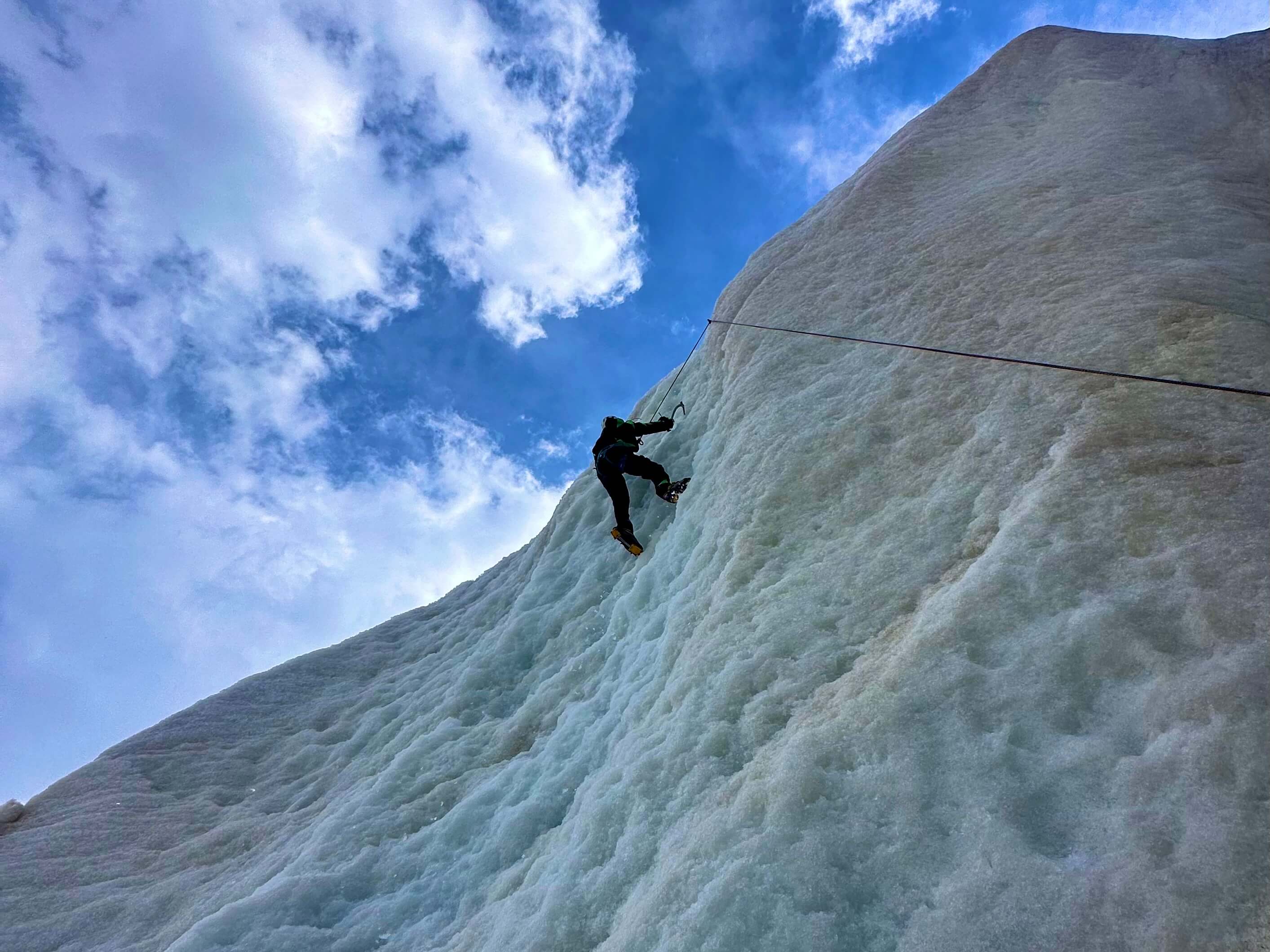
Once everyone was moving comfortably, we walked up to a vertical wall of ice at the head of the valley. Here we were shown how to ice climb using stubby axes, which is far harder than it looks. We got the iconic photos on the wall that the mountain is known for, then with arms burning walked back to base camp. Over a big dinner and a night of card games we were all in high spirits for what was to come.
Day 2 - High Camp
Today was intentionally slow. We ate loads, while breathing in the thin air and looking up at the remarkably clear summit. We met teams going up, and others just arriving. Shortly after lunch we started the 2 hour walk to high camp. This was mostly big rocky steps, with small sections of snow and scrambling. The bags felt heavy, but at a slow pace was fine.
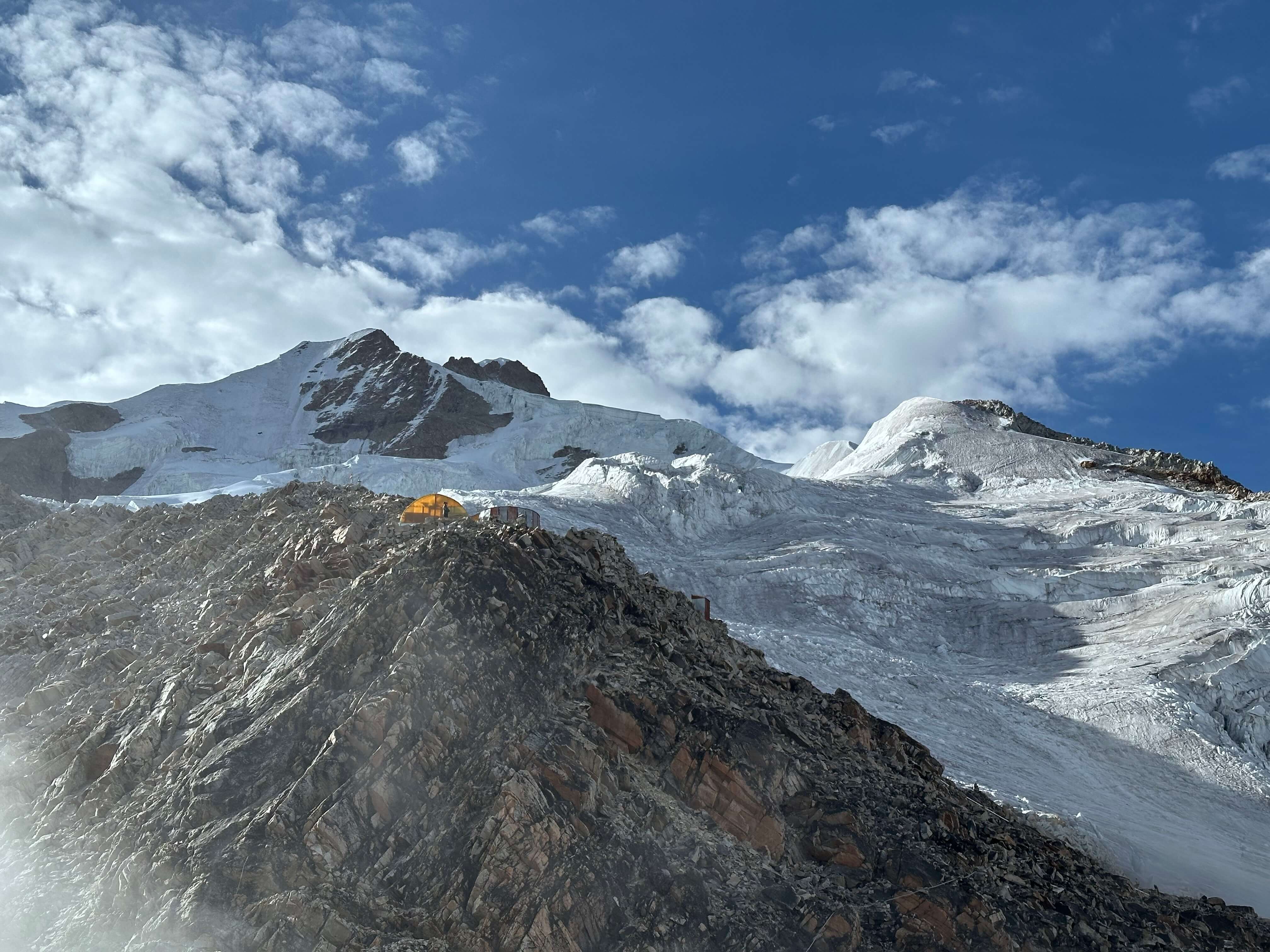
Our next comfy beds were in Rock Refuge (5,150m). It’s perched precariously on a rocky ridge, though I think the name may refer more to the hardness of the pillows! Again we had the place to ourselves, playing card games and eating dulce de leche desserts (which I was addicted to at the time). I couldn’t get much sleep as usual, and it wasn’t long before our 11:00pm alarms went off.
Day 3 - Summit Night
It’s the usual format here. Walk through the night while snow is hard underfoot, aim to summit for sunrise, and be back down before the midday sun can soften snow or loosen rocks. We had some tea and biscuits as we geared up in a nervous silence. Then out into the icy night.
There was a dense cloud in the distance with sporadic flashes of lightning, but it wasn’t a concern here. We could see a lot of stars, and moonlight lit up the peak above. I love how it makes the snow sparkle. We scrambled up some awkward rocks to reach snow, then we put on our crampons and roped up.
Kevin & I with Patricio, and Graham & Gustavo with Felix, long-roped to limit falls into any crevasses. Cracks in the ice looked deep as we stepped over them, and our tired legs felt heavy after weeks of escapades. It’s a beautiful and surprisingly technical glacier crossing. I didn’t need my headtorch because of the moonlight.
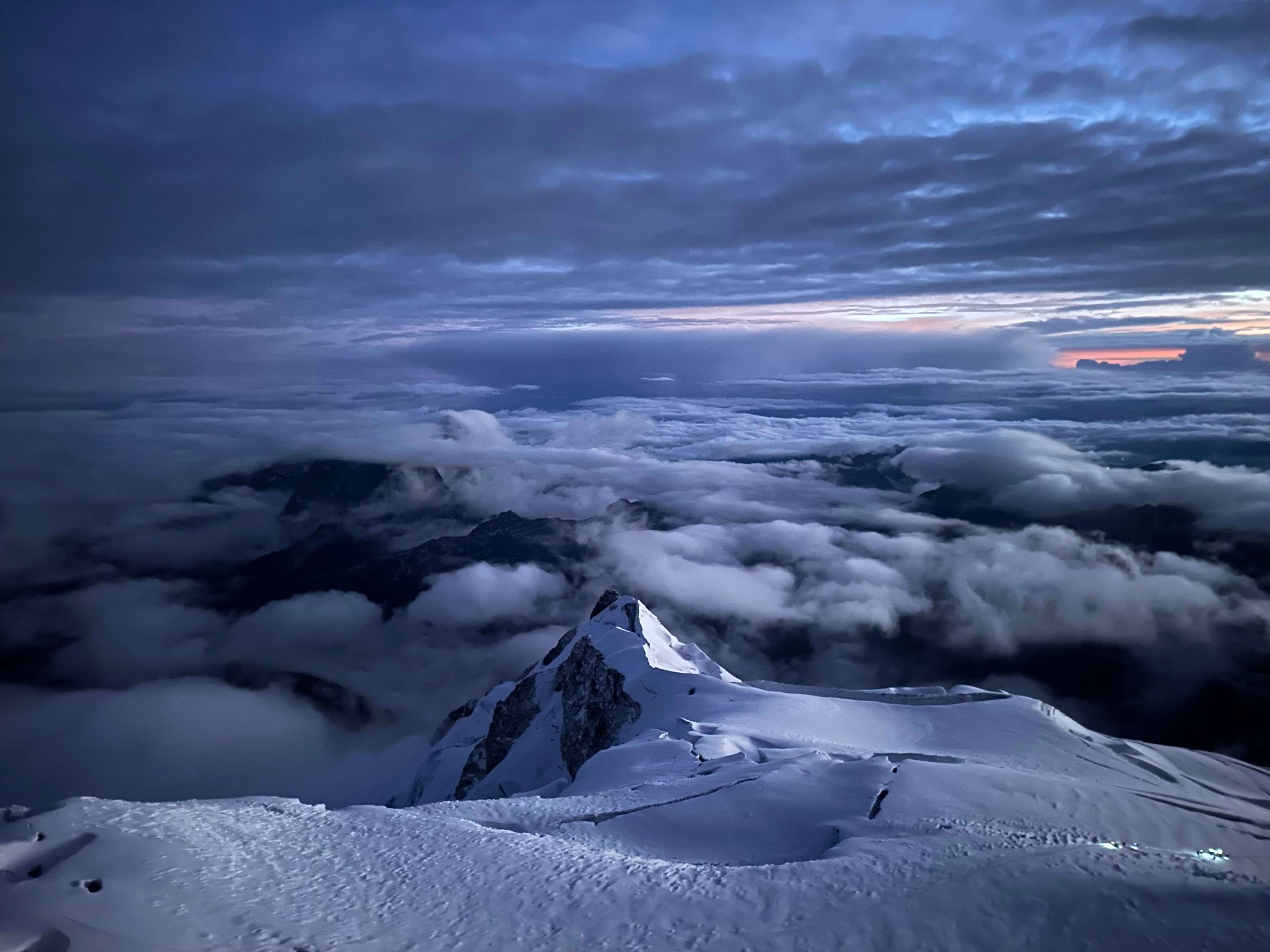
The mountain was silent. A few headtorches flickered below, but we had it essentially to ourselves. We kept a fast pace to keep warm. Kevin had stepped through soft ice into a puddle which soaked the inside of his boot. I reminded him to move his toes at all times while stopped, and that seemed to manage it well enough.
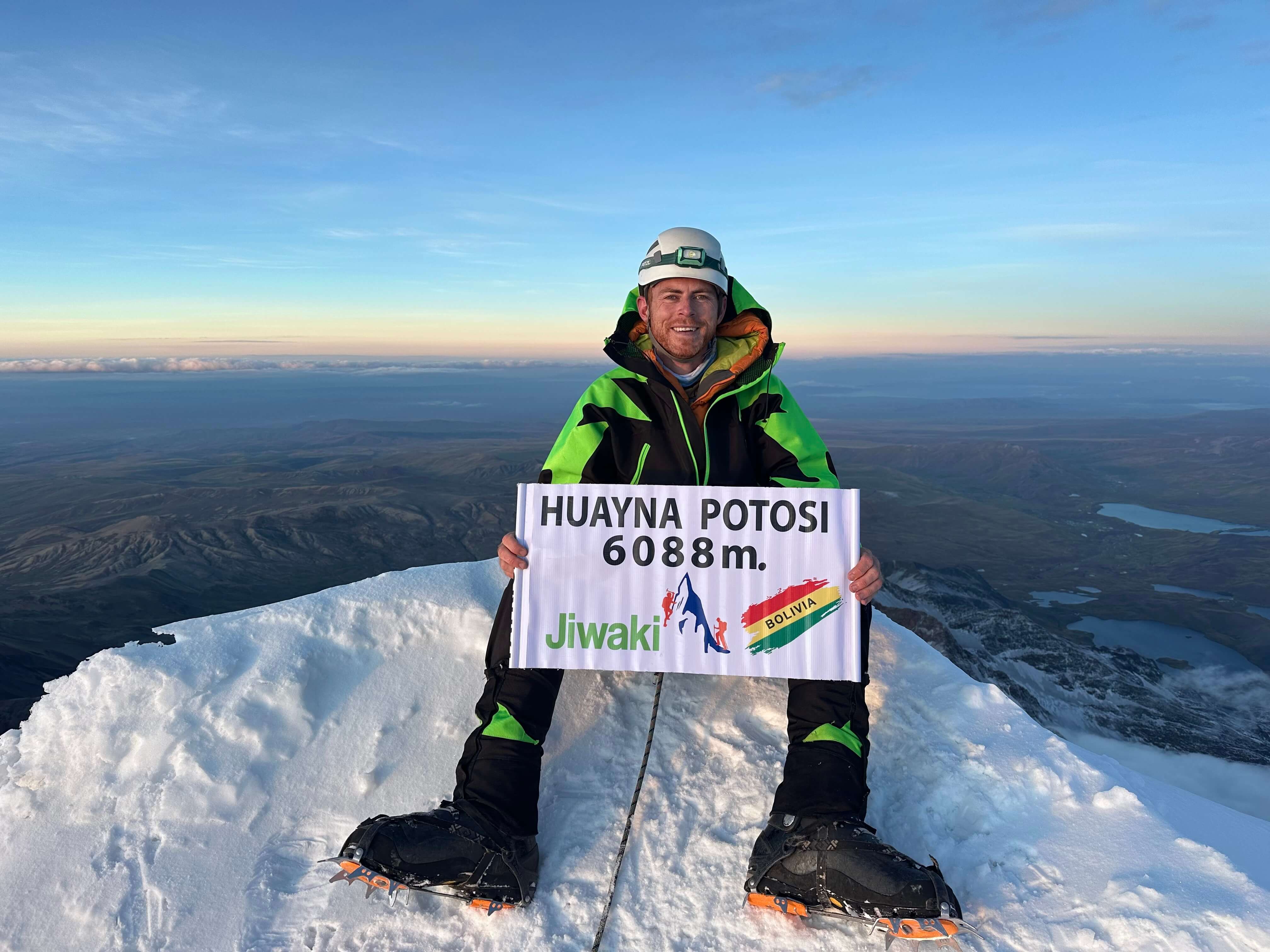
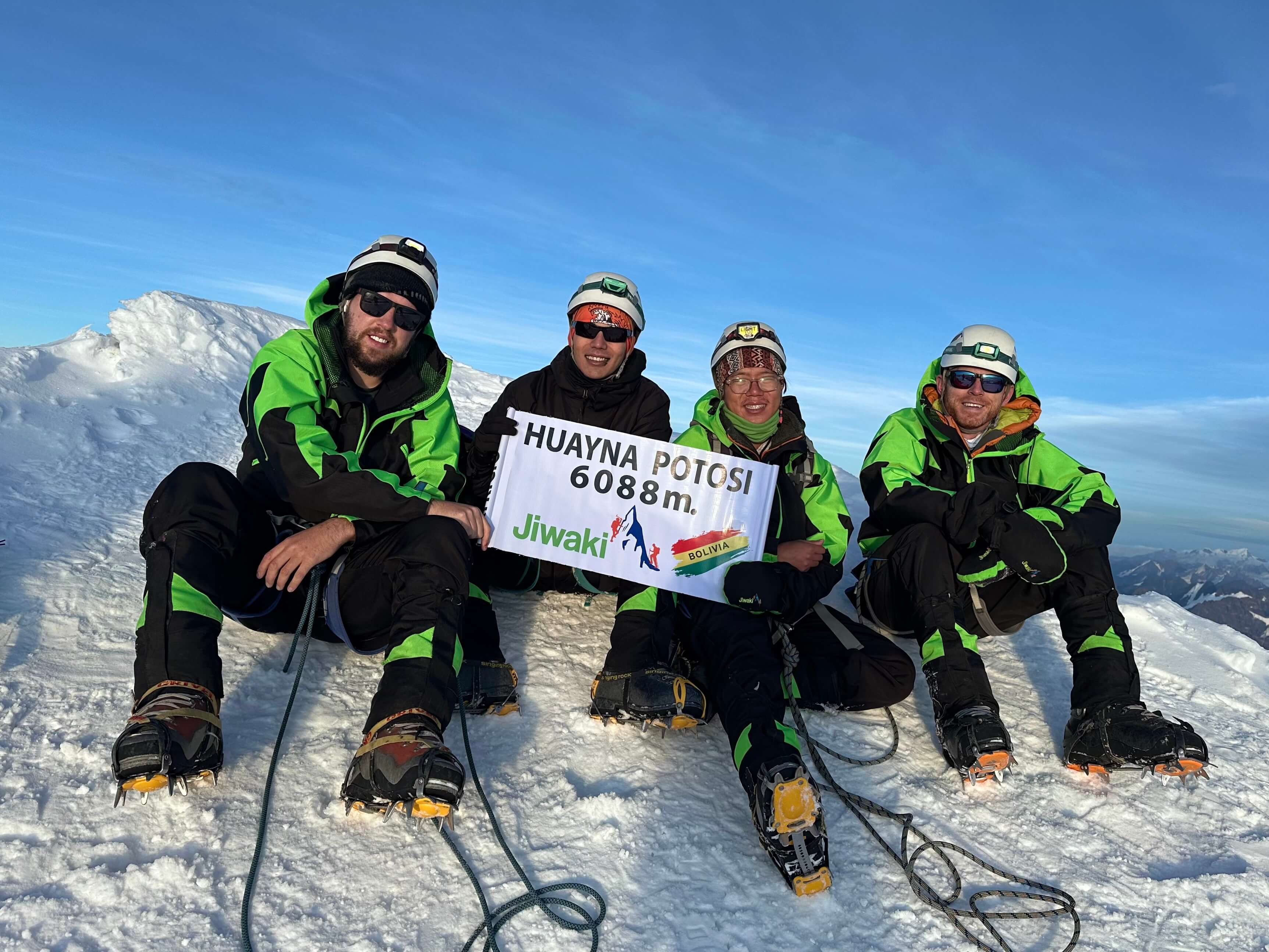
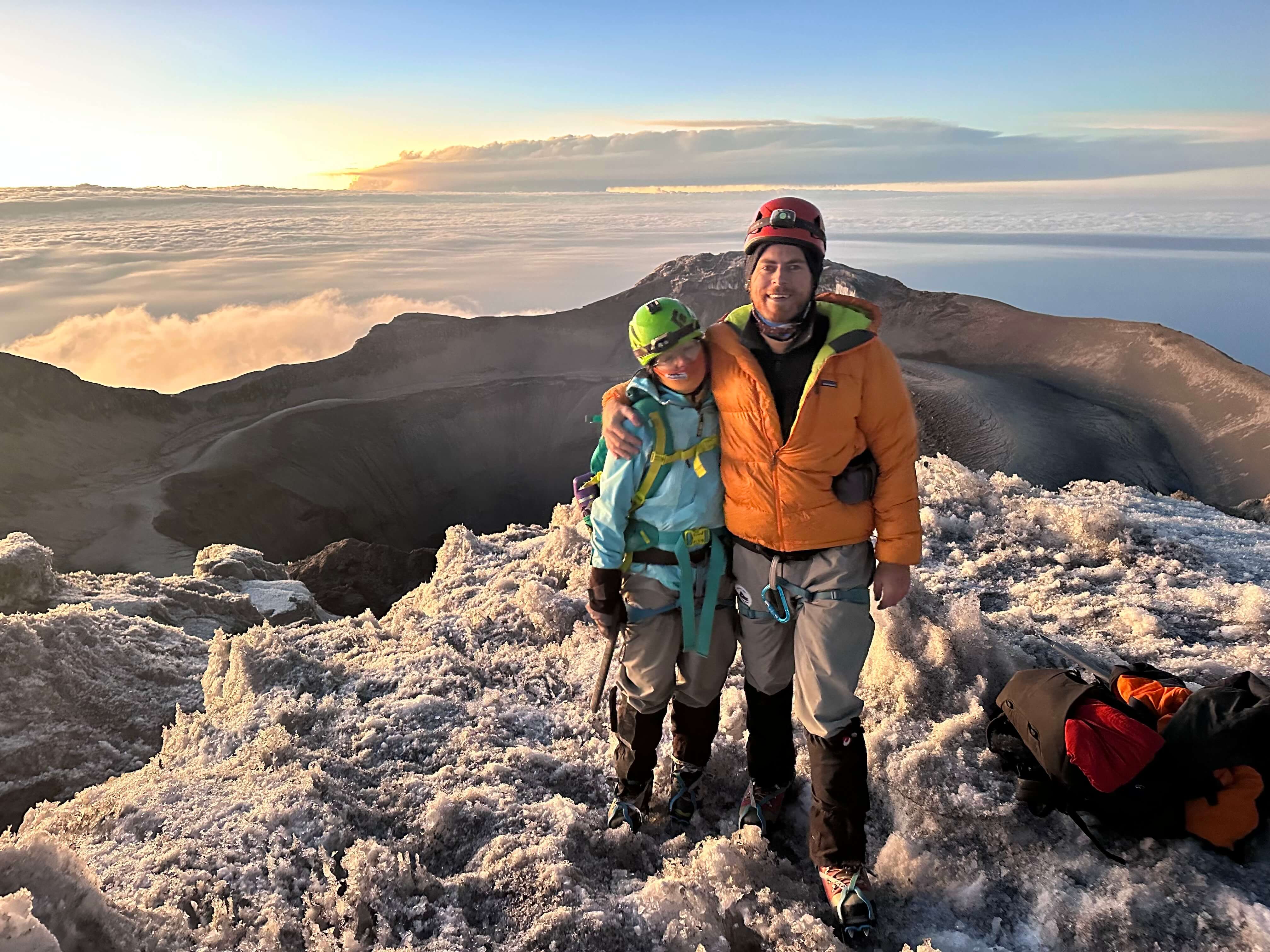
We crossed narrow snow bridges, saw deep caves, and climbed complex routes up ridges and steep slopes, often needing our ice axes. It’s a stunning glacier, but not easy. The last slopes are the steepest, but with some extra power from the sunrise behind us we pushed on to the summit at 6:00am. Kevin & I took loads of photos and about 30 minutes later Graham, Gustavo & Felix made it up too.
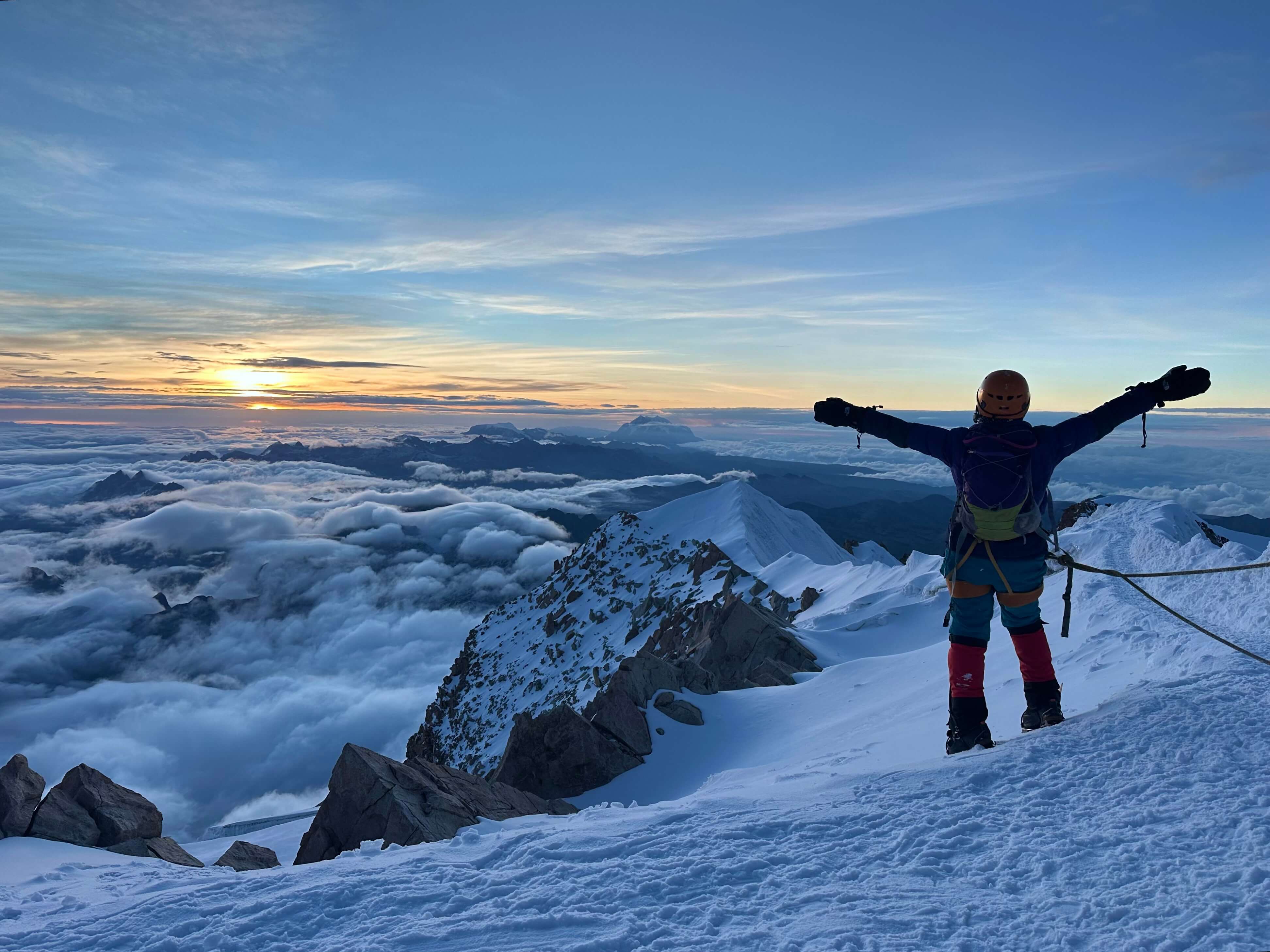
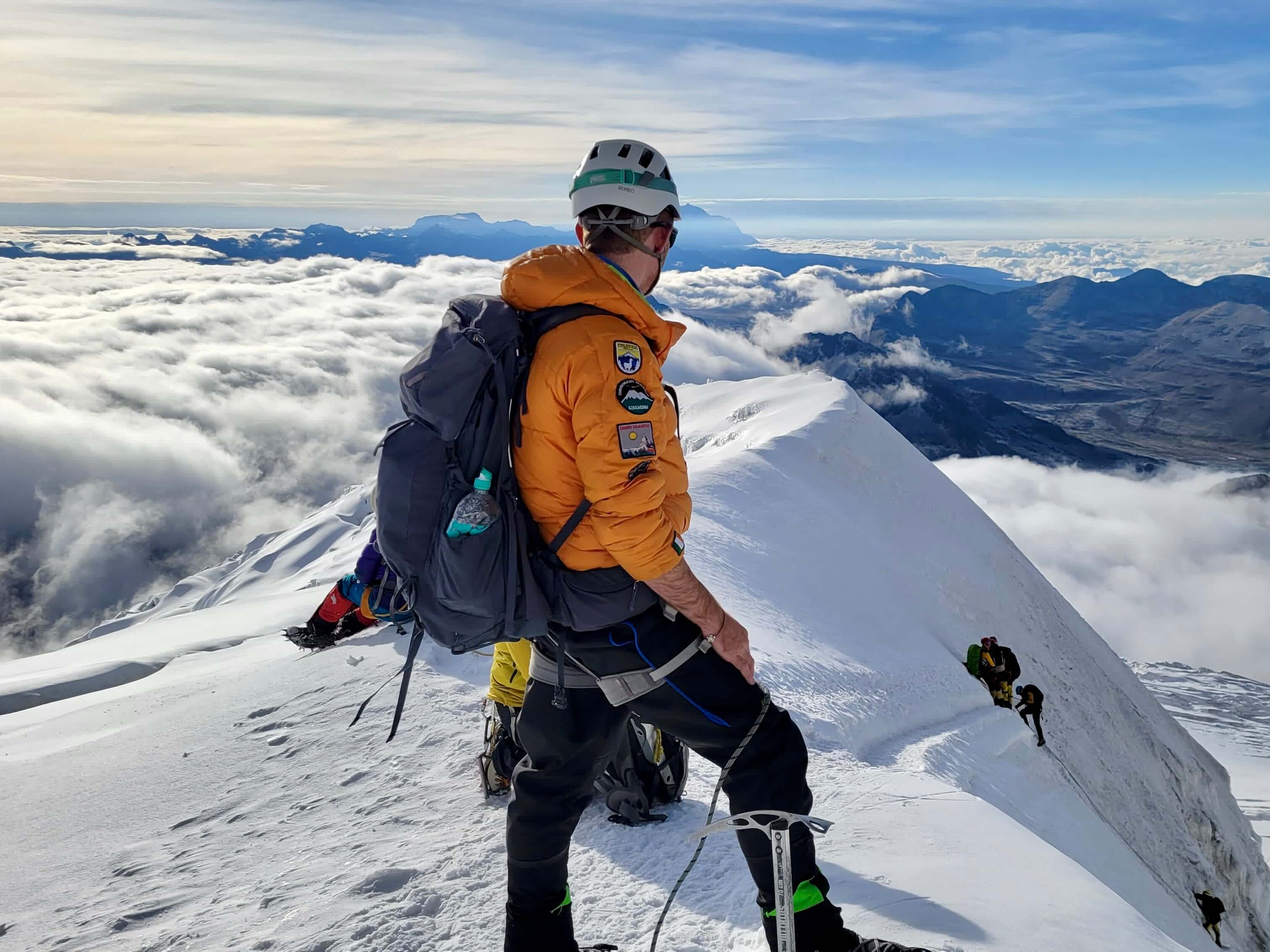
When you descend you see details that were hidden in the night. Crevasses seem deeper and the glacier looks endless. We moved fast enough that I gave myself a small headache, but it’s good to not delay in these places. Kevin was doing great, extremely tired, but moving well. Back in high camp we wasted no time packing our heavy bags and finishing the descent to base camp by 9:00am.
We shared our experiences with those who were headed up to high camp today, before making the 3 hour journey back to La Paz. Summit nights are usually a blur, a dream-like experience that doesn’t seem real as you eat breakfast after them. The quiet satisfaction lingers forever though. Even though we had returned to the real world of laundry and groceries, we both felt proud in the mundane moments of what we’d been able to achieve.
Afterthoughts
One month ago, I convinced Kevin to climb Peru’s Cerro Mateo (5,150m). I did this to kick-start his acclimatisation, familiarise him with glaciers, and essentially give him a test run for Huayna Potosí. Since then he went to that altitude again, swam at the height of Mont Blanc, as well as pushed himself on several hikes. He put in the work to make this climb look easy on the day and should be very proud of that.
There’s no way I can say this is the “easiest climb for beginners”. Though I would wholeheartedly say this is the most worthwhile and best value climb for those willing to put in the work. Being humbled by the scale of a glacier is mesmerising, and learning the skills to safely manage your body in these environments is rewarding for all endurance pursuits. This is a particularly beautiful peak and one I’m thrilled to have stood on top of.
The guides from Jiwaki did a good job. Their teaching elevated the trip far beyond what I had expected, and they were knowledgeable where it mattered. The food was also so good, and we had beds! It boggles my mind that this whole experience could be done for such a low price, but that’s Bolivia for you. The cheapest country in South America by far.
If anyone reading this is considering the climb, then it is almost certainly worth doing. Put in the work and you will be rewarded. For me this was the final stepping stone in my training. Next stop Aconcagua.
Thanks for reading,
Brian
%20-%20The%20World's%20Best%20Climb)