Arequipa in Peru is famous for its mix of architectural styles. These are the result of centuries of earthquakes, caused by the rumblings of two nearby volcanoes; Misti (5,822m) & Chachani (6,075m). Many suspect Arequipa will become the next Pompeii, but for now the earthquakes dissipate energy and prevent eruptions. It’s one of the most beautiful towns I’ve ever visited, and the volcano views made me want to climb.
In the off-season, guided trips are only on Saturdays. I was limited on time, so I had to choose one. Both peaks are non-technical, and being in the desert they rarely have snow. Misti has a classic volcanic cone and active crater, while Chachani is a rocky peak with better views. I chose Chachani for the extra height, aiding my acclimatisation for Aconcagua next month, and building on what I had done on the Ecuador Volcanoes, and hikes in Peru like the Santa Cruz Trek.
I booked with Baby Llama Tours, who charged $90 for the two day climb including tents, food and gear. They had seven clients, and we met at their office at 7:00am Saturday. Our guide José had us choose double boots, thick summit clothes, and sleeping bags from their gear room. Our bags were tied on top of a jeep for a bumpy three hour drive to a remote mountain saddle in the desert at 5,060m.
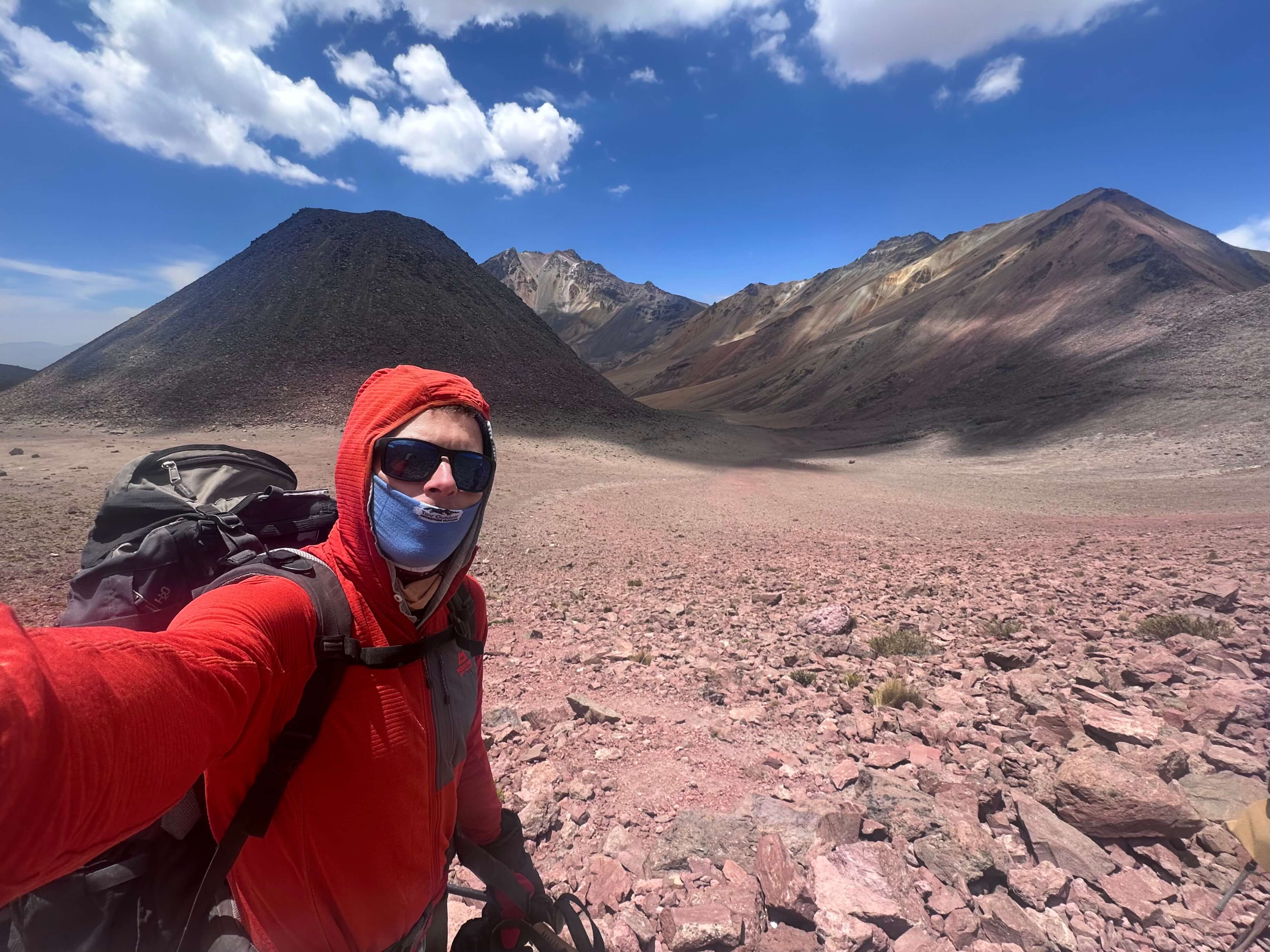
It was windy but warm for today’s short two hour walk on dusty tracks. Downhill to a valley of huge peaks, then around the volcano base and up towards camp. Sections of massive rocks were slow, and we tried to take it easy. Still chatting, but remembering to breathe deeply. On a flat ledge we saw other tents, and set up our own at 5,170m. We ate dinner and rested all day, lying outside on our groundmats and looking up at the peak. After watching the sunset at 6:30pm, we all went to sleep.
Alarms went off at 12:30am. It was calm and quiet eating our light breakfast. Bright moonlight lit up the mountain and made headtorches unnecessary. While it was cold, I found it shockingly comfortable compared to similar peaks. At 1:30am we started walking. The thin trails were easy to follow, and surprisingly gradual as they zig-zagged up. The group had different levels of acclimatisation, but the easy trail meant we had no real issues. I had a little nausea, but mostly was just sleepy.
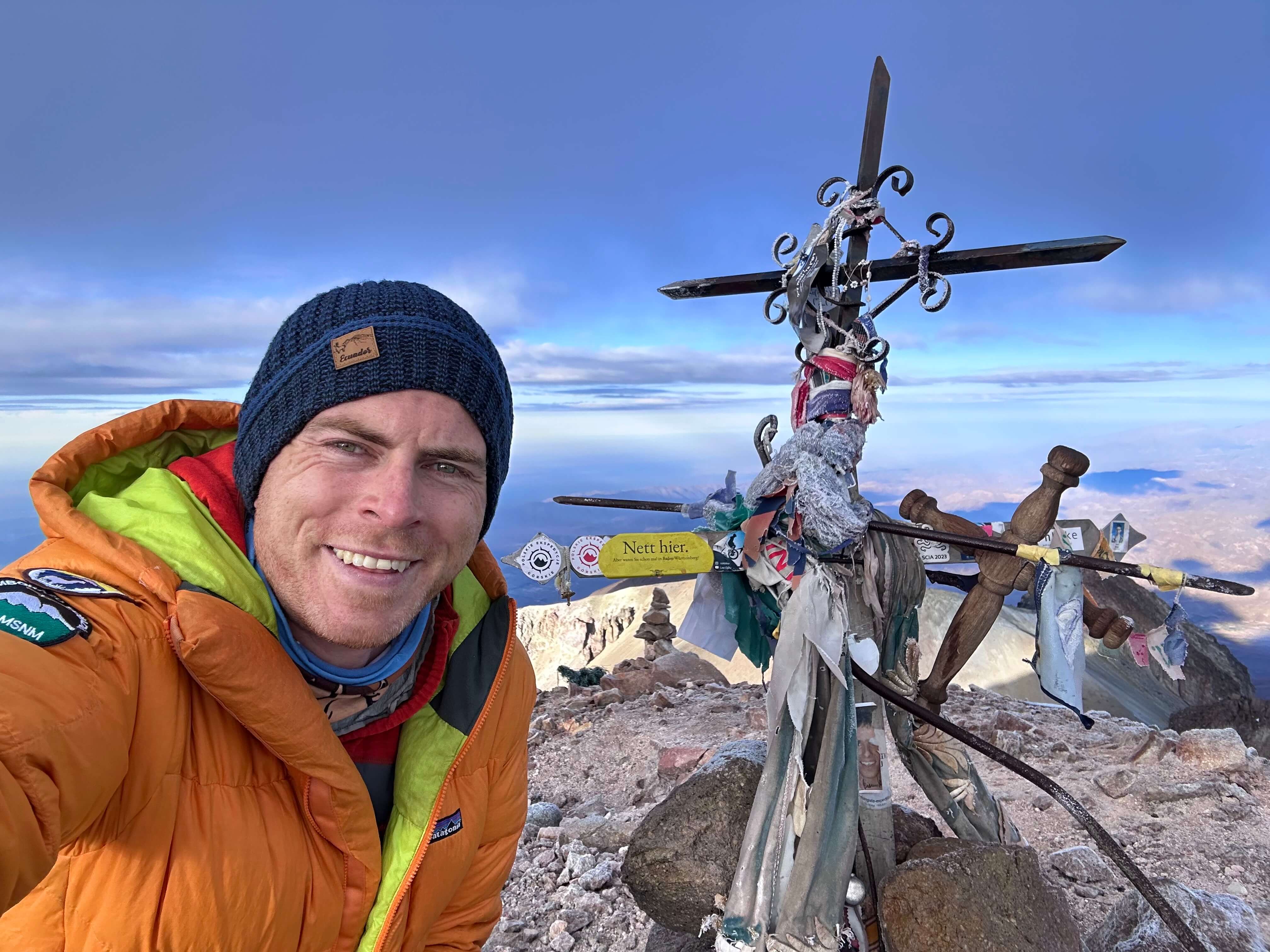
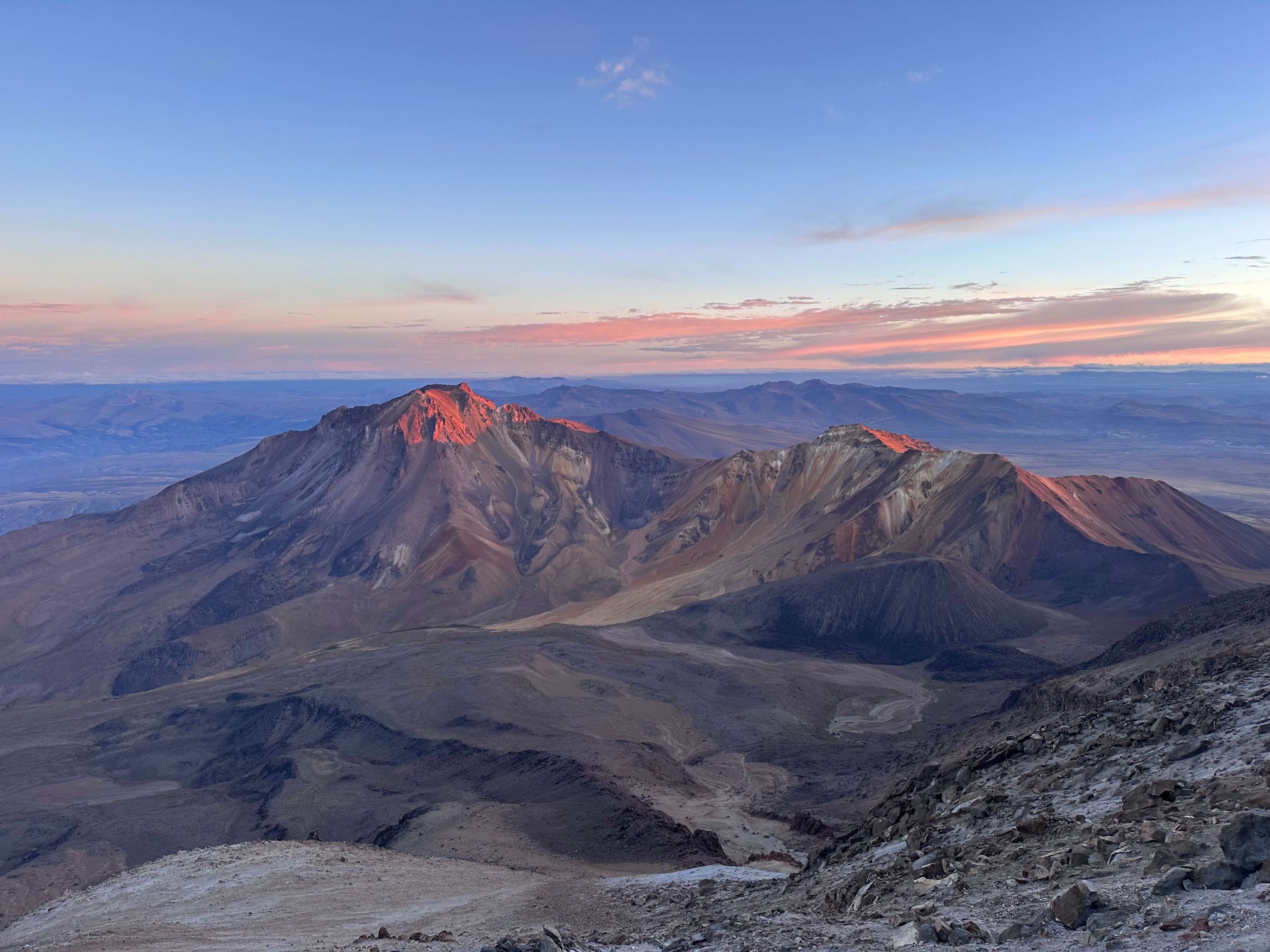
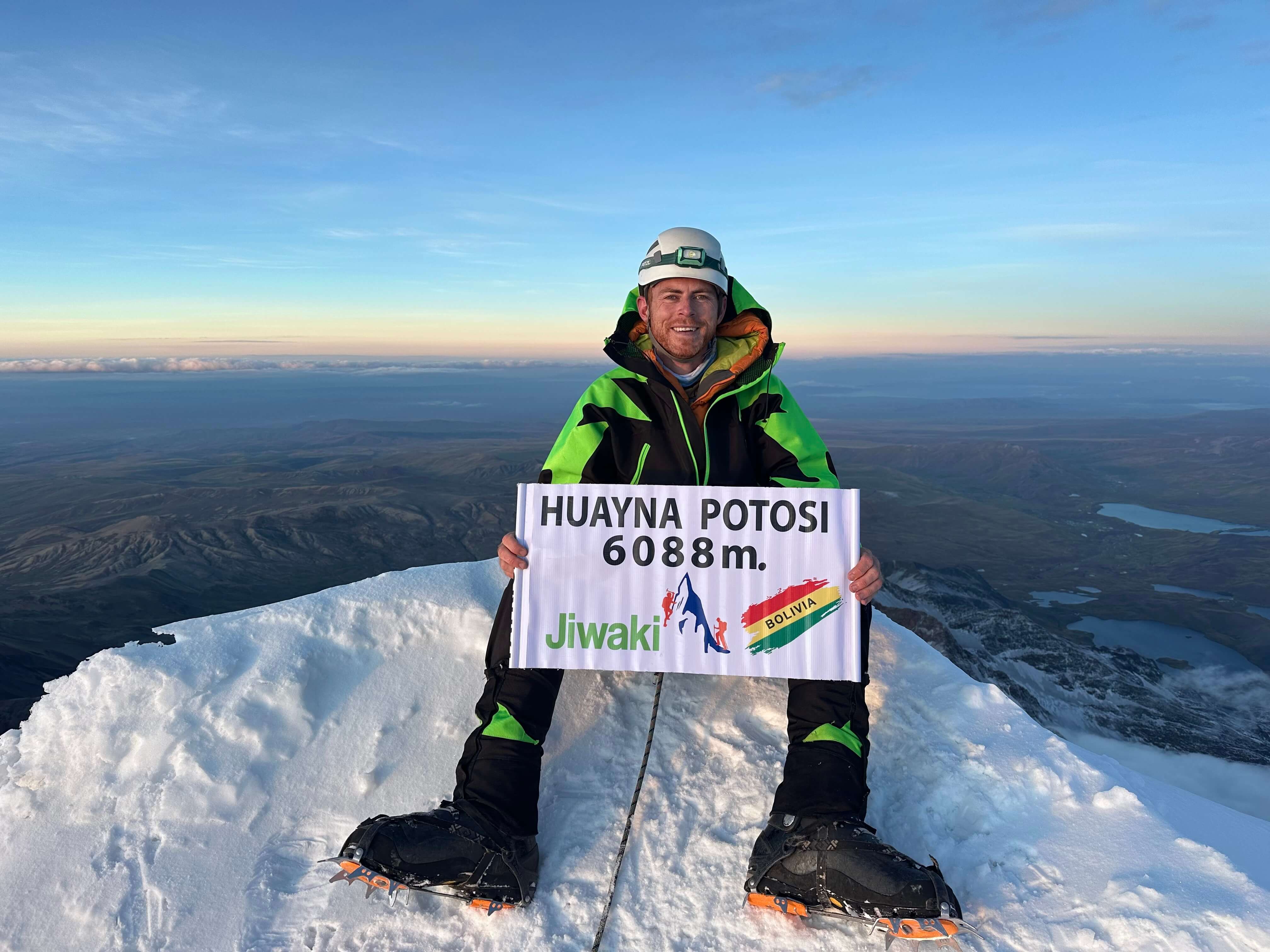
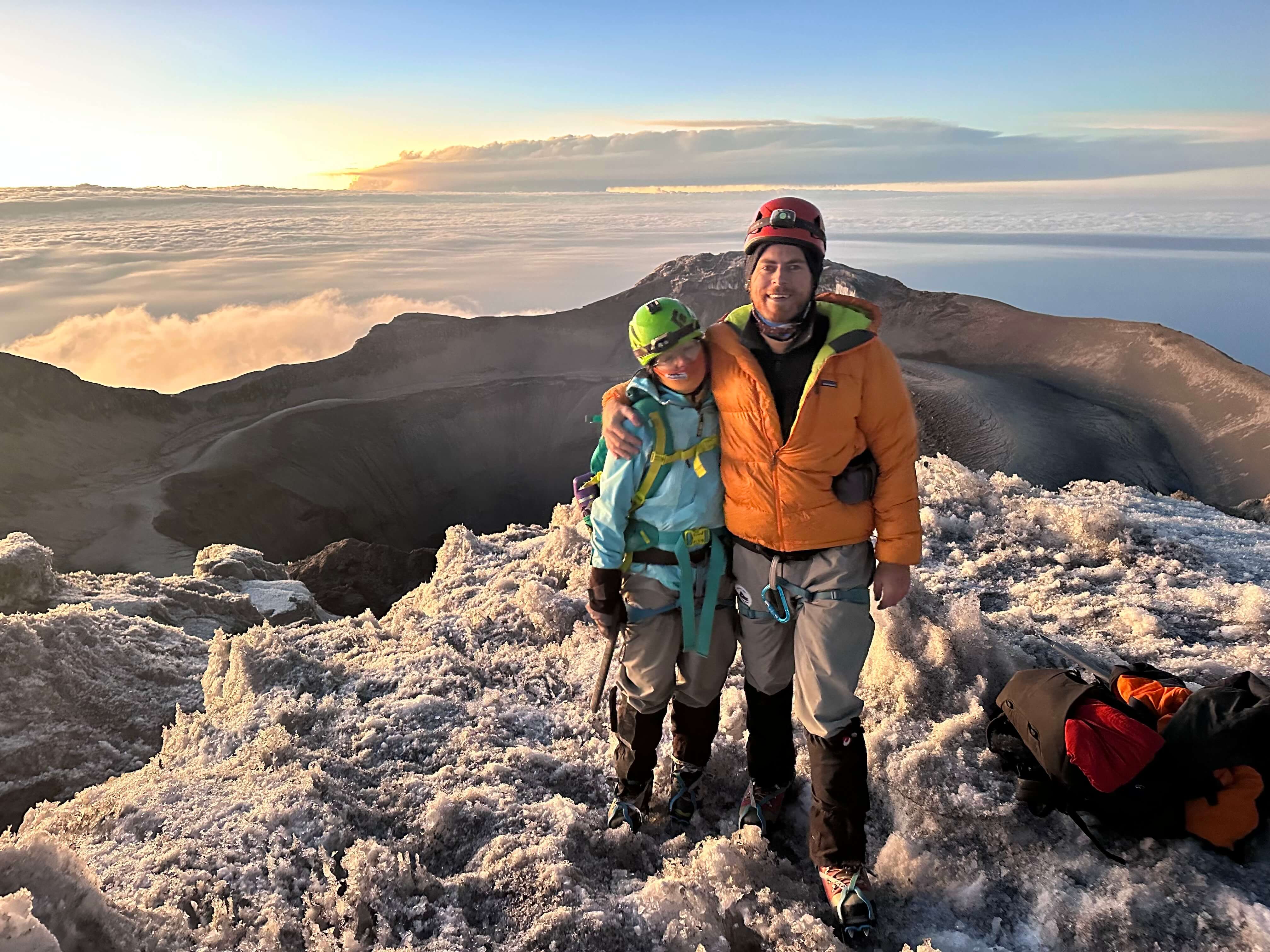
On a lot of high altitude peaks, the guide looks for any reason to turn clients around. Here we had the opposite. Around 5,800m (higher than Elbrus), we passed an Italian couple who had turned back. José spoke to them, and seeing they were fine he convinced them to continue with us. By now, a dramatic sunrise had turned all the peaks red. The final ridge brought incredible views and at 6:00am I reached the summit. The rest of the group followed soon after, joined by the Italians to the surprise and delight of their original group.
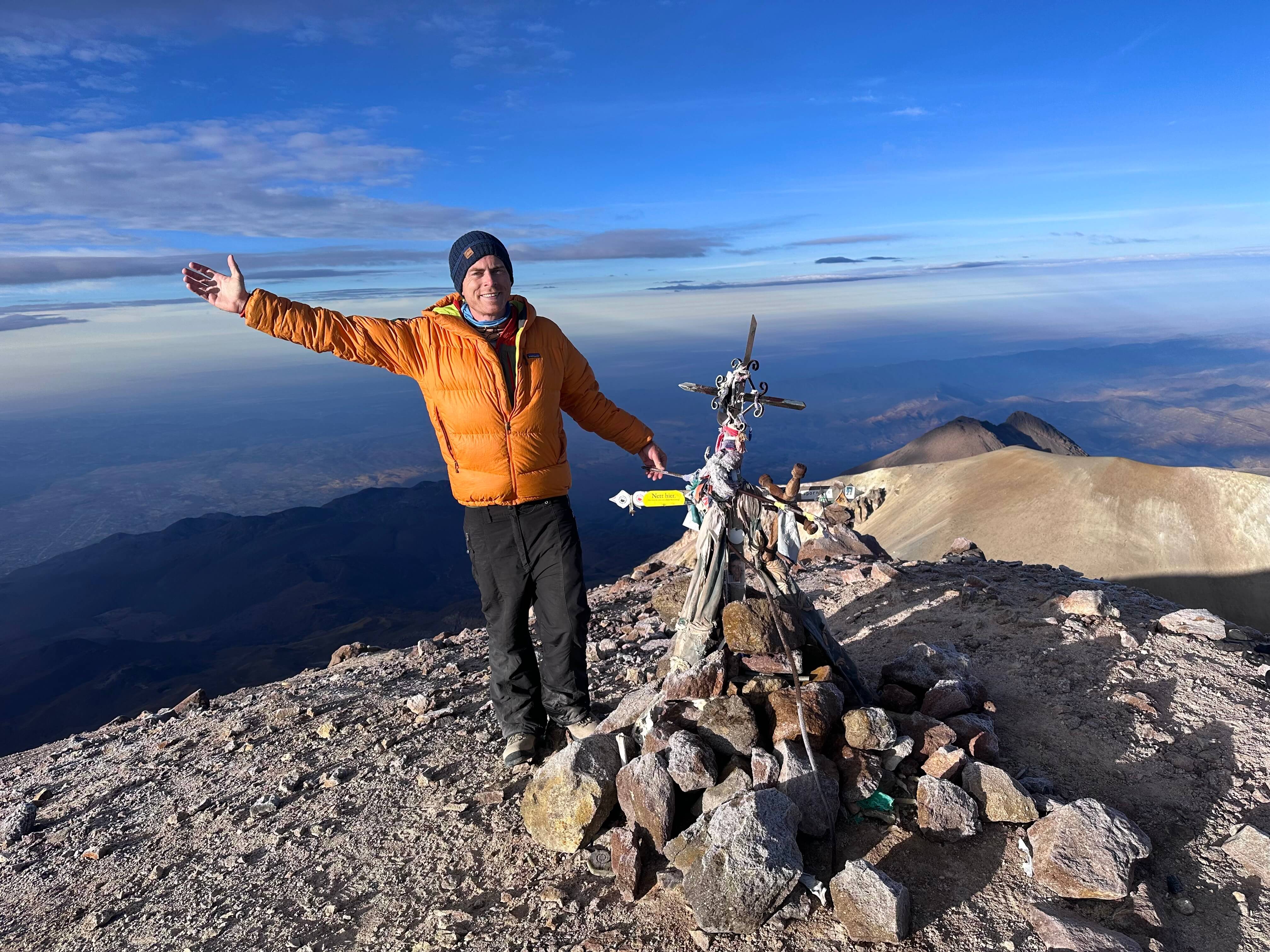
A few people had mild headaches by now, but everyone did remarkably well. After photos and some food, we began the descent. José was easygoing with our paces, since the trail and conditions were so clear. I went ahead and let my feet slide down gullies of volcanic sand that had me back in camp in under an hour. It was another hour before the others started arriving, during which I’d been napping. We packed the tents and walked back to the jeeps, everyone tired but elated. The bumpy drive was still awful, but at least this was the last time.
I can’t recommend this climb enough. It’s like experiencing the difficulty of altitude without any of the other challenges that normally come with mountains. Of course you need to pre-acclimatise, and guides will quiz you on your past few weeks to make sure you’re ready. However, for those ready to take on a 6,000m peak, this is the most accessible one in the world.
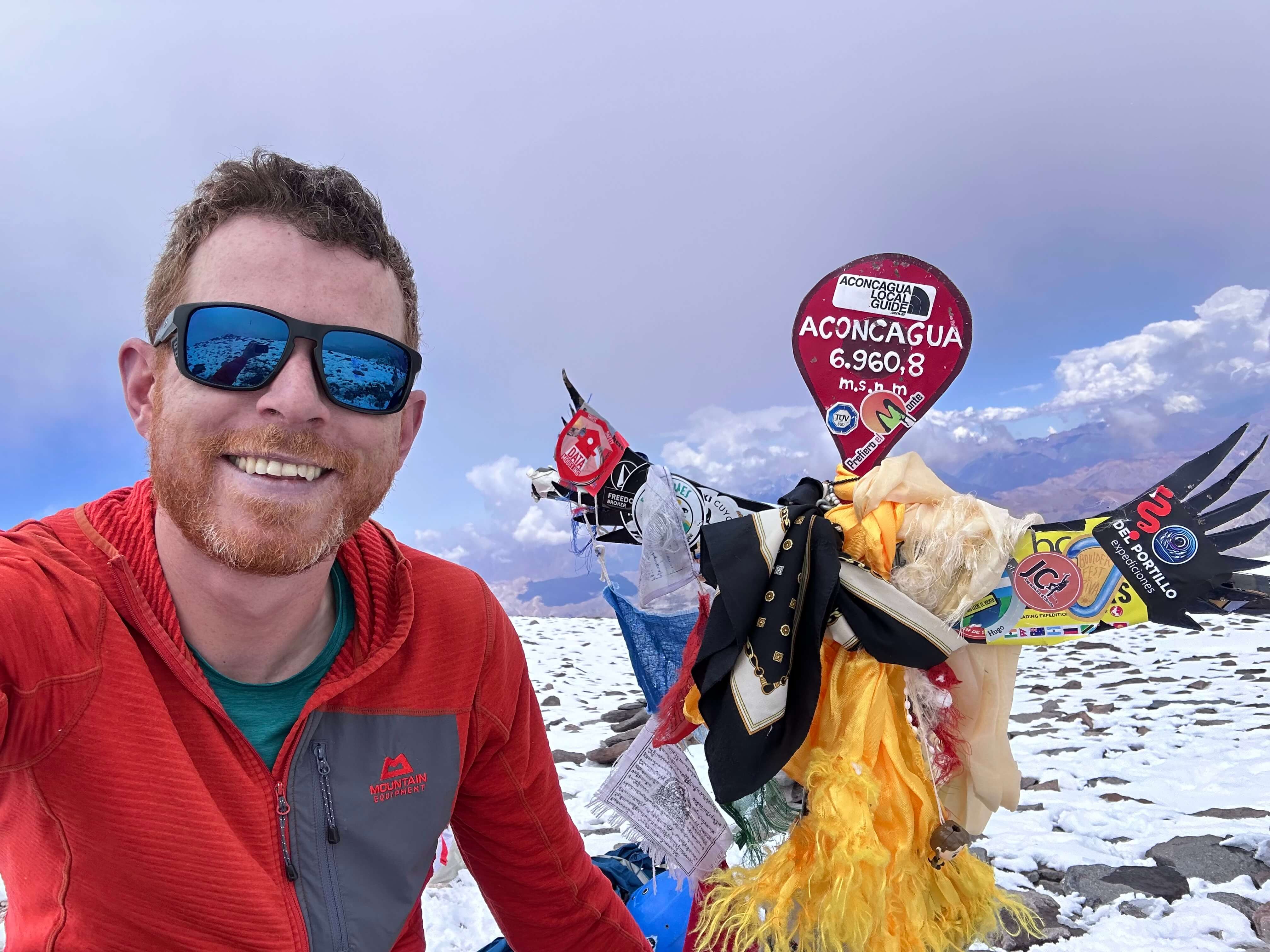
It felt great to get back to Arequipa, celebrating with a shower and an overly large pizza. It was a busy day though, buying food and sorting last-minute logistics. At 2:40am that night I would take a long bus to Cabanaconde, to start a thru-hike at 9:00am. I booked the bus and a taxi to it, then got what little sleep I could. 24 hours after Chachani & on tired legs, I was heading into the world’s deepest canyon for Peru’s steepest long-distance trail; the Colca Canyon Trek.
)