The Ecuador Volcanoes are a popular high-altitude progression, where climbers gradually acclimatise by ascending a series of peaks in the Andes. This usually includes Pichincha (4,784m), Cotopaxi (5,897m), and the ultimate goal, Chimborazo (6,310m). The final being Ecuador’s highest mountain, and thanks to the equatorial bulge, the closest point on Earth to the sun.
High altitude climbs in the Andes are done fast. The norm is to hike to a high camp that’s 1,000m below the summit in one push, nap until almost midnight, summit for sunrise, and usually drive away 24 hrs after you arrived. It’s an aggressive schedule that places the responsibility on you to pre-acclimatise. It’s not like Kilimanjaro where you spend a week on one mountain.
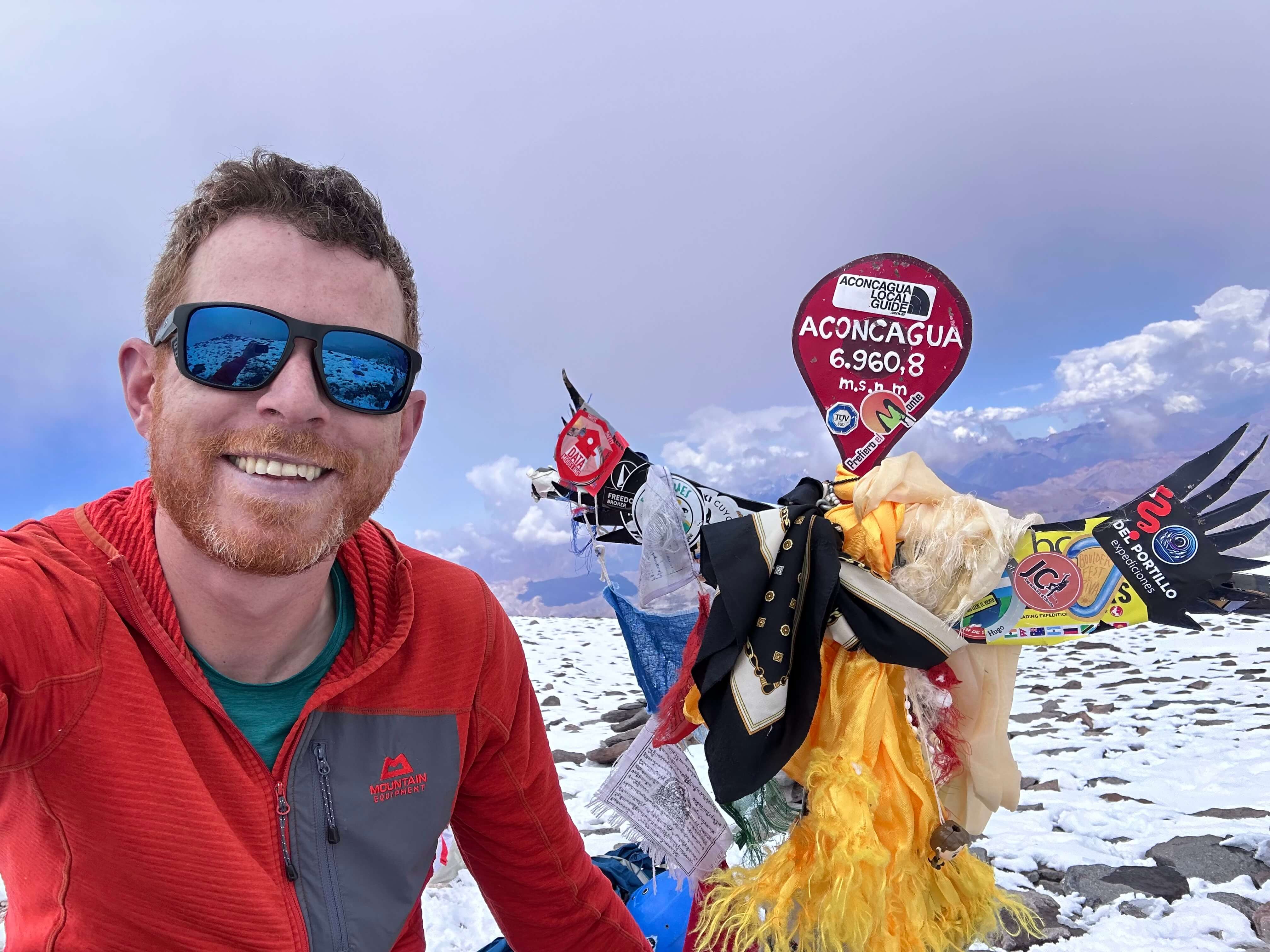
I did these climbs two months before summiting Aconcagua (6,961m); the highest point of South America. That peak has a 30% success rate, so I used these volcanoes as a base, and topped up with further 5,000m & 6,000m peaks to have my body ready. Acclimatising early and slow is so important, and this was a perfect place to do that.
I booked guides for Cotopaxi & Chimborazo through Ecuador Eco Adventures. They were well reviewed and supplied good gear, but their guides came across as rushed and careless on both climbs. I was glad to have recently refreshed my own skills on Elbrus, without which I don’t think I would have summited. The cost was $350 each for Cotopaxi where Mairéad joined me, and $550 for Chimborazo which I was taking on alone.
Pichincha (4,784m)
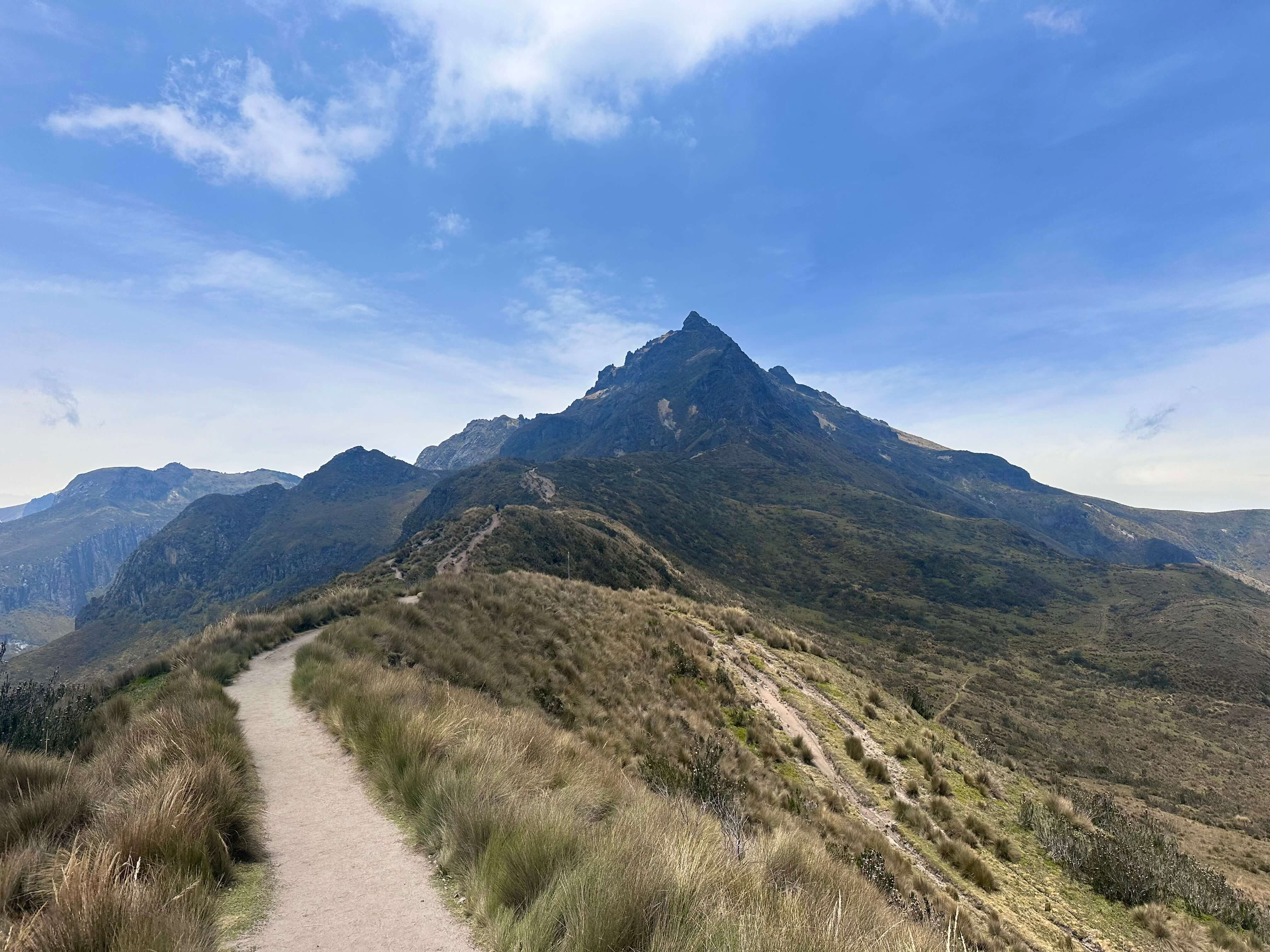
Mairéad and I had been above 3,000m a week before, but still planned a rest day around Quito (2,850m) when we arrived. The next day we did a day trip to Quilotoa Lake (3,914m), where I tried guinea pig, and we both felt strong in the thin air. The day after we were ready for Pichincha, which starts by taking the teleferico cable car to 3,945m.
It’s stunning at the station, full of families enjoying the giant swings that feel like flying above the city. Behind you is the rocky peak, as high as Mont Blanc, but full of people trail running who make you forget the elevation. The nice paths made it an easy climb, until the final scramble which does get your heart racing. From the top you can see the distant peaks that we’d tackle next, after a few days of rest at the equator, opera and an overly scary escape room.
Cotopaxi (5,897m)
Cotopaxi is Ecuador’s most famous peak because of its perfectly symmetrical cone. It became popular with mountaineers for its beautiful glaciers and snowy slopes. In recent years, thawing has made it dangerous and technical due to increased crevasses, rockfall and hard ice. We had a clear and calm night, but wouldn’t have summitted if not for previous experience and competence. It’s a risky mountain that shouldn’t be underestimated.
In the city we met our guide, Patricio. We chose double boots, warm summit clothes and sleeping bags from their stock, then packed it all tightly in our bags. It was a 2hr drive to Cotopaxi National Park on bad gravel roads, then a 2hr walk up steep scree to José Rivas Refuge (4,864m). It was cloudy, dusty and cold all the way. The refuge was full of climbers and we had fun chatting over the communal dinner. We had bunk beds by a window and could see the clouds lift, getting a little sleep before our 10:30pm wake up and 11:30pm start.
Warmed from tea and biscuits, and feeling the nerves, we started into the cold but cloudless night. We had 2 hrs on scree and volcanic sand, then put on crampons to enter the glacier. Huge crevasses were slow and laborious to navigate on hard ice and rock. We jumped over gaps on our meandering path around ice cliffs, with snowy slopes in places. We felt fatigued, cold, and at times nauseous, both managing it through pace, deep breathing, and sips of warm water.
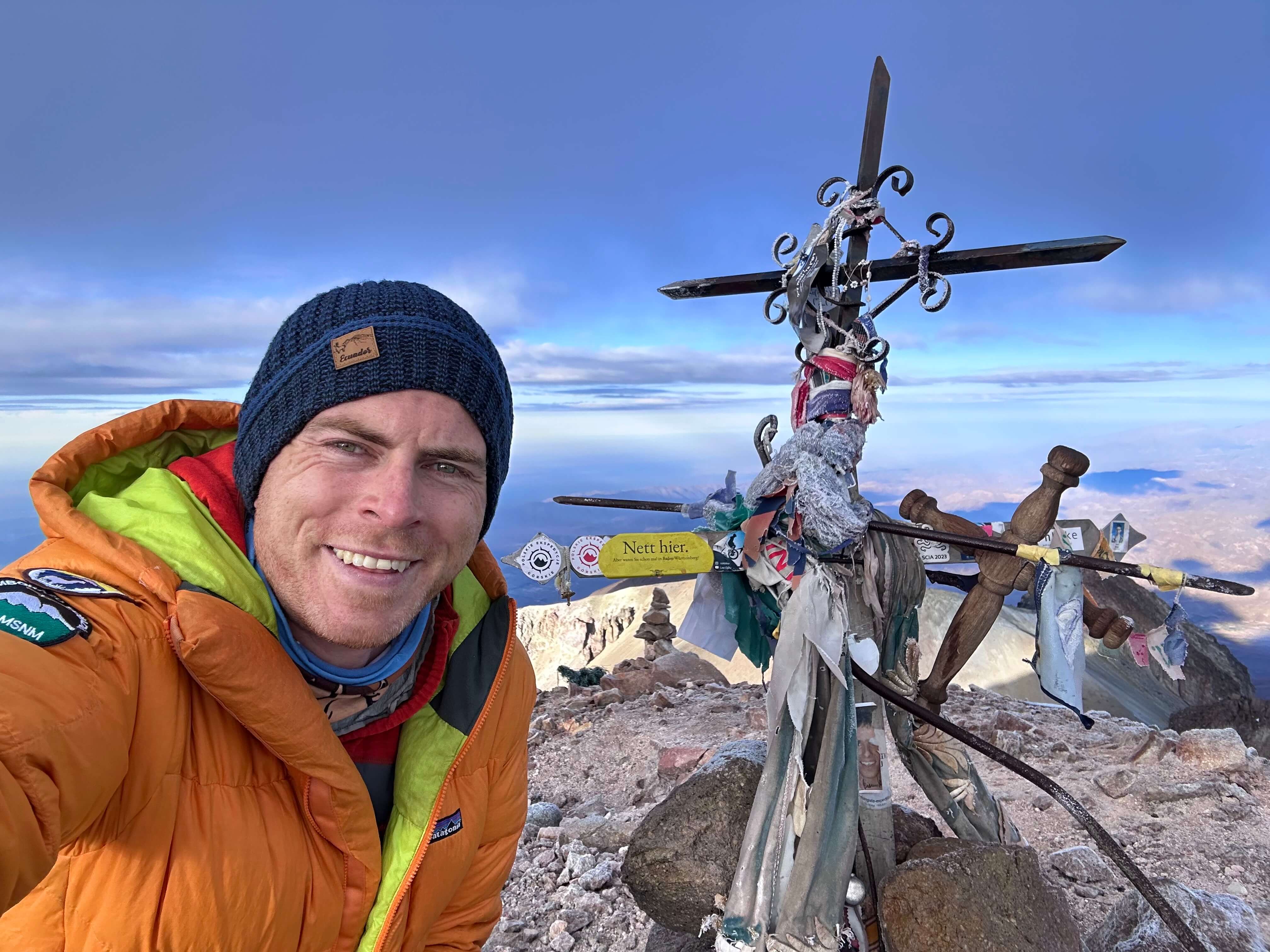
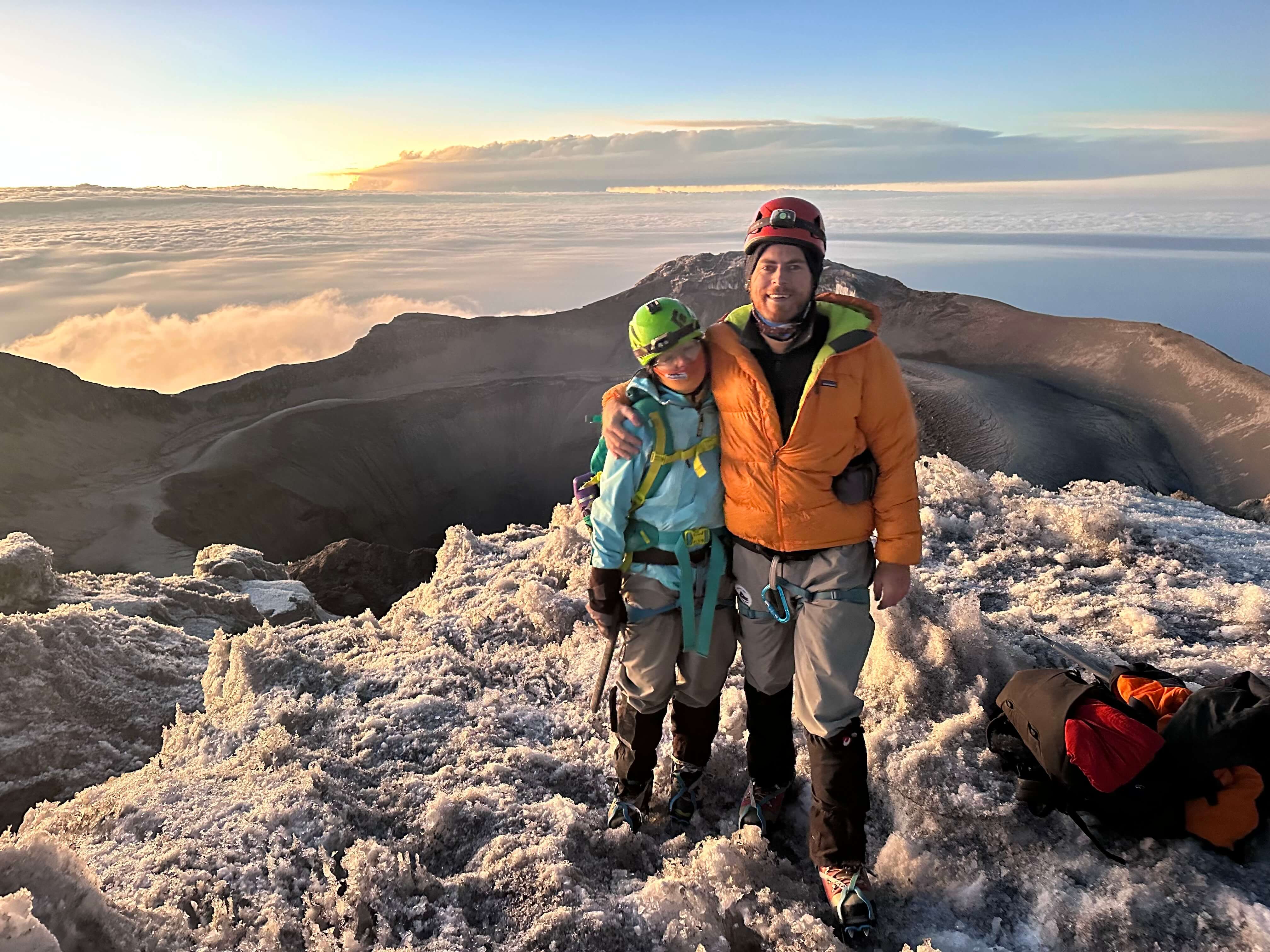
Near the top there’s a lot of scrambling. The rockfall from climbers above is dodgy, so you shout that you’re below and move fast. As we climbed over the final ledges we saw down into the crater. We climbed sharp ice blocks to the true summit, where everything lit up from the early colours of sunrise. It’s the most beautiful peak I’ve ever seen, and we sat watching the sun come up which warmed us.
The descent was fast, and we felt it in our legs and energy levels. In a matter of hours we’d gotten our things from the refuge, descended fully, driven back to Quito, and were sitting in a restaurant processing the climb. It was much tougher than Kilimanjaro even though just 2 meters higher. This was Mairéad’s climbing complete, so we enjoyed a few days in the mountains and in the Amazon before her flight home. The same day she went to the airport, I arrived to the final mountain.

Chimborazo (6,310m)
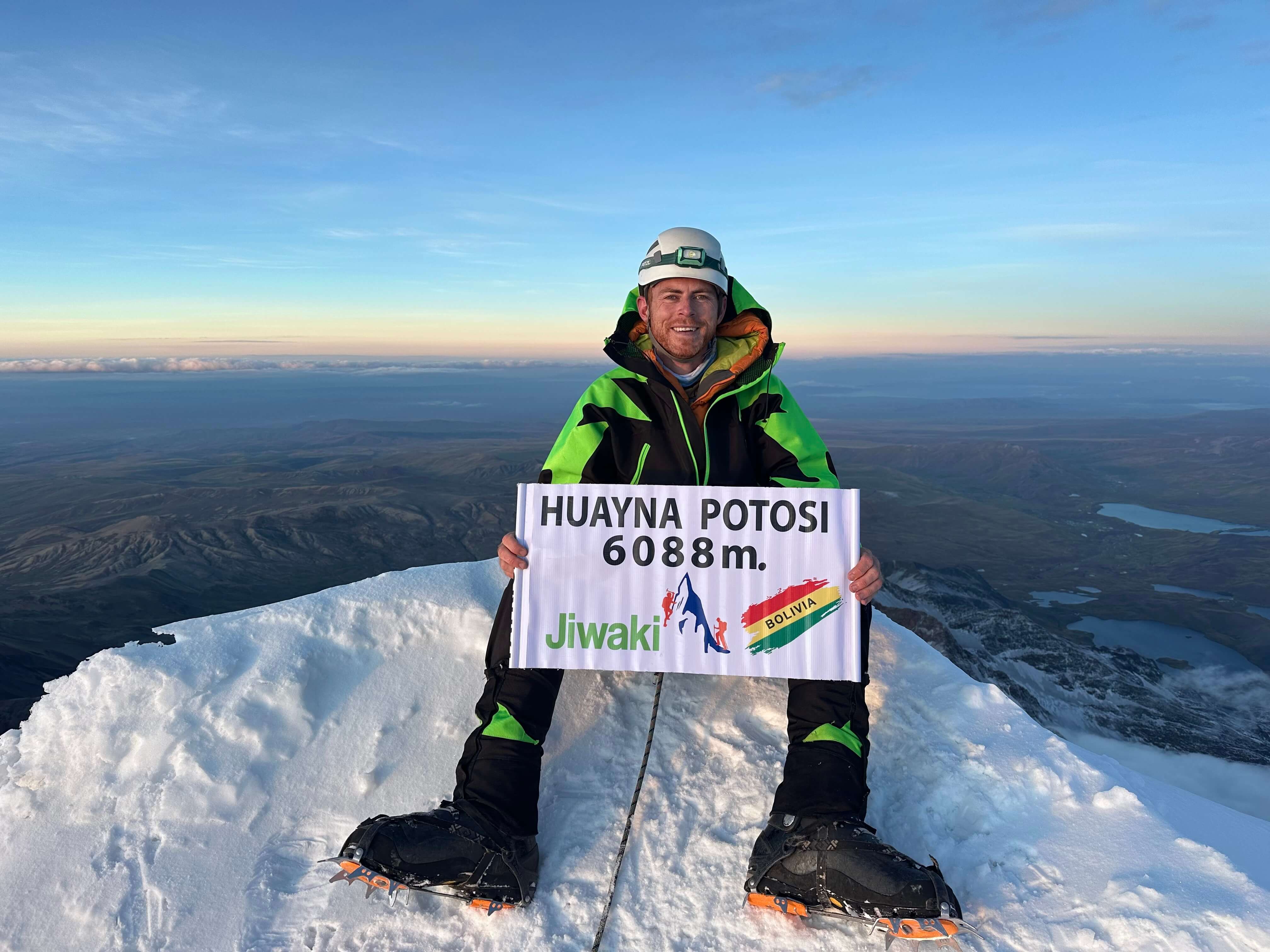
Ecuador’s highest peak and the closest point to the sun. This is a challenging climb with awkward scrambles, complicated glacier navigation, and an endless snow slope to the twin summits. For having booked both climbs with the same company I was given a free night in a luxury dome tent at the mountain’s base. Llamas walked outside my window with the peak visible behind.
The next day I met my guide, Fausto. He spoke no English, which I presume is why he skipped any gear checks. Luckily I had all I needed. We drove the bumpy roads to the base, and started a 3hr climb up a steep ridge to El Castillo Camp (5,350m). A few old dome tents sit exposed above the clouds, where climbers nervously ate and prepared for the climb. Other guides discussed the route and plan with their clients. I was only shown an alarm set to 11:30pm on Fausto’s phone and returned his thumbs up. I rested as much as I could before then.
The climb is long and steep from the start. I followed up a ridge to bright red rocks where you scramble onto ice. We passed three groups to be the first onto the glacier and continued like we were racing. Over crevasses and snow bridges, then hours later crossing a bergschrund to move to snow. From here you zig-zag up a dome that never seems to level out. The snow cover was better than Cotopaxi so I felt comfortable, but our speed made no sense. We were miles ahead of everyone, taking no breaks, and clearly too early for sunrise.
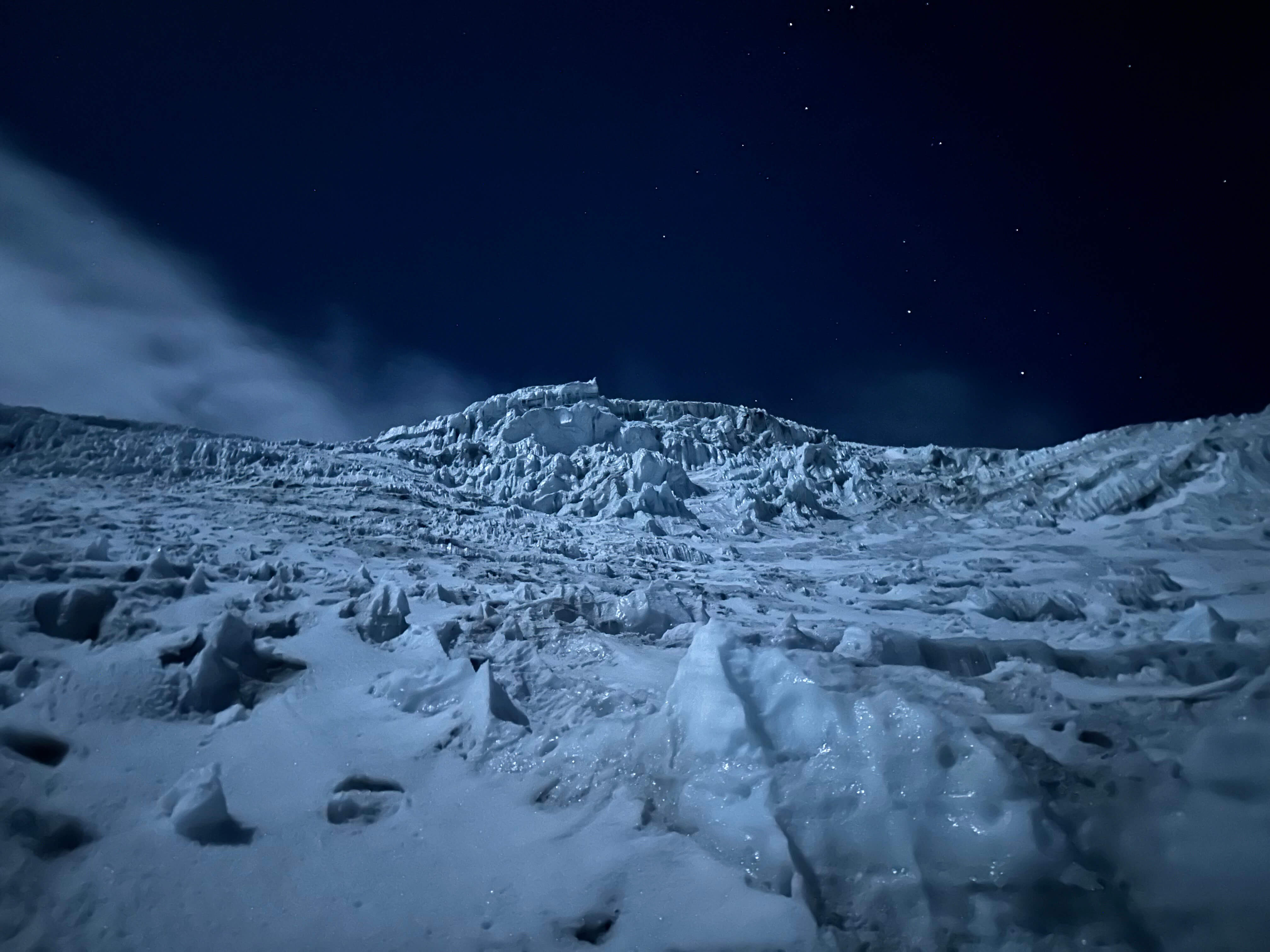
The snowy dome continued for two hours. I had no symptoms of altitude, but felt sleepy. The sun usually helps around now, but no sign of it yet. The slope appeared to level off for a long time before actually doing so, eventually reaching the top of the first peak before 5:00am. From here you drop deep into the saddle, and climb the last slopes to the summit, where we arrived by 5:30am. The moon had made the snow glisten all night, and from here the whole mountain seemed to shine.
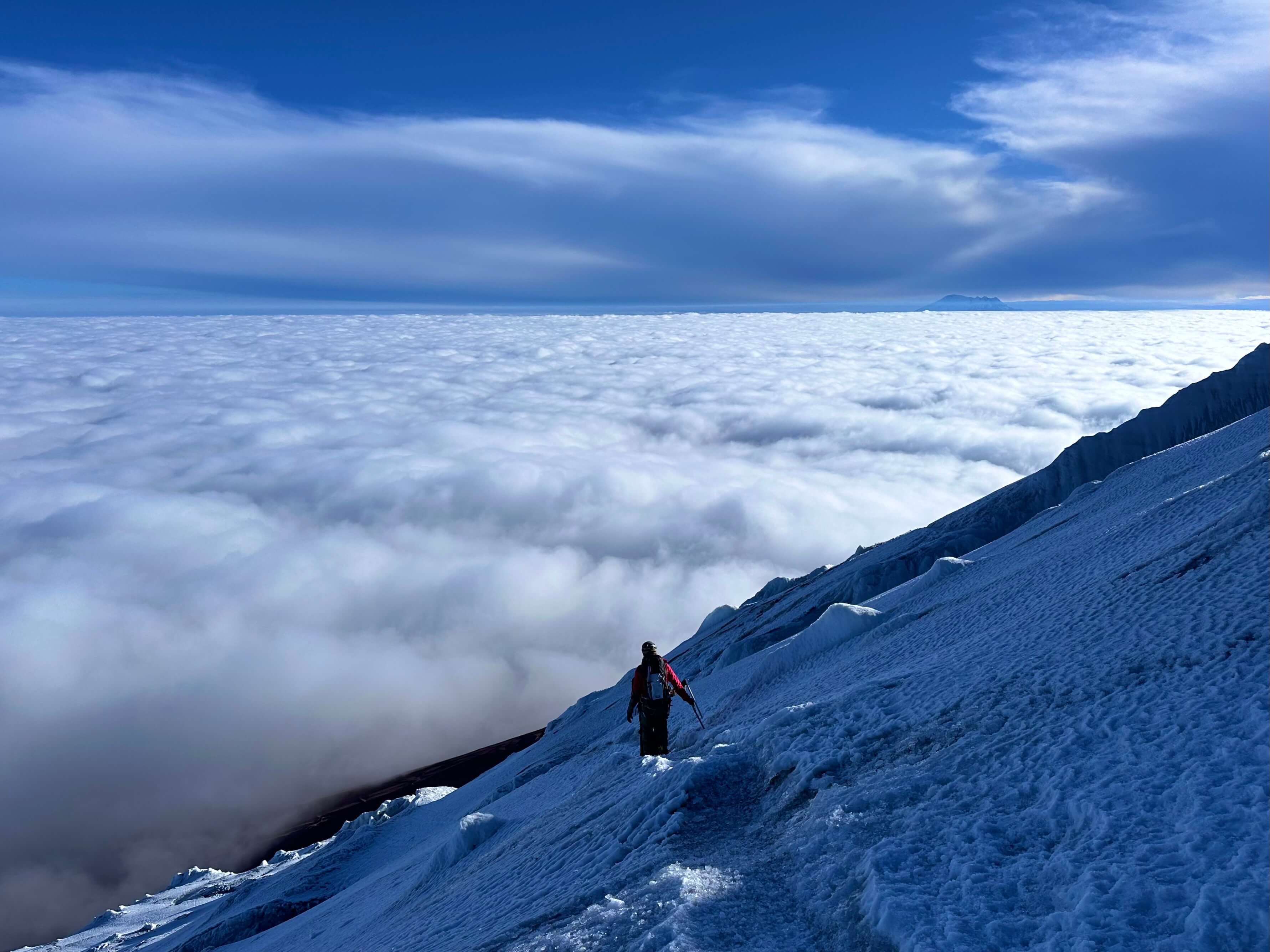
We were back through the saddle and back on the first peak when we finally saw the next climbers. The sky was getting bright but we began our descent without ever seeing the sun. We descended at the same pace, through the crevasse field which looked far bigger with light. We passed ice caves and had stunning views of the surrounding area, watching the camp get closer and closer. All our gear in hand we made the last descent and were driving the awful roads to town before 11:00am.
That day went so fast that it was like a blur. I took a bus into the Amazon to meet my friend Alex, and the next morning was kayaking on the most remote and difficult river I had paddled in years. We discussed the climb and suspect the guide wanted to turn early. Likely trying to tire me out, which I think was also the case on Cotopaxi. It explains the actions that felt confusing up there.
I wouldn’t choose the company again, but all’s well that ends well. It resulted in great memories for Mairéad and I, and a solid base of acclimatisation that I was excited to develop for Aconcagua. The mountains were spectacular challenges that I’ll never forget.