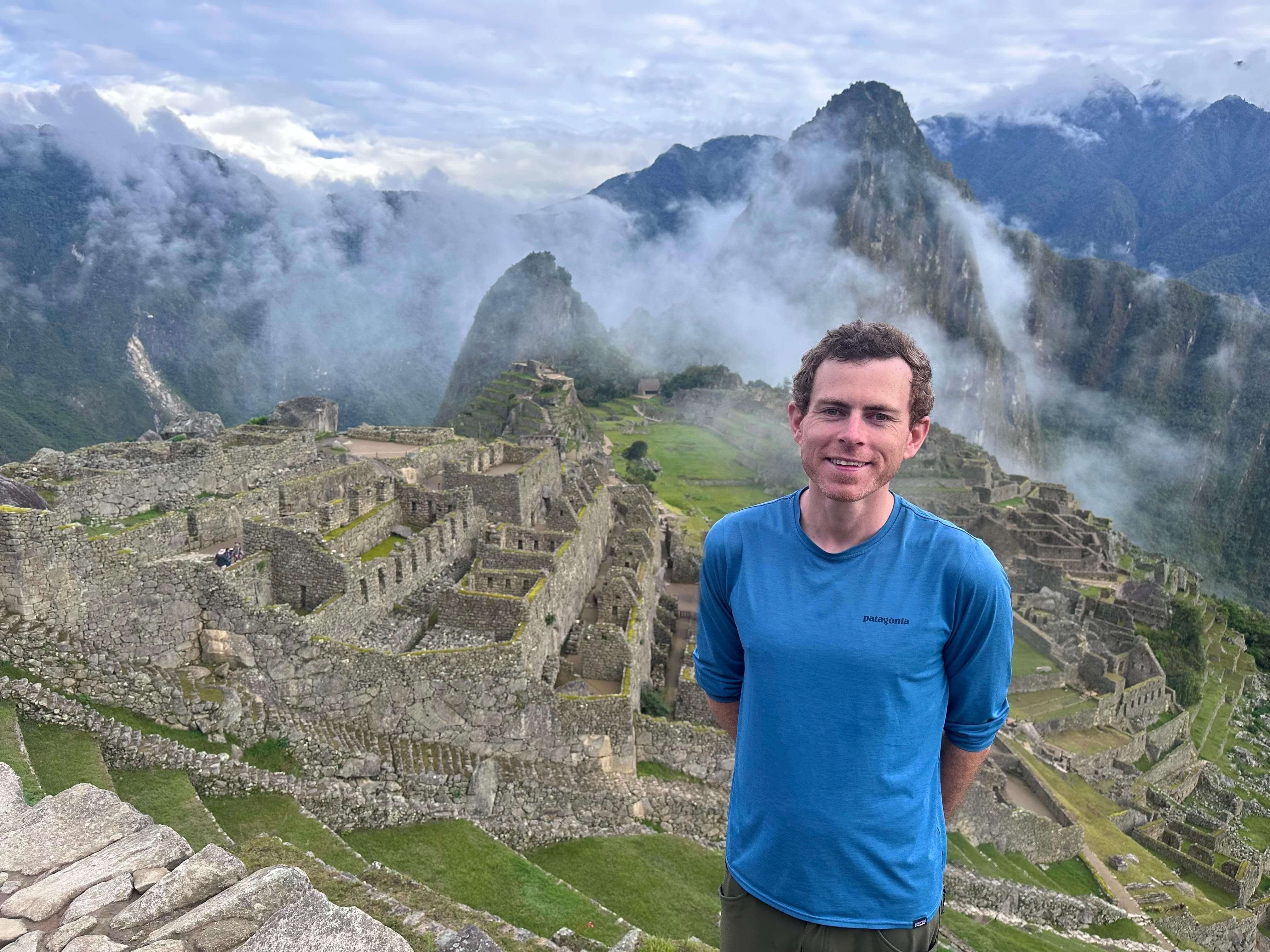
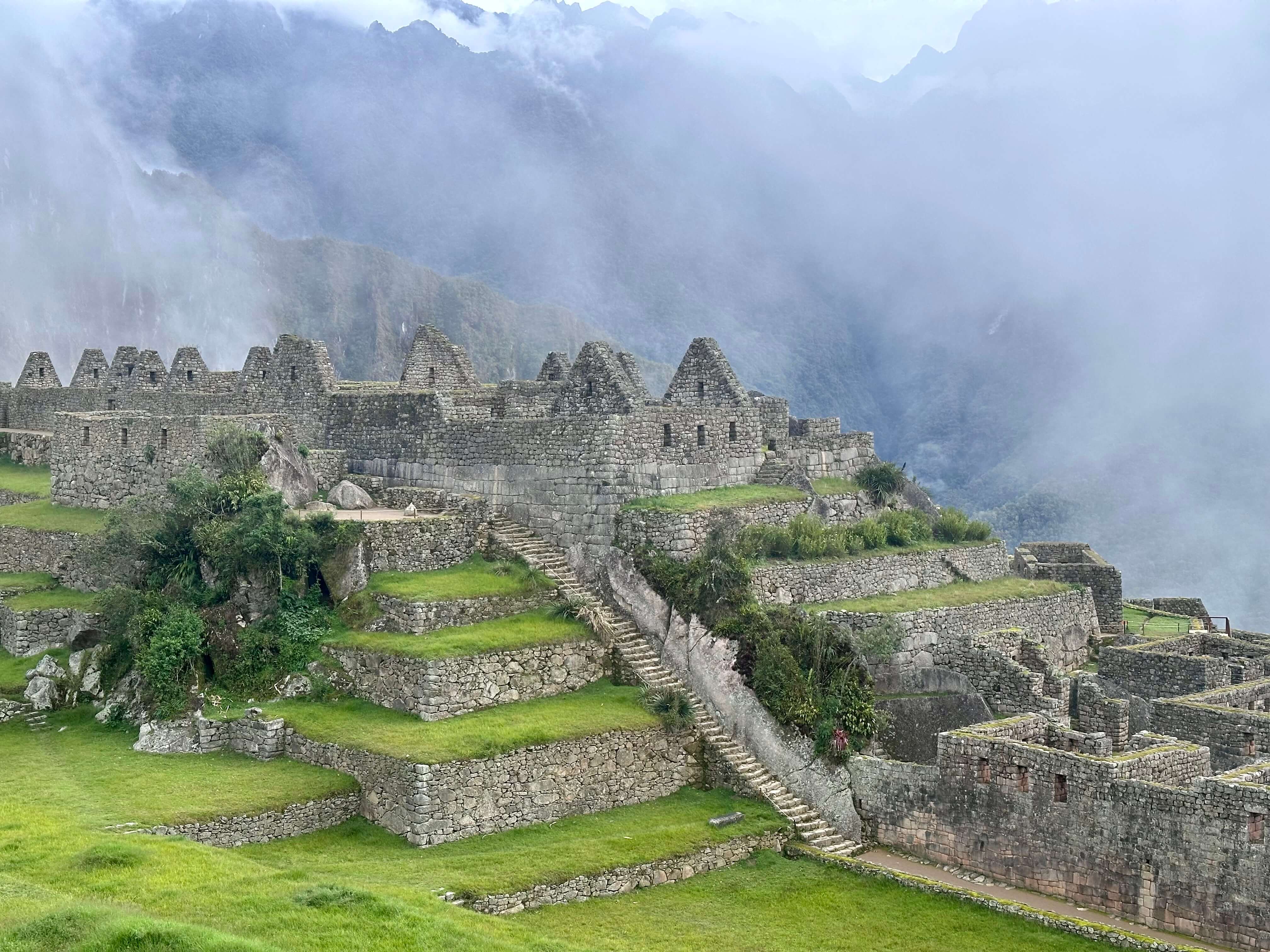
In 1450, Machu Picchu was built as a large estate for the Inca Emperor Pachacuti. It was a complex of stone temples and mist-shrouded terraces, perched high on a mountain saddle in the Andean jungle. A century later, invading Spanish brought war and disease that led to its abandonment. The jungle reclaimed the site, and locals concealed the location, eventually becoming known only in legend as the Lost City of the Incas.
In 1911, a lecturer named Hiram Bingham was guided to the ruins by a local farmer. He was disappointed to find the charcoal signature of a Peruvian explorer already there; “A. Lizárraga, 1902”, but it was Bingham’s writings that began an era of scientific exploration. He led teams from Yale who unearthed roads, water channels, buildings and over 40,000 artefacts. In 1928, a trainline was named in his honour, joining it to the previous Incan capital of Cusco. He was also said to be the inspiration for Indiana Jones.
Machu Picchu became a UNESCO World Heritage Site in 1983, and was named one of the Seven Wonders of the World on 7/7/2007. It’s the most iconic tourist destination in South America, and sees 1.5 Million visitors per year. Most people visit on a day trip, or stay in the luxury hotels of Aguas Calientes; the small town on the valley floor. Those who want the most cultural immersion walk there via ancient Inca roads, seeing the ruins, valleys and cloud forests that offer a glimpse into the local history.
Inca Trail vs. Salkantay Trek
The 45km Inca Trail was cleared by Bingham’s team and became one of the world’s most famous multi-day hikes. The number of ruins and irrigation channels along the path suggest it was a main route to access the city. It culminates by entering Machu Picchu at sunrise through the Sun Gate. Peru introduced a permit system in 2001 to deal with the unmanageable demand. Now permits tend to be expensive and sell out months in advance. This led to a number of other routes being established.
The 70km Salkantay Trek is the most popular with backpackers, who want fewer crowds and a more rugged, flexible experience. It’s more physically demanding, going higher and deeper into the Andes, particularly over Salkantay Pass at 4,650m. It does follow Inca roads but is more nature focussed. Passing glaciers, waterfalls, blue lakes, huge rivers, and different types of jungle. It’s typically done in 5 days, and best hiked in dry season (May to September).
I hiked the Salkantay in December 2024, during my six month trip of Backpacking South America. It did rain a lot, but was still great. I was travelling with Kevin, and we booked a 5-day guided trip with Machu Picchu Expeditions for a cost of $270. This included transport, food, accommodation, Machu Picchu entry, and the train back (which is $70 alone). In Cusco we met our guide Cesar who checked our gear, gave us sleeping bags, and briefed us on what was to come.
Day 1
Cusco to Soraypampa
Distance: 15.6km | Ascent: 750m
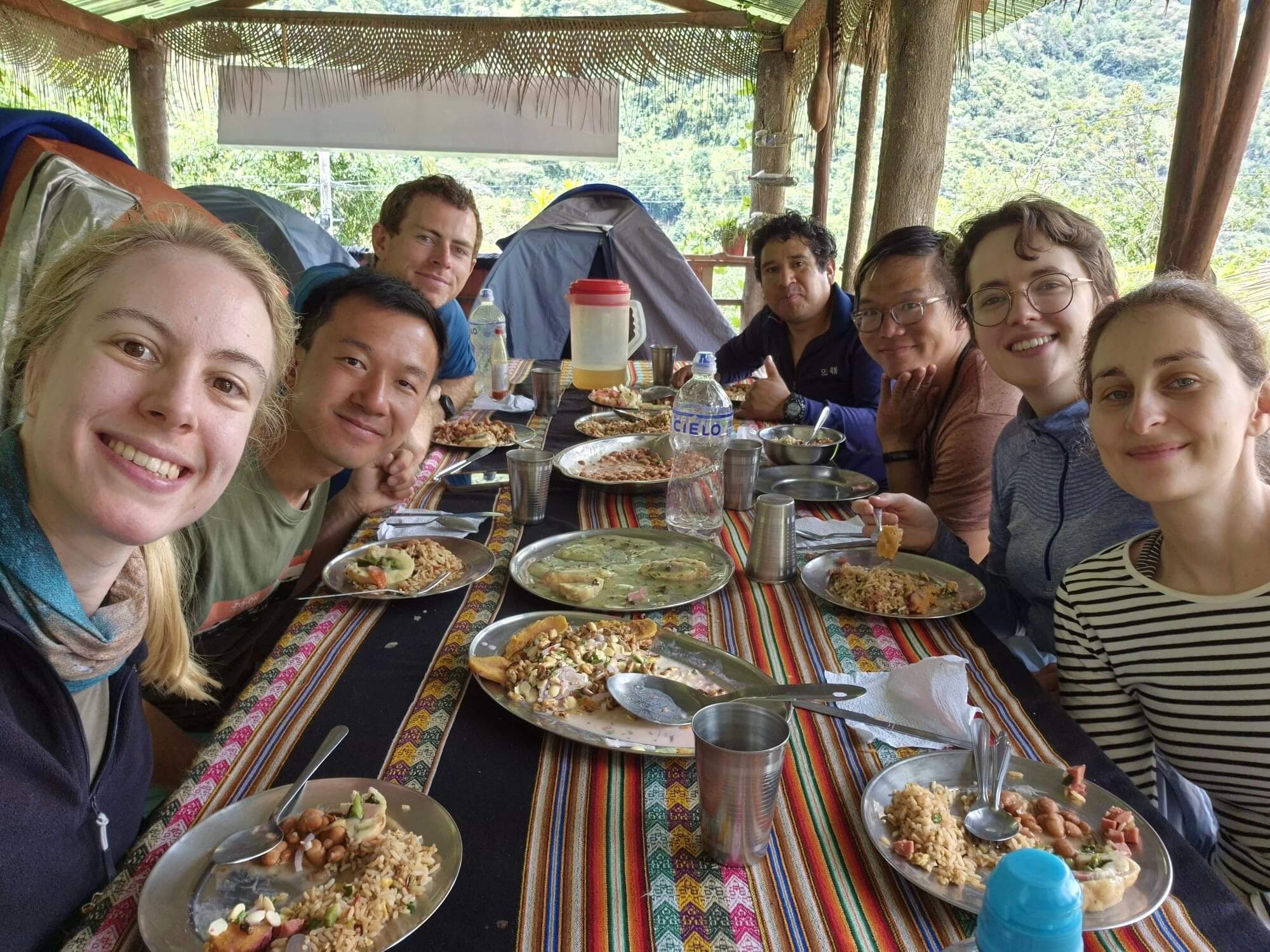
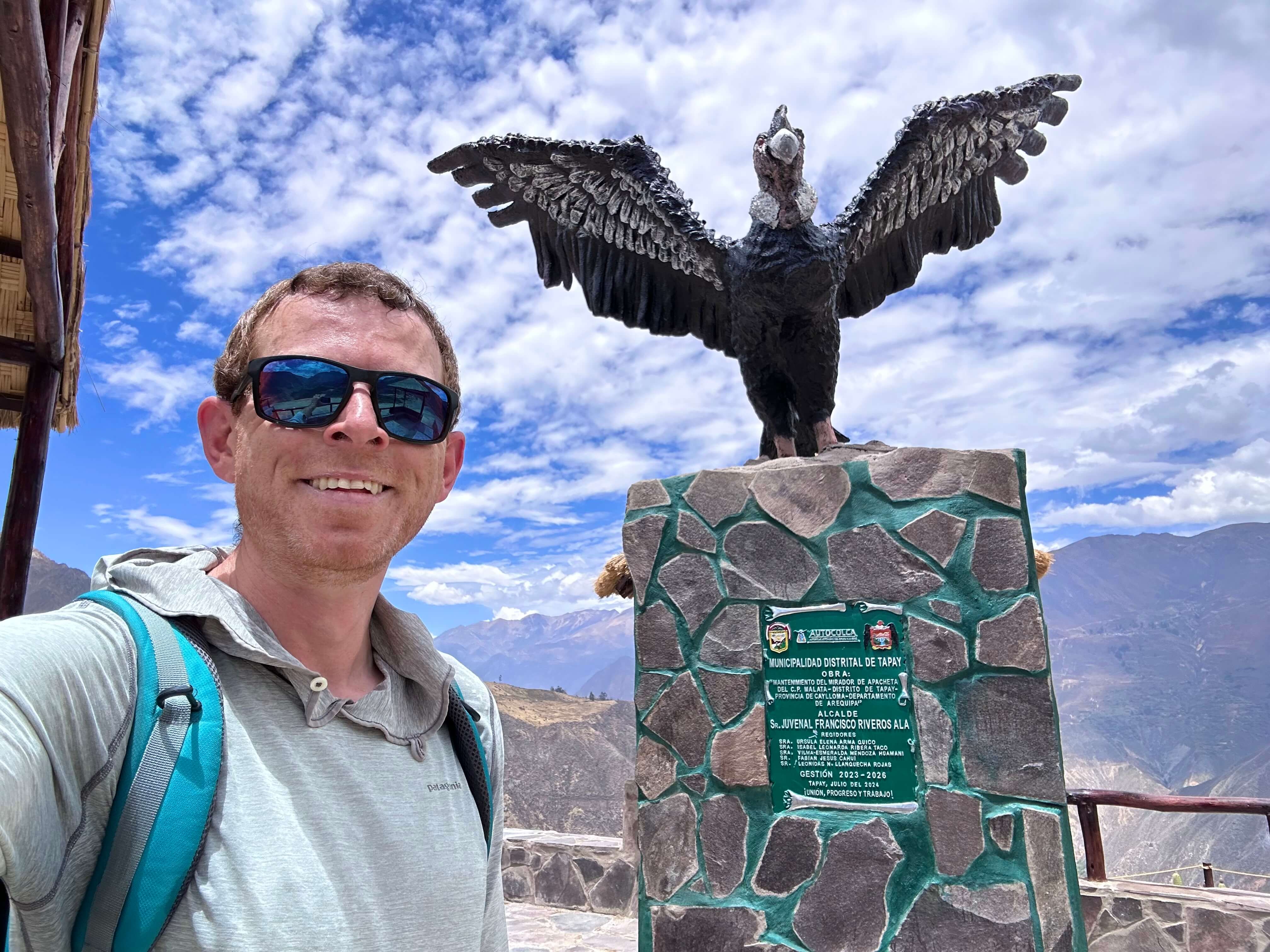
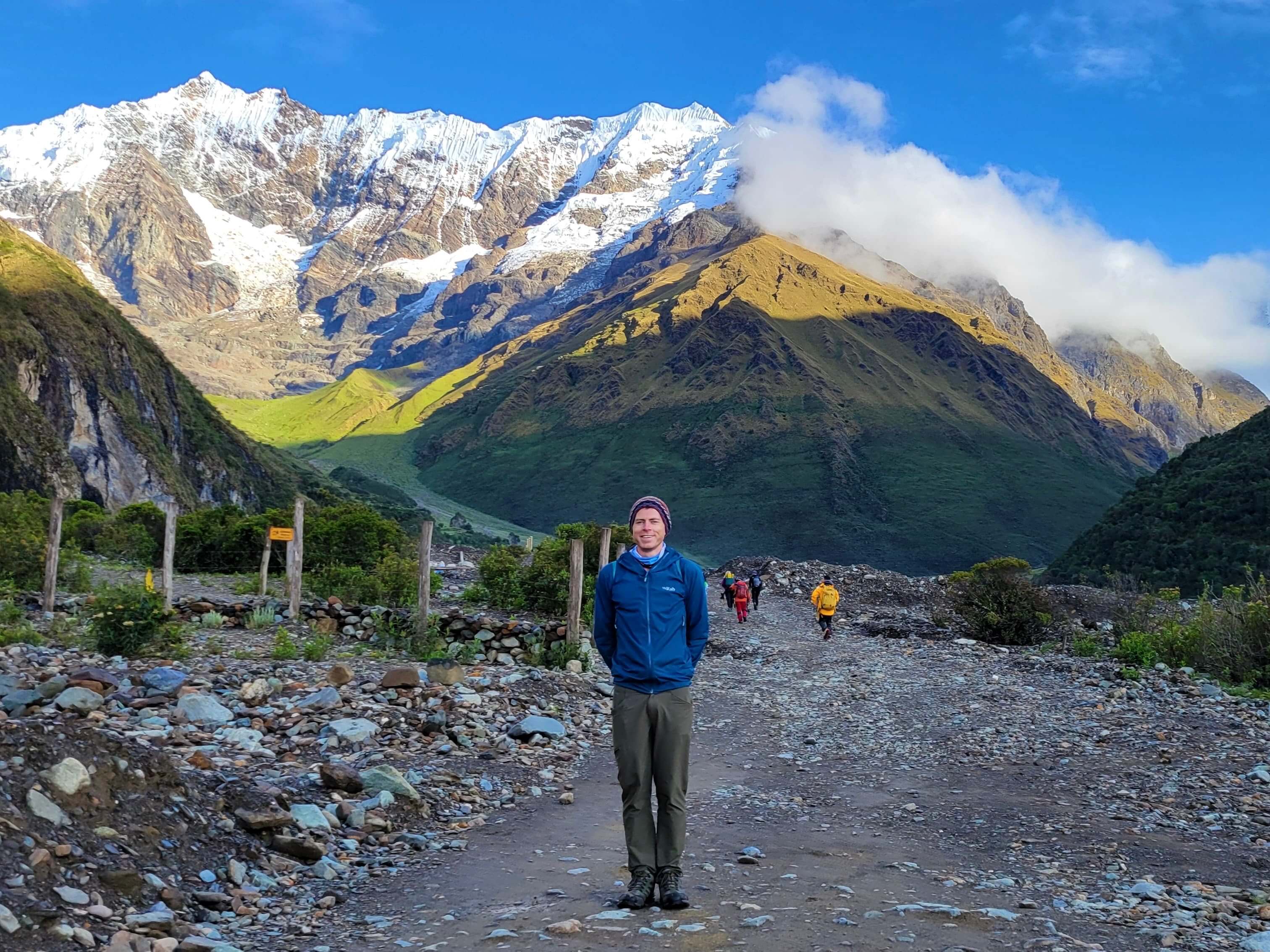
We were picked up at 5am by Cesar & our chef, Bisente. During the 4hr drive, and over nice pancakes, we got to know the other clients; Laura, Carol, Renata & Lee. Our start was a cold and unassuming roadside by a condor statue. From here, you walk up a grassy hill to reach an Inca road and aqueduct we’d follow all day. The water channels are 500 years old and still supply local villages. It’s remarkably flat, with a gentle downhill all the way to camp. Large birds flew overhead (which Cesar knew lots about), and cows wandered the fields below.
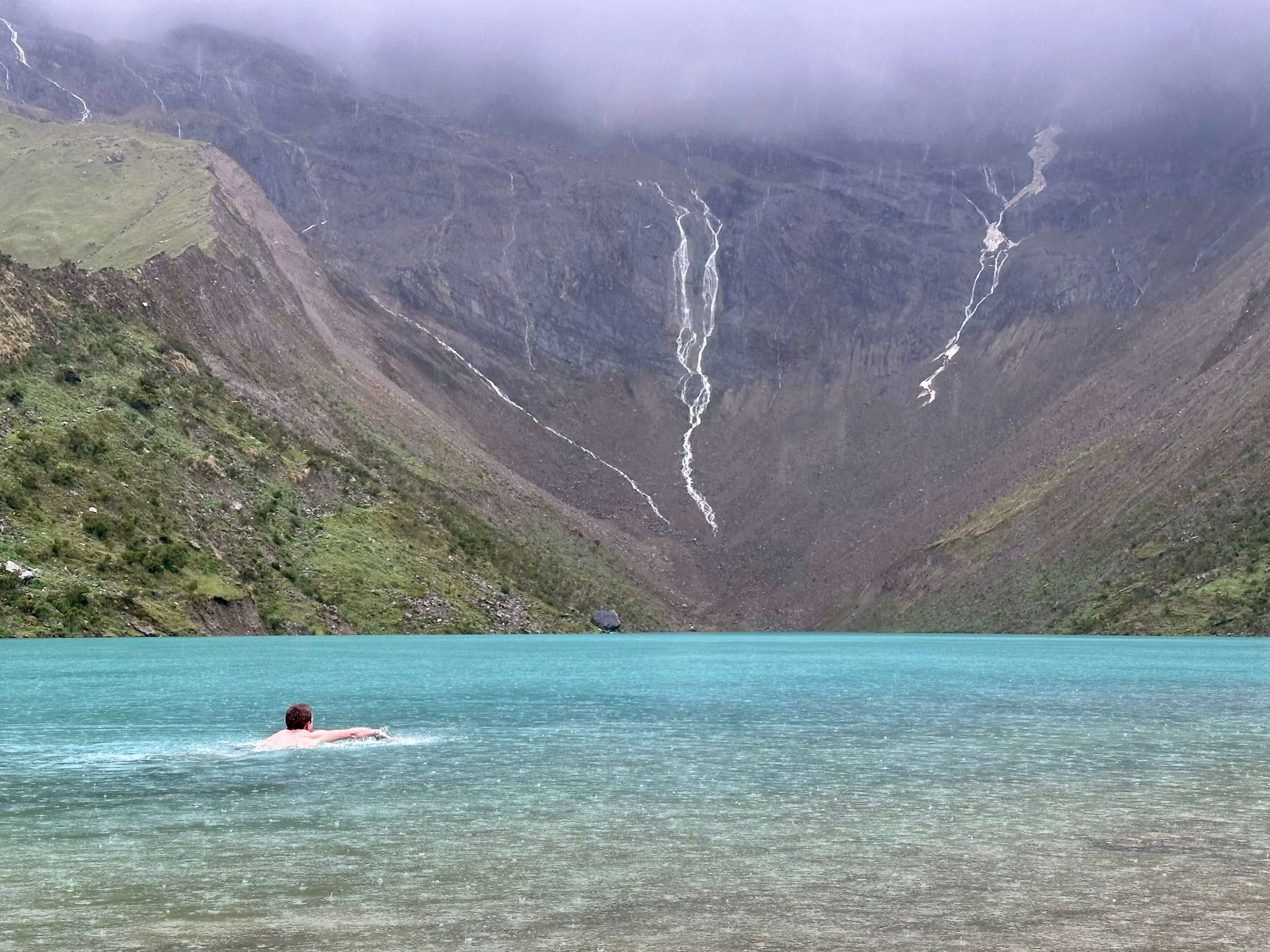
We reached camp quickly, leaving our gear in wooden cabins that only leaked a little. After some lunch we continued on over rocky rivers and bridges, then up a steep valley to reach Hamuntay Lake (4,200m). Heavy rain fell almost frozen, which gave us the lake to ourselves. No one wanted to spend much time in the storm, but I did go for a swim. It was nicer than the higher lakes on the Santa Cruz Trek, but I wish I brought a towel. Kevin led the fast charge back to camp where we thawed out with chicken, veggies and hot chocolate.
Day 2
Soraypampa to Collpapampa
Distance: 32.1km | Ascent: 910m
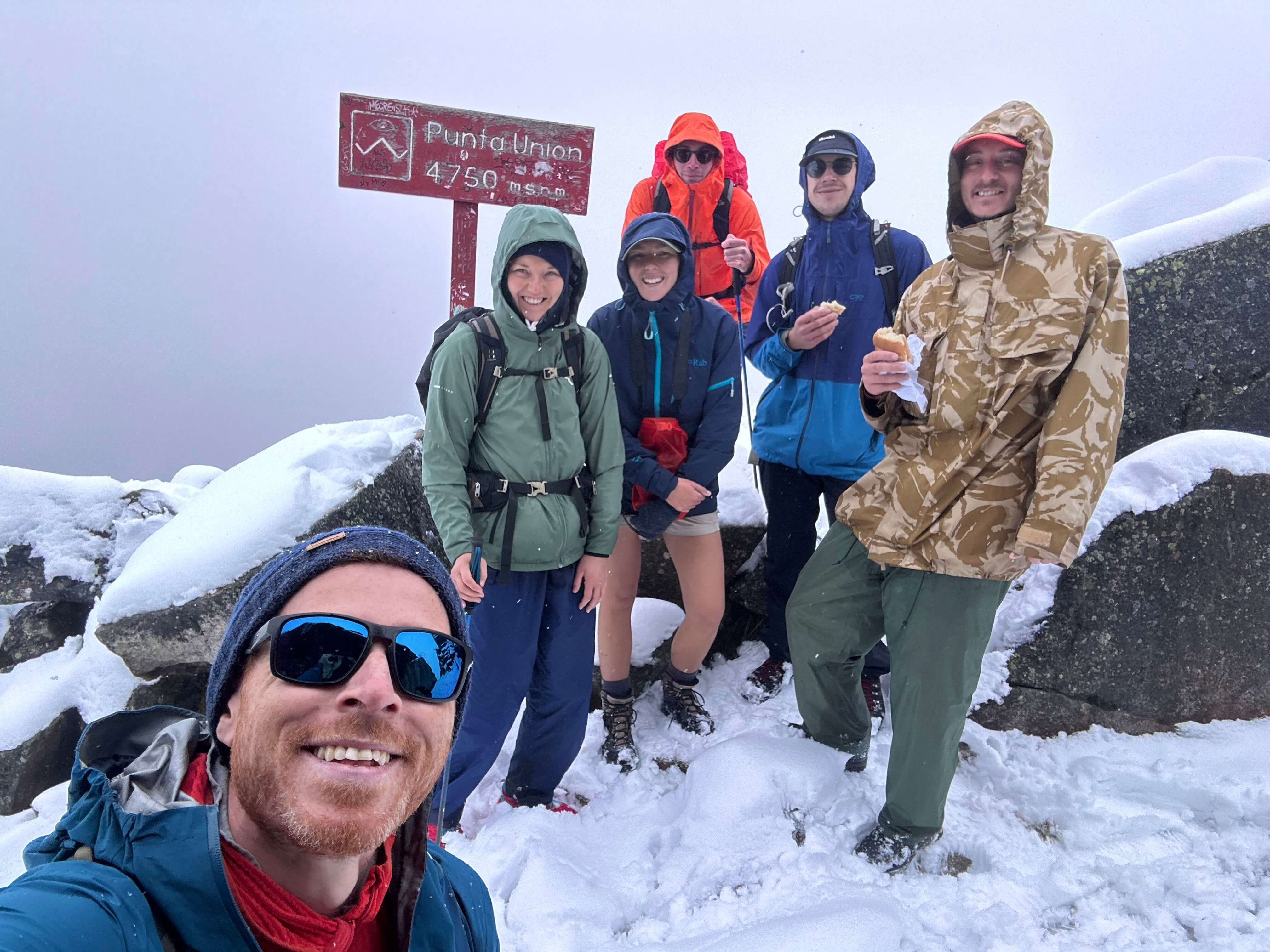
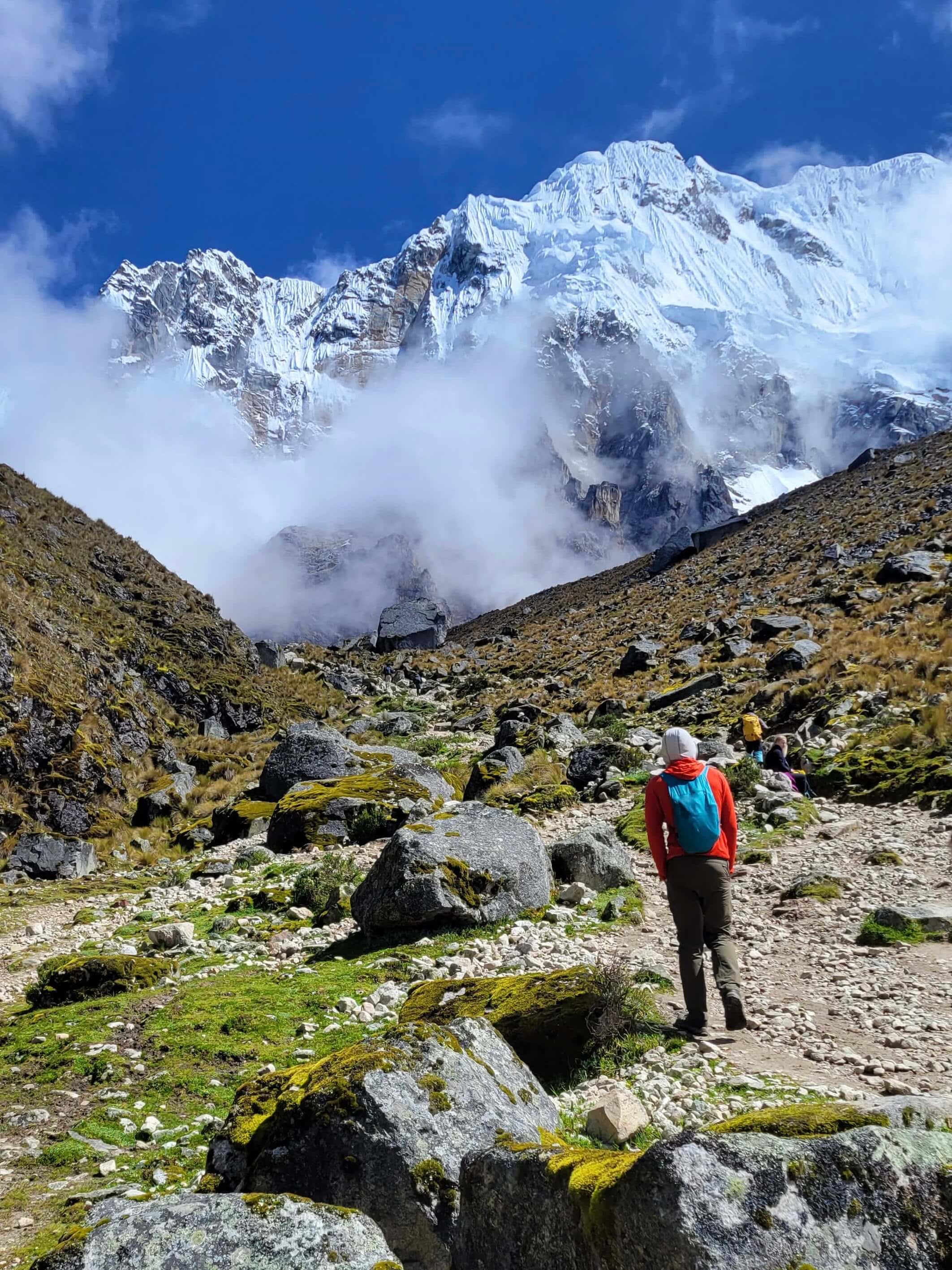
The calm after the storm. A stunning morning revealed the snowy peaks ahead. We walked for hours along beautiful rivers and valleys, wondering how nice the lake must look today. As we climbed, we began to see our goal; Salkantay Pass (4,630m). This crossing is why people say the route is more scenic than the Inca Trail, and luckily the weather was perfect for us. It’s a steep approach, and our group appeared well acclimatised with no issues all the way to the top.
We spent time taking photos on the barren rocks, then descended into the next valley. I saw rivers and fields ahead that looked remote and untouched, before a sudden dense cloud brought heavy rain. I trail-ran to the lunch stop to avoid the worst of it, and we had a nice break when the others arrived. The rain got worse so I ran the last hour too, allowing me an early shower and nap in our nice warm cabins. That night was calm again, and well spent as a group with good food, playful dogs, card games and hot chocolate.
Day 3
Collpapampa to Lucmabamba
Distance: 18.7km | Ascent: 100m
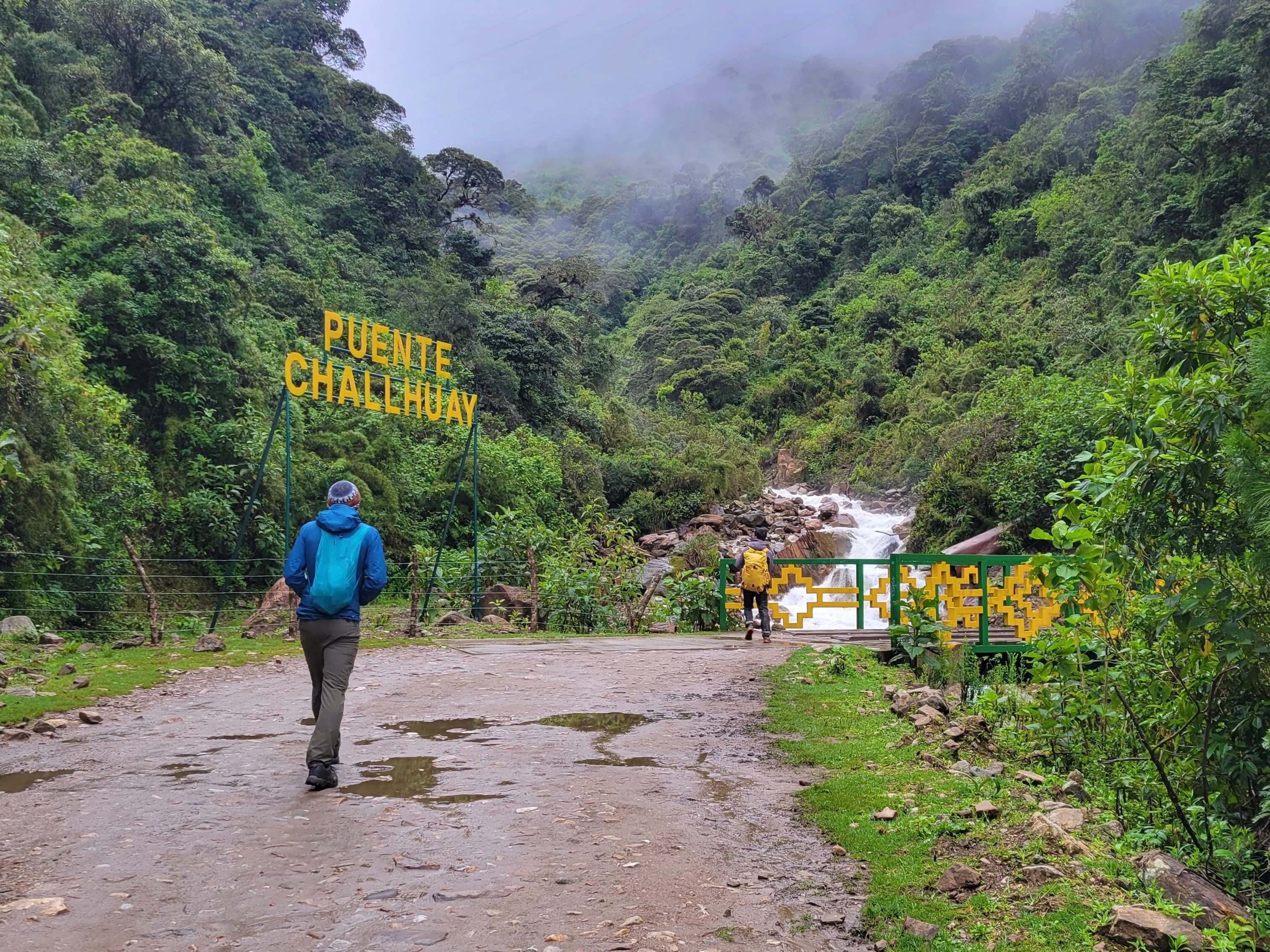
A whole day of huge rivers and deep valleys. There were no dramatic views of snow-capped peaks, but to me this was almost more beautiful. Huge rapids like you’d see in India had me constantly excited, discussing kayaking lines with Kevin. Our route was mostly gradual track, except a few very steep and very muddy exceptions. We crossed big bridges and fjords, feeling tiny compared to the huge jungle and waterfalls around us.
We had a short stop for lunch, then after some confusion finally found our accommodation. The weather stayed nice so we did a chocolate tour. This had us picking cocoa beans and sucking the citrusy pulp from the seeds, then with dried ones we roasted and deshelled to make nibs, and boiled that into hot chocolate. In the evening we drove to Cocalmayo Hot Springs which is beautiful, swimming under the stars. Back in the village we spent our night with beers while all watching Klaus (it was quickly approaching Christmas).
Day 4
Lucmabamba to Aguas Calientes
Distance: 24.7km | Ascent: 1,250m
An original Inca staircase rises from the village and took so long to climb. It brought us into humid rainforest, with great views at any clearing. On top was a small observatory and the first glimpses of Machu Picchu, though still too far above to really see. On our descent to the final valley we passed Llactapata, a building thought to be a rest stop and road side shrine. Here Cesar gave us the full history of the area.
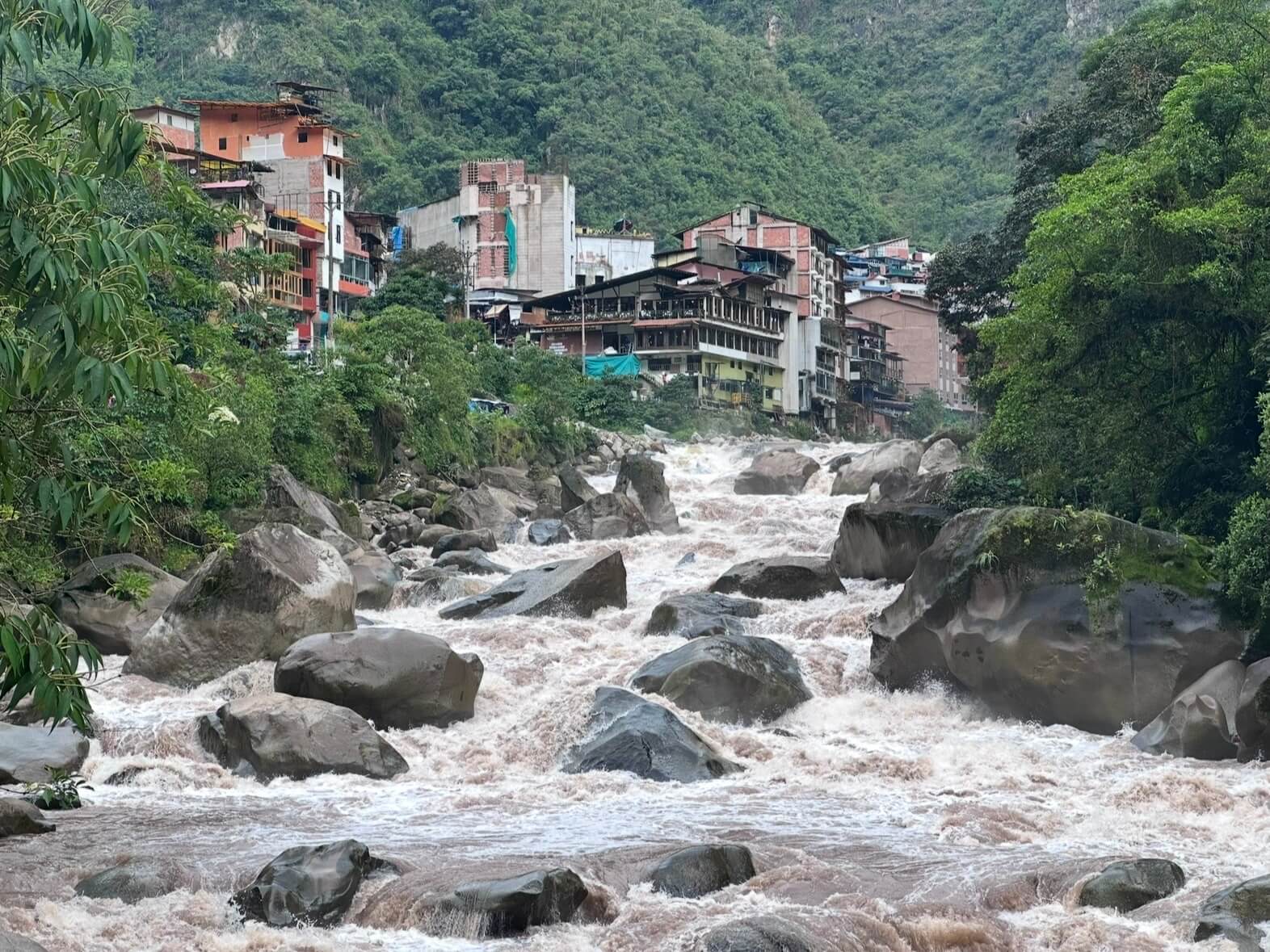
On the valley floor, we followed the Alcamayo river on its horseshoe around the base of Machu Picchu. This brought us over bridges and a dam to our lunch stop in the aptly named town of Hydroelectrica. Then 10km of train tracks wound their way to Aguas Calientes. It was a slog in the heat, but very pretty, and the rapids were amazing. Stalls lined the edges with empanadas, ice cream and cakes that we couldn’t resist with our hiker hunger.
A simple hostel and a well deserved shower had us ready to explore. I bought badges in the massive market, saw the hot springs that give the town its name, followed the river looking for the biggest rapids, and got photos with all the cool statues and carvings. Kevin & I got a nice dinner by the waters edge with people we met at the hostel, and finished the night with the national drink of Peru; Pisco Sours.
Day 5
Aguas Calientes to Machu Picchu
Distance: 14.5km | Ascent: 660m
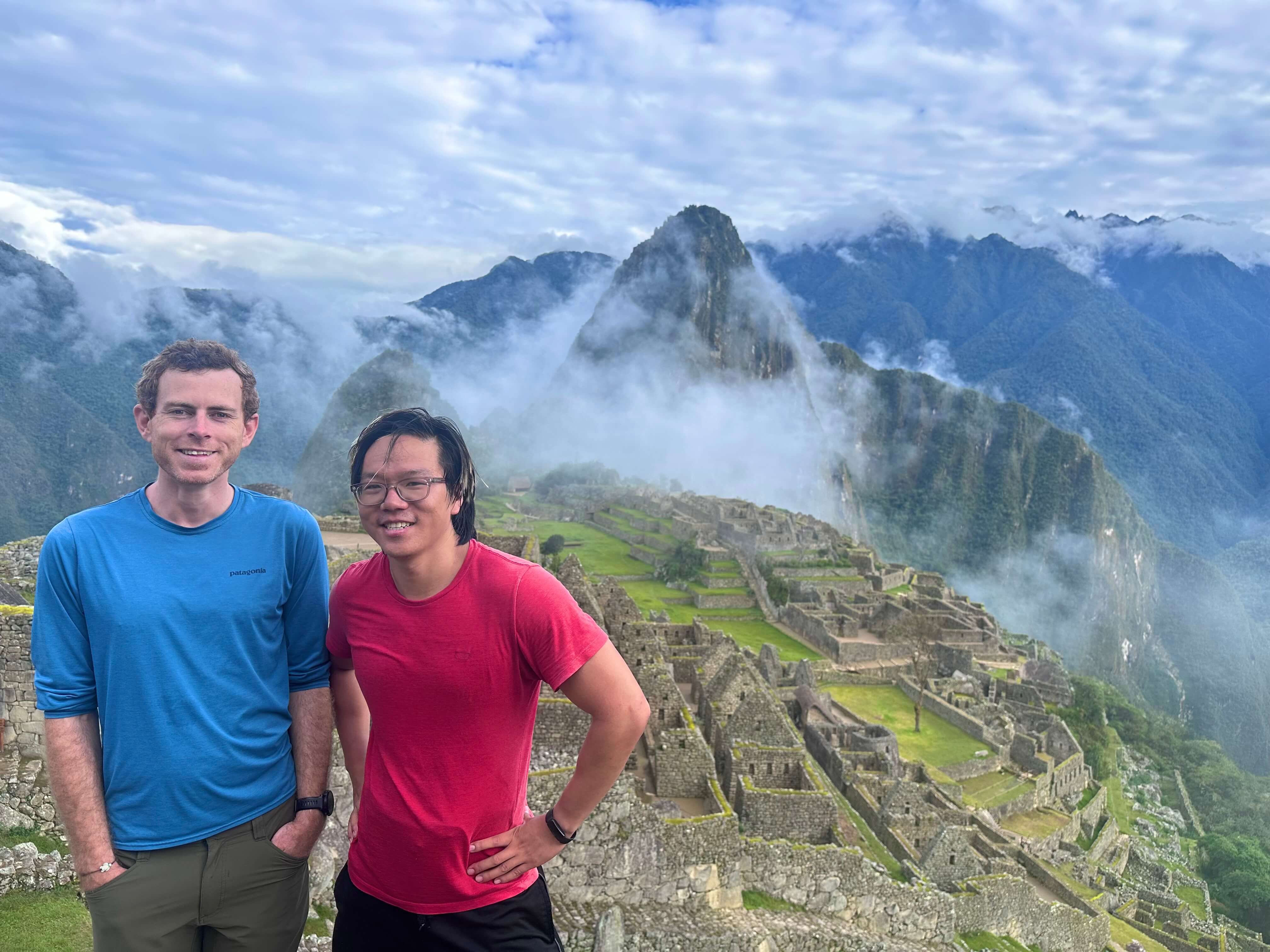
We left at 5:00am to tackle the final 1,800 steps. It was pitch black, following the river to a bridge, then trudging up the steep trail. Cesar took the zig-zagging bus with some of the others, but these final steps felt important after the past few days. Kevin & I reached the top just as the sun rose, and were one of the first to enter that day. The light morning fog lifted as if just for us. I had now seen five of the Seven Wonders, and this was easily the most impressive.
Machu Picchu is massive, and so dramatically framed by nearby peaks. Over 150 buildings are perfectly preserved, supported by the terraces the Incas were known for. Granite stones weighing up to 55 Tonnes have been perfectly carved to fit one another, and we walked along all the irrigation systems, fountains and baths. Observatories had water mirrors on the ground which were used to know the date, and stone pegs show how roofing was tied down. This was easily one of the most amazing things I had ever seen, walking alongside llamas high above the clouds.
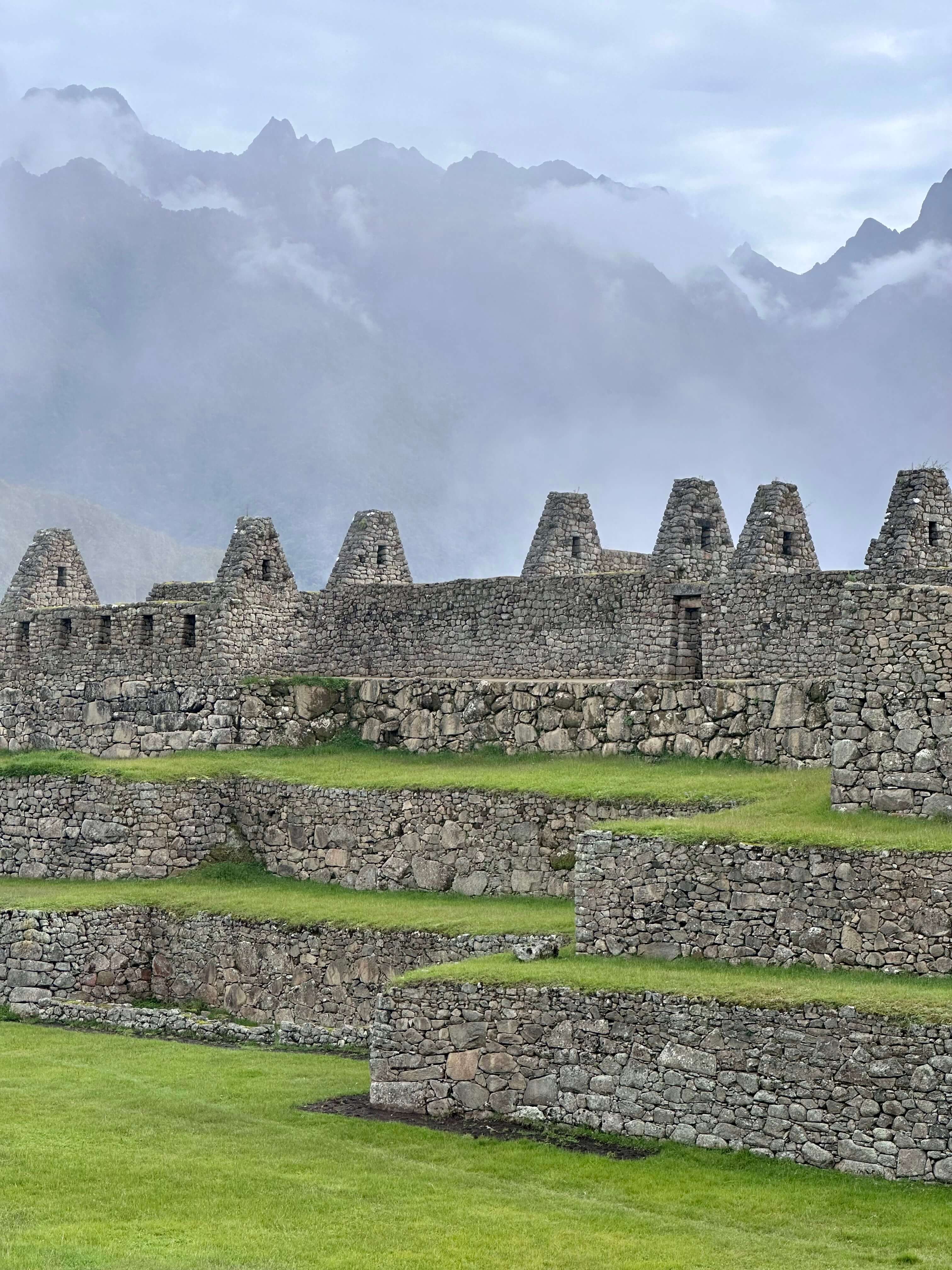
Kevin & I did make a mistake when we entered early, not knowing the routes are strictly one-way, even when empty. It took some effort but we managed to get back to Cesar for the tour with our group. He told us about the Inca Trilogy; the Condor, Puma & Snake which represent the Sky, Earth & Underworld. He showed how Machu Picchu is distinctly shaped like a Condor, drawing connections to Cusco which is shaped like a Puma. He pointed out the mortarless masonry and wall designs which have survived earthquakes, and described what various buildings were thought to be for.
And suddenly it was over. We were descending the steps, collecting our bags, and sitting on the most scenic train I’d ever been on. We watched the valley disappear behind us, and that night were back in the hustle and bustle of Cusco. Kevin & I got dinner with Renata and already reminisced. We were excited for simple things like washing our clothes and a day of not walking, but we knew the experience had been special.
Afterthoughts
This might be the best experience on Earth and anyone considering should just go. Peru is second only to New Zealand as my favourite country, and this is the perfect culmination of a trip there. The hike is brilliant and made getting there more rewarding, but even if the train is all that’s accessible to you it’s so worth seeing. I think everyone should stay in Aguas Calientes though, no day trips!
The Salkantay Trek is a pretty route, with a nice mix of mountains, lakes and jungles. I’m not going to say it’s the most spectacular hike in the world, especially compared to the TMB or hikes in Patagonia, but for the normal person it is uniquely beautiful. If you can get a permit for the Inca Trail I reckon they’re far more similar than different. It’s really about spending time in the area, learning about the local culture along the approach, and building an appreciation for the significance of what you’re walking to.
I think we got lucky with our group, and lucky when it mattered for the weather. There were a few times that better communication from Cesar would have led to less confusion, but he was knowledgable, friendly and represented Machu Picchu Expeditions well. It’s always nice to share an experience like this with others, so the memory can be confirmed as real. Having Kevin who at this point was a pro-hiker with me was great, laughing our way through it all. I’m very thankful to have had this experience.
Thanks for reading,
Brian