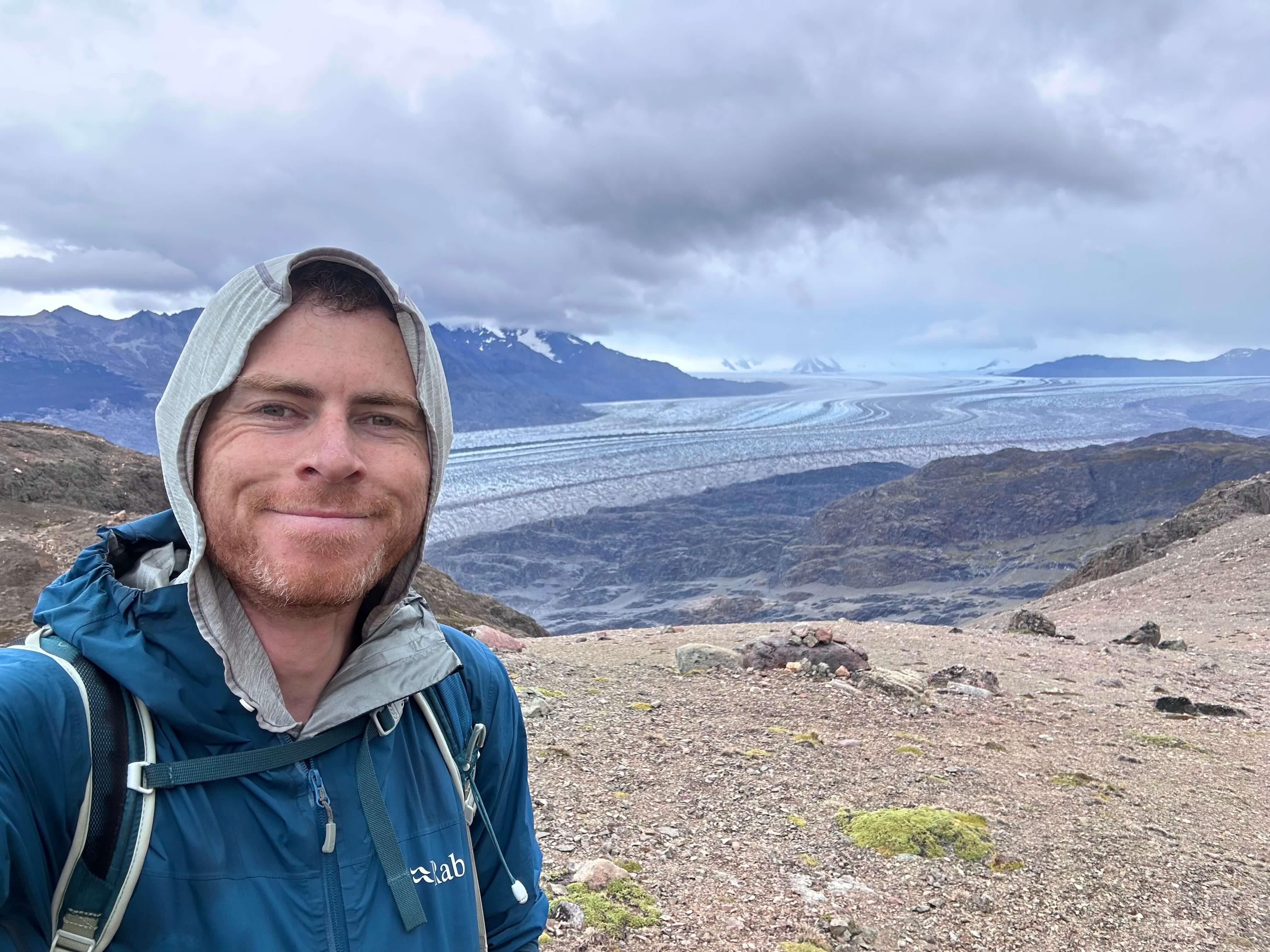

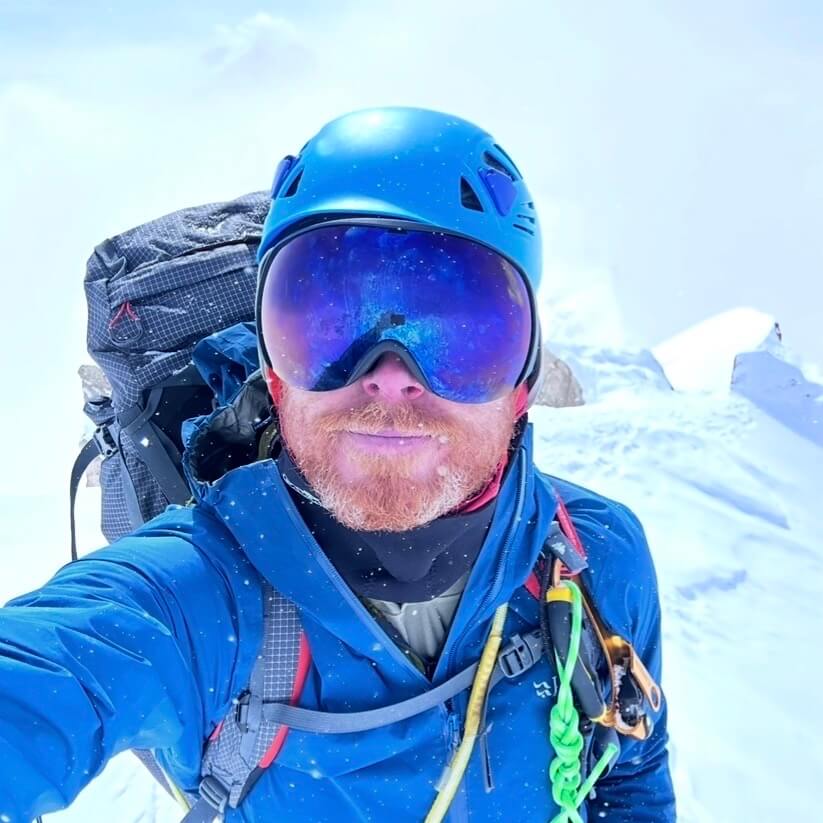
It had been an adventurous few weeks on Aconcagua and the O-Trek. Moving deeper into Patagonia brought me to my next big hike, the notorious Huemul Circuit in Argentina. This is often called Patagonia’s most difficult hike. All I knew beforehand was the terrain is rough and slow, some parts are on a glacier, and big rivers are crossed by tyrolean traverses where you pull yourself across on a wire. That was enough to convince me.
Introduction
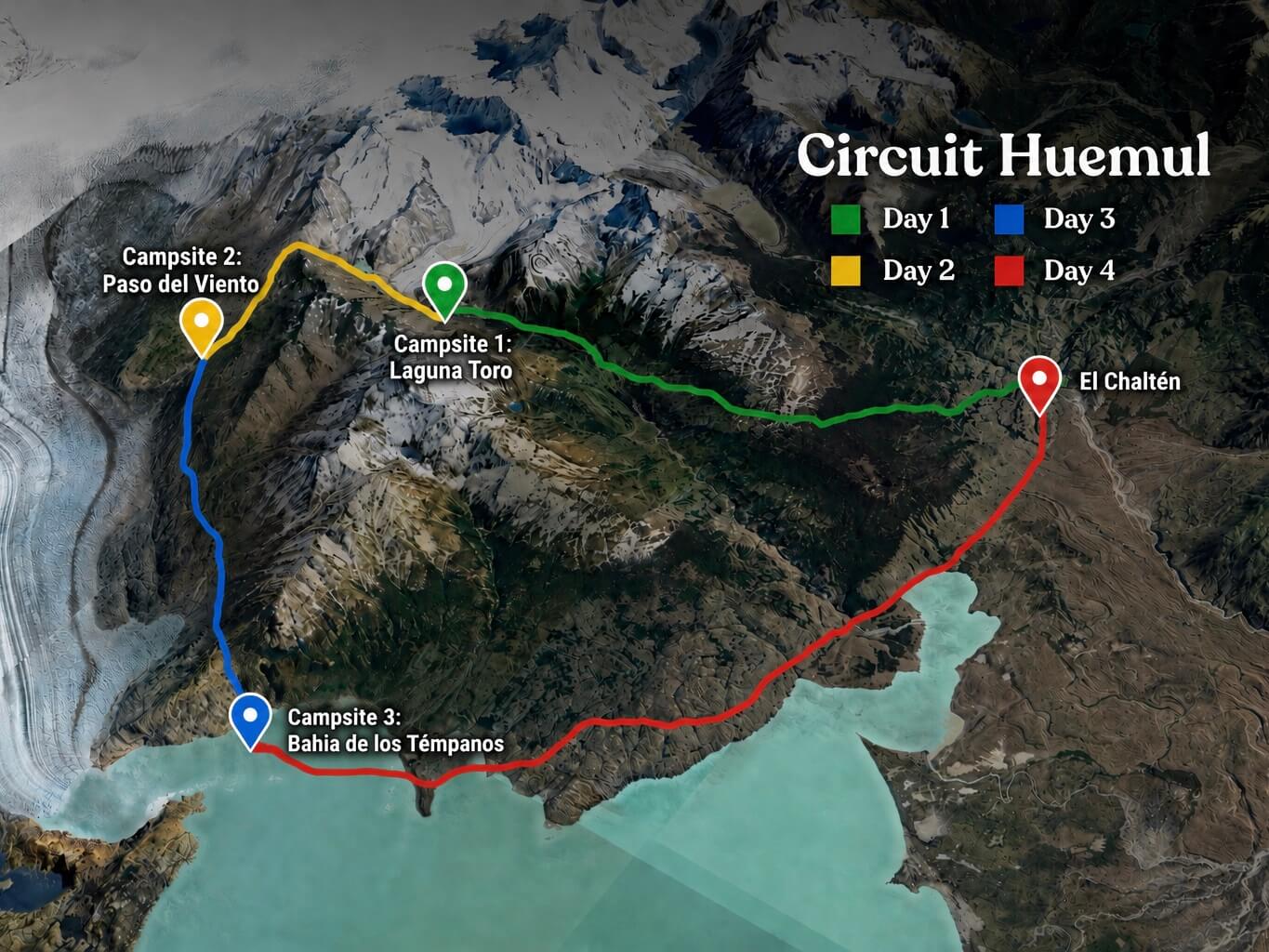
The Huemul Circuit is a remote loop in Argentina’s Los Glaciares National Park, beginning and ending in El Chaltén. Most people hike it in four days, camping at Laguna Toro, Paso del Viento and Bahia de los Témpanos, though I combined the first two days. The route crosses rough scree slopes, muddy forests, glacier viewpoints and two tyrolean traverses over glacial rivers.
What makes the hike famous is its proximity to the Southern Patagonian Ice Field; the third largest ice field outside Antarctica and Greenland. Huge glaciers spill into valleys filled with turquoise lakes and floating icebergs. Weather changes constantly and the winds can be brutal. Compared to the crowds around Fitz Roy (the most popular hike in Argentina, and the mountain on the Patagonia logo), very few people hike the Huemul Circuit. It still feels wild.
Arrival in El Chaltén
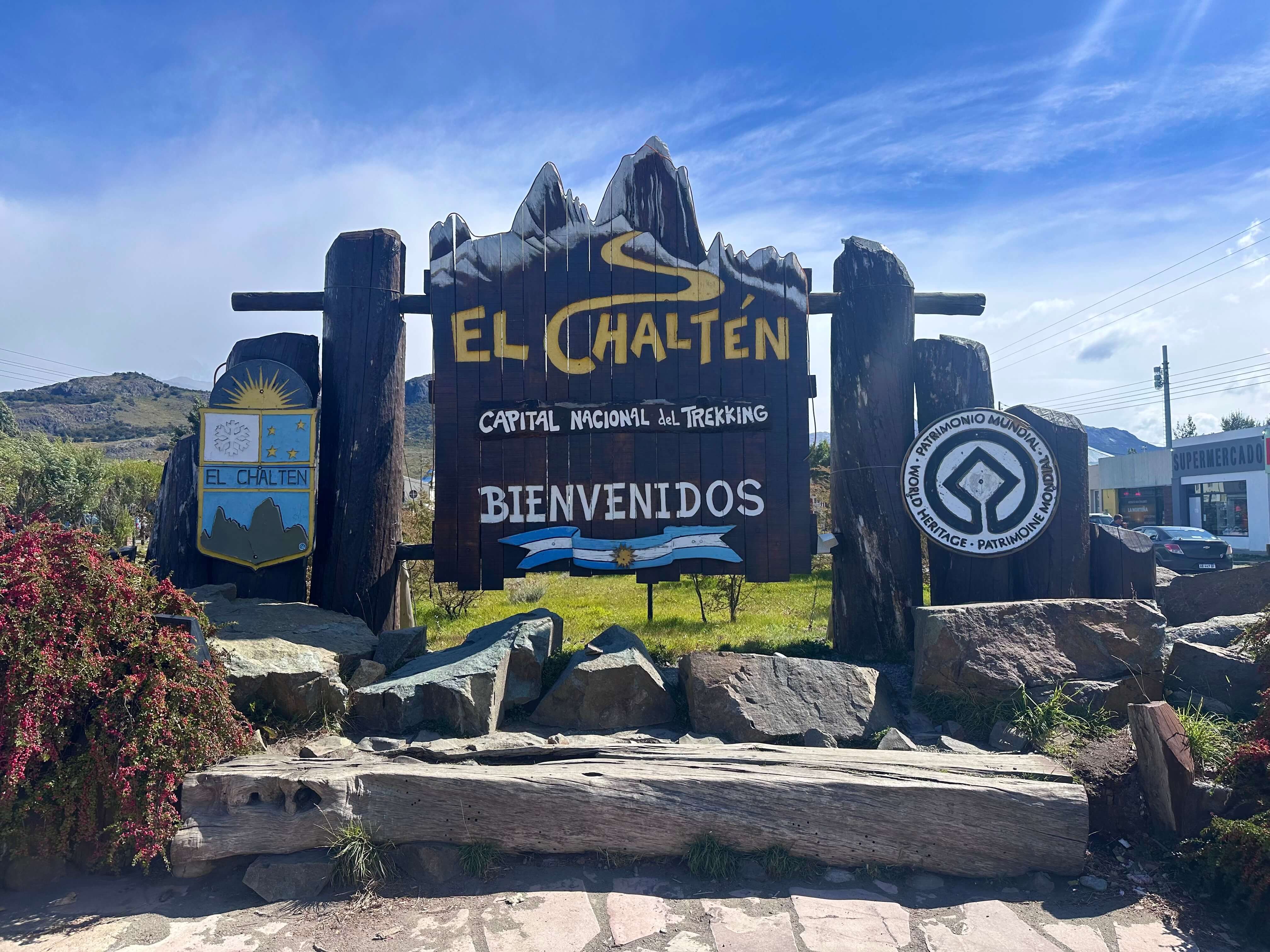
My bus arrived in El Chaltén late and I found my hostel. I’d planned to hike Fitz Roy the next day, but there was a three day weather window ahead of a big storm that I didn’t want to waste. The Huemul needs good conditions, so I’d combine the first two stages to finish while the weather was on my side. I sorted my gear, stored what I wouldn’t need at the hostel, and in the morning ran my errands.
Gear rental in Patagonia is expensive, which made me glad I had my own tent, sleeping bag and ground mat. I only needed to rent a climbing harness and carabiners for the tyrolean traverses. I priced every rental shop in town and the cheapest still cost more than buying a new one at home, but beggars can’t be choosers.
I stocked up on equally expensive food for the trail, which was mainly porridge, wraps with salami, and noodles I’d cold soak for dinners. Plus loads of cheese, nuts and snacks. Shops didn’t open until 9:00am, so I was at the trail a little later than hoped at 10:00am.
Argentina had just introduced a new national park entry fee, costing around $30. Their card systems were offline when I arrived so everyone was waved through for free. For any other hikes in the area you can just enter the park from any of the countless trails that have no warden hut, or go before 9:00am when they start work to avoid it. For the Huemul I had no choice but to pass this entrance, so this was a lucky start.
Day 1
El Chaltén to Paso del Viento
Distance: 30.2km | Ascent: 1,620m
Near the trailhead there’s a ranger hut where you fill out an online form in case you go missing, then show proof before being allowed continue. The ranger wished me luck and I headed up the valley, looking right towards the huge granite towers and wondering which one was Fitz Roy.
The first section was fast and easy. Nice lake views beside the trail and snowy mountains on the horizon. I finished the Day 1 section in three hours and had lunch at the Laguna Toro campsite. The only people here were some climbers from Colorado, on their way down from a summit that morning.
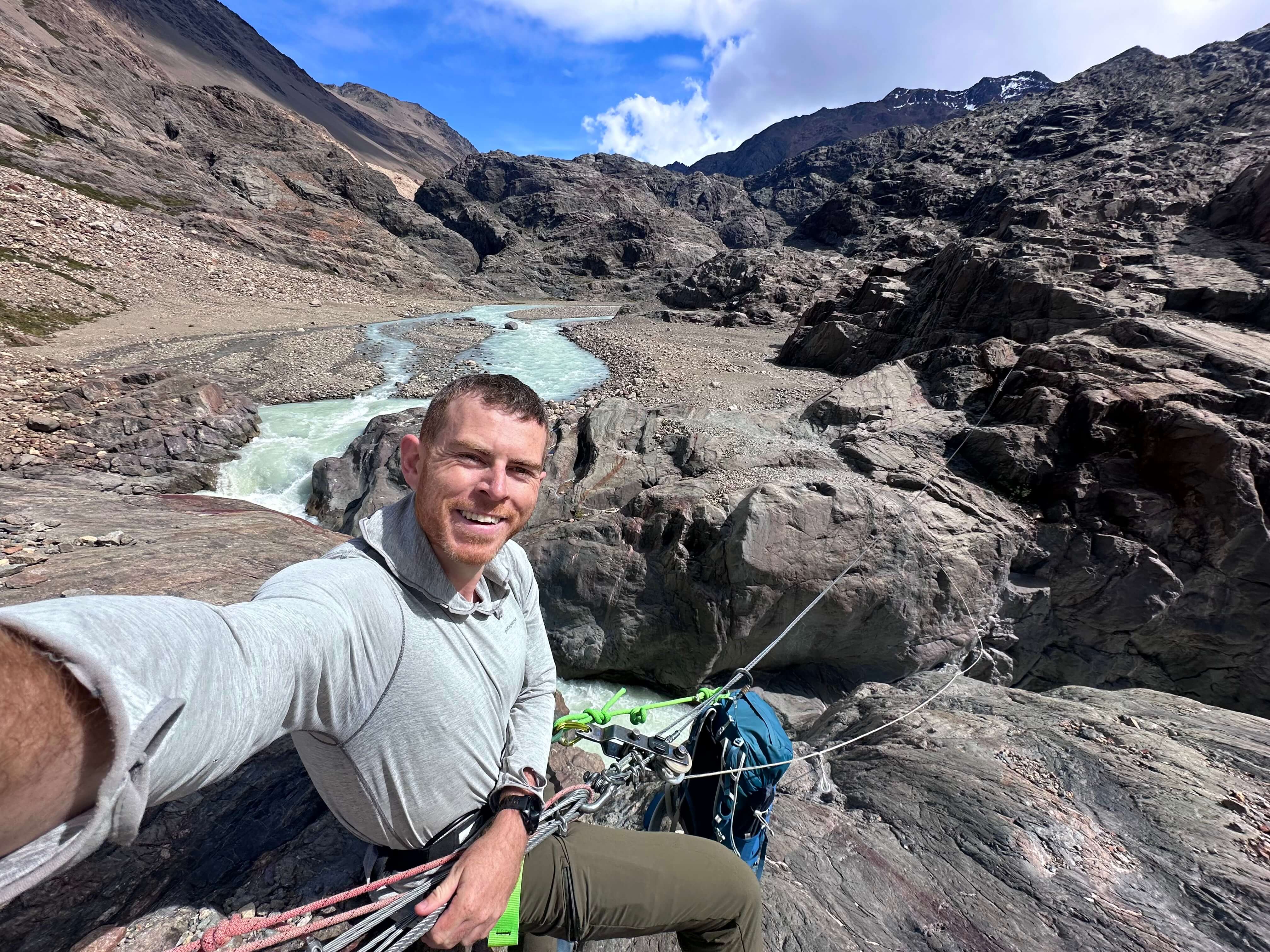
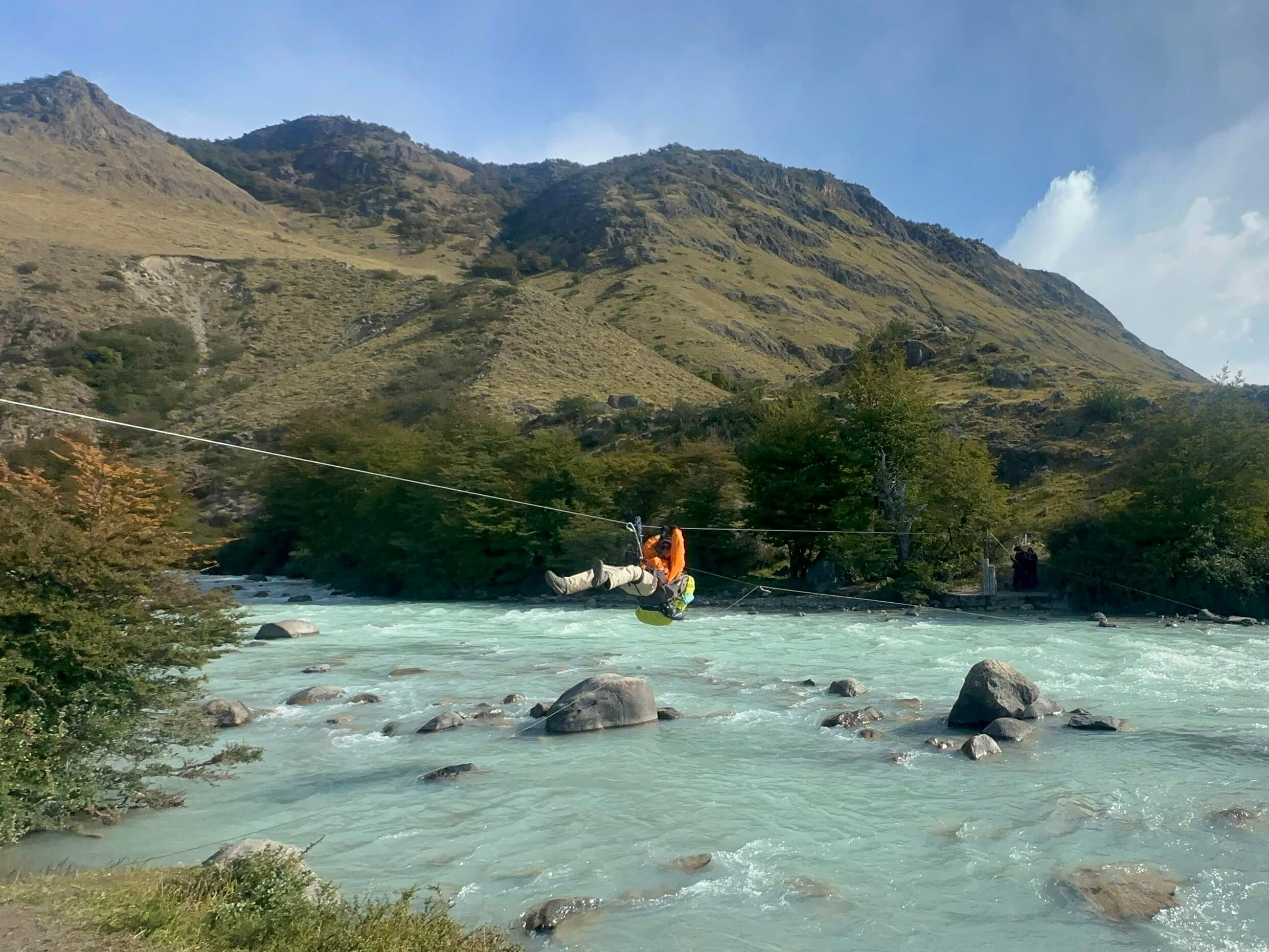
From there the trail became rougher. Steep rocky climbs, loose scree and sections where the route became difficult to follow. Then came the first tyrolean traverse which was terrifying.
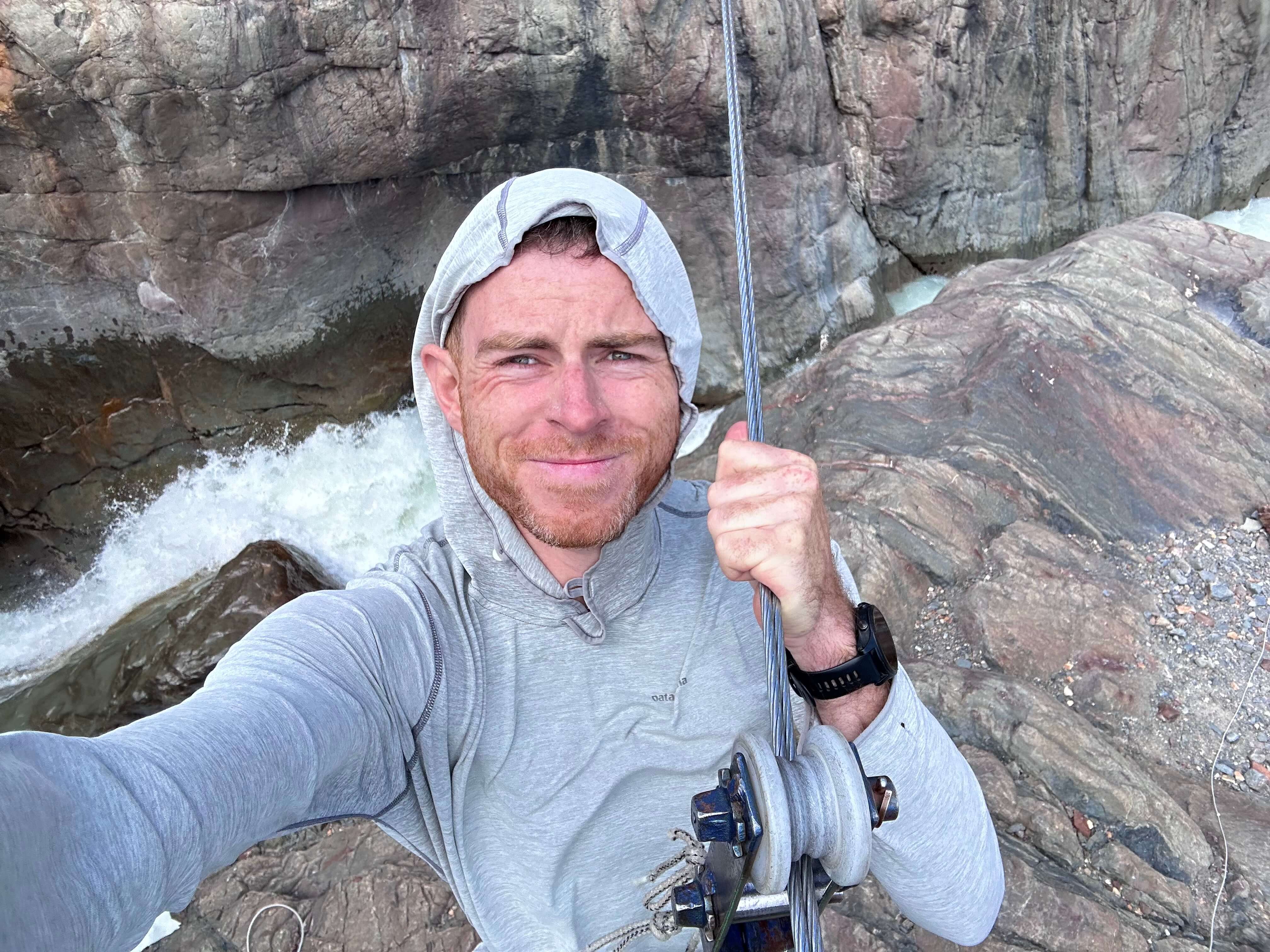
The rapid below is violent and deafening. I’d studied videos the night before on how to cross them properly, but I still doubted myself as I hung above the water. Pulling yourself across is surprisingly exhausting as it’s slightly uphill too. I was very relieved to reach the far side, and walked down to the rapid so I could look up at the wire.
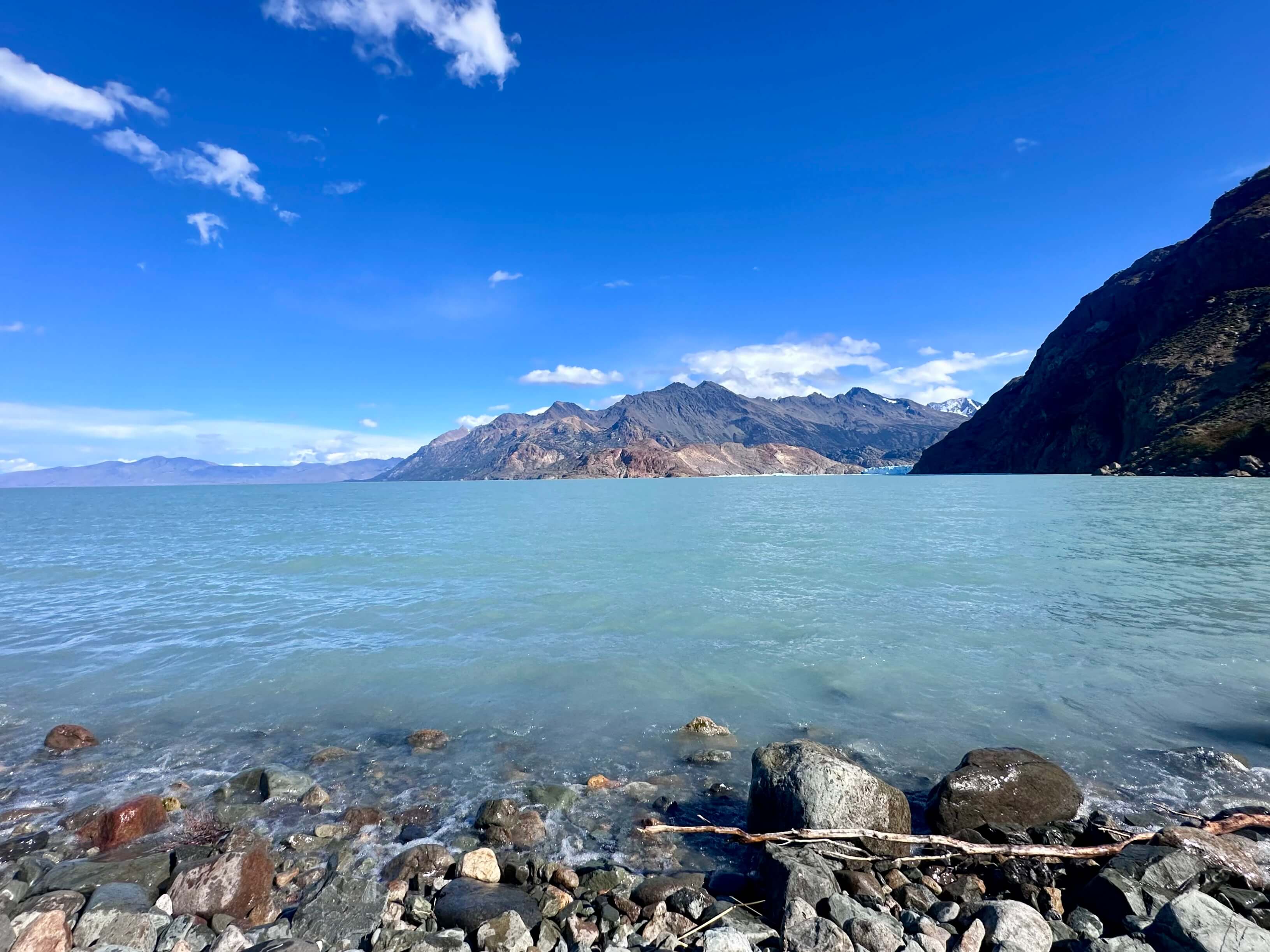
It got a lot windier as I moved onto the glacier section. The ice was littered with deep crevasses that made it too dangerous to walk over, so I followed scree along the left edge instead. The glacier turned bright blue and seemed endless. Navigating around collapsed icy sections was awkward, but eventually I reached the far side and climbed a pass beside a roaring river. The view back over the ice field was unreal.
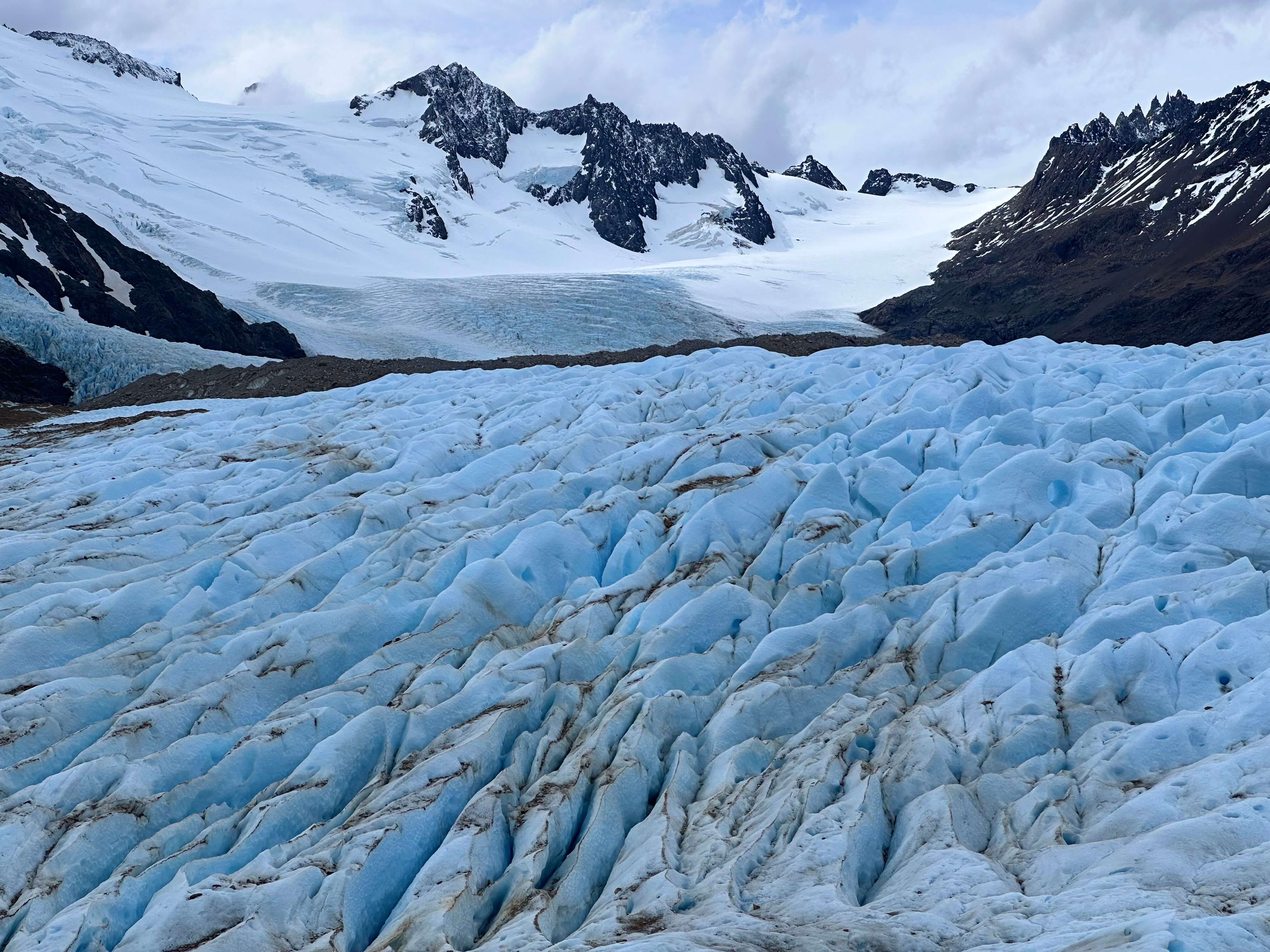
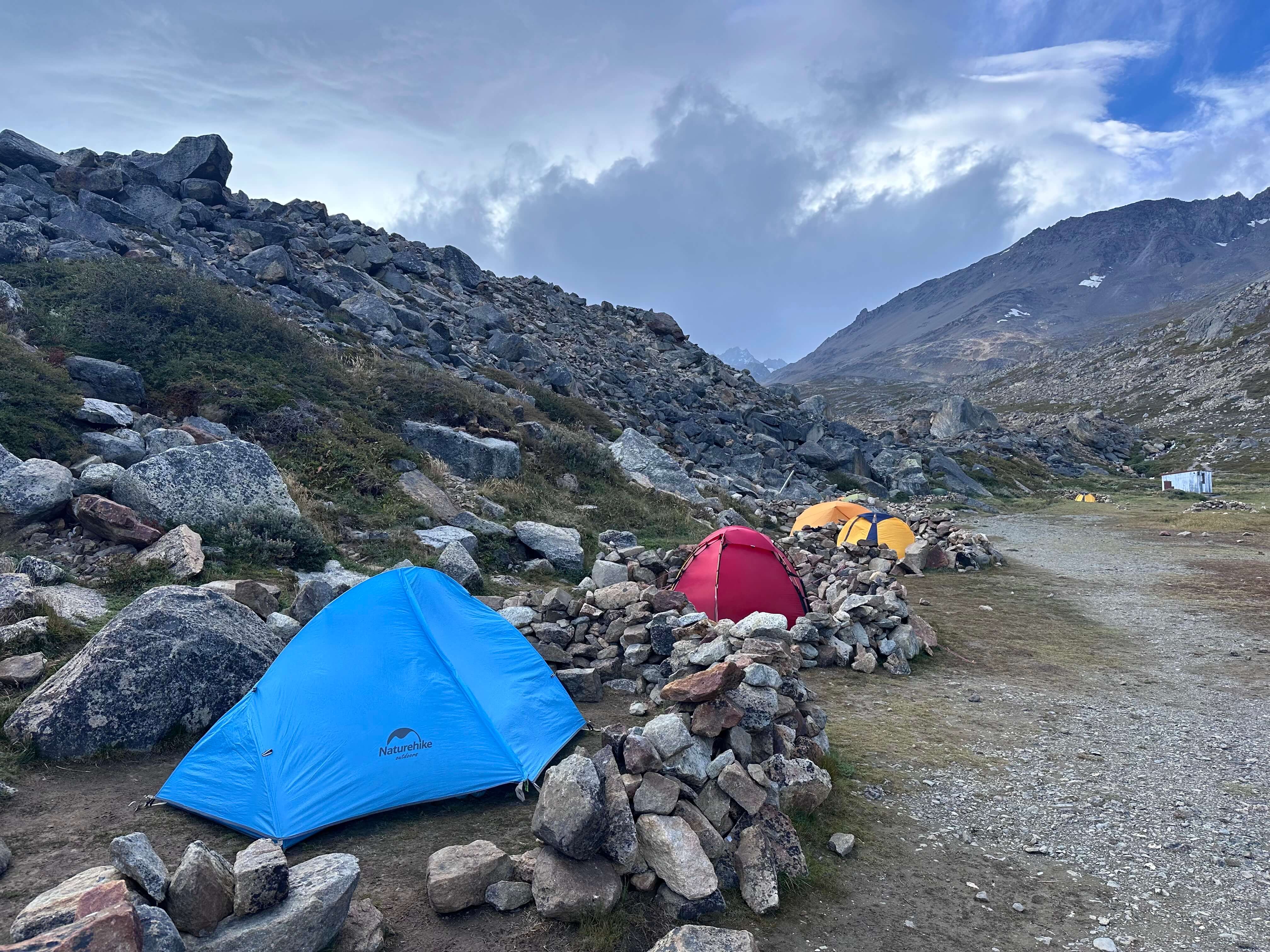
The ground was scattered with bright, mineral covered rocks. On top of the pass were small alpine lakes, and a view of even more glaciers beyond. I descended on loose scree towards my campsite at Paso del Viento and tucked my tent between rocks on the lake edge.
There were six other tents, all trying to beat the same storm. A few swam in the freezing lake, while I filtered water from a nearby stream and chatted to my Australian neighbor. Rain that evening had us retreat to our tents, but I was happy to have a movie night with snacks. Something I had missed while travelling.
Day 2
Paso del Viento to Bahia de los Témpanos
Distance: 15.1km | Ascent: 530m
Today looks short, but doesn’t feel like it. Up and down scree slopes following a glacier, on slow and rough terrain. The views get more impressive as you climb towards todays high pass. From the top you see the full vista behind you, and you finally see grass and beaches instead of scree ahead.
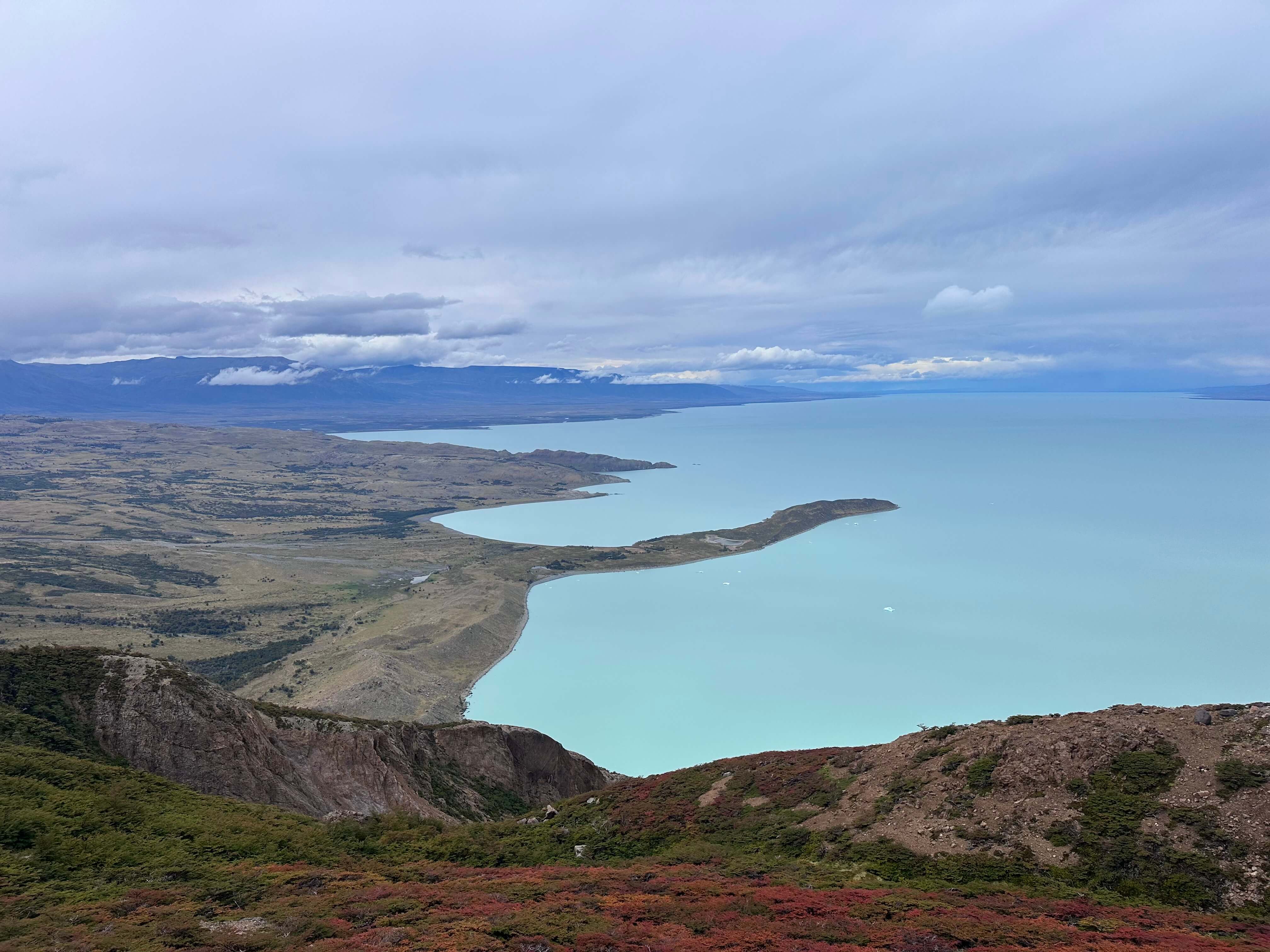
The descent is rotten. Steep mud, slippery roots, and loose rock the entire way down. Even in mostly dry conditions it had me cursing out loud. Calling this the hardest hike in Patagonia is an exaggeration, but this descent helps the case. As you enter this next valley you forget about the icy glaciers and scree of the past days, seeing only green peninsulas and huge lakes with icebergs floating in them.
I found a great spot beside a lake, setup my tent, dried my gear in the sun, and sat with my feet in the water. It was one of the nicest camp spots imaginable and made todays hardship worthwhile. Only two tents were setup there as everyone else camped higher near the main trail. That evening strong rain and wind returned so that meant another movie night, which was no harm.
Day 3
Bahia de los Témpanos to El Chaltén
Distance: 25.2km | Ascent: 920m
I got such a fright when I woke up. A mouse had chewed through my tent and eaten my wraps. This happened to me years ago on the West Highland Way so I obviously hadn’t learned my lesson about storing food beside lakes. I frantically checked my bag to make sure he wasn’t in there, but he was long gone.
The morning was gloomy and windy. I moved quickly through grassy valleys, muddy bogs, and long beaches while fog slowly lifted from the mountains. The second tyrolean traverse had a queue where people struggled to get on and off the cable. Luckily they let me pass which I did quickly. It was much more chill than the last one.
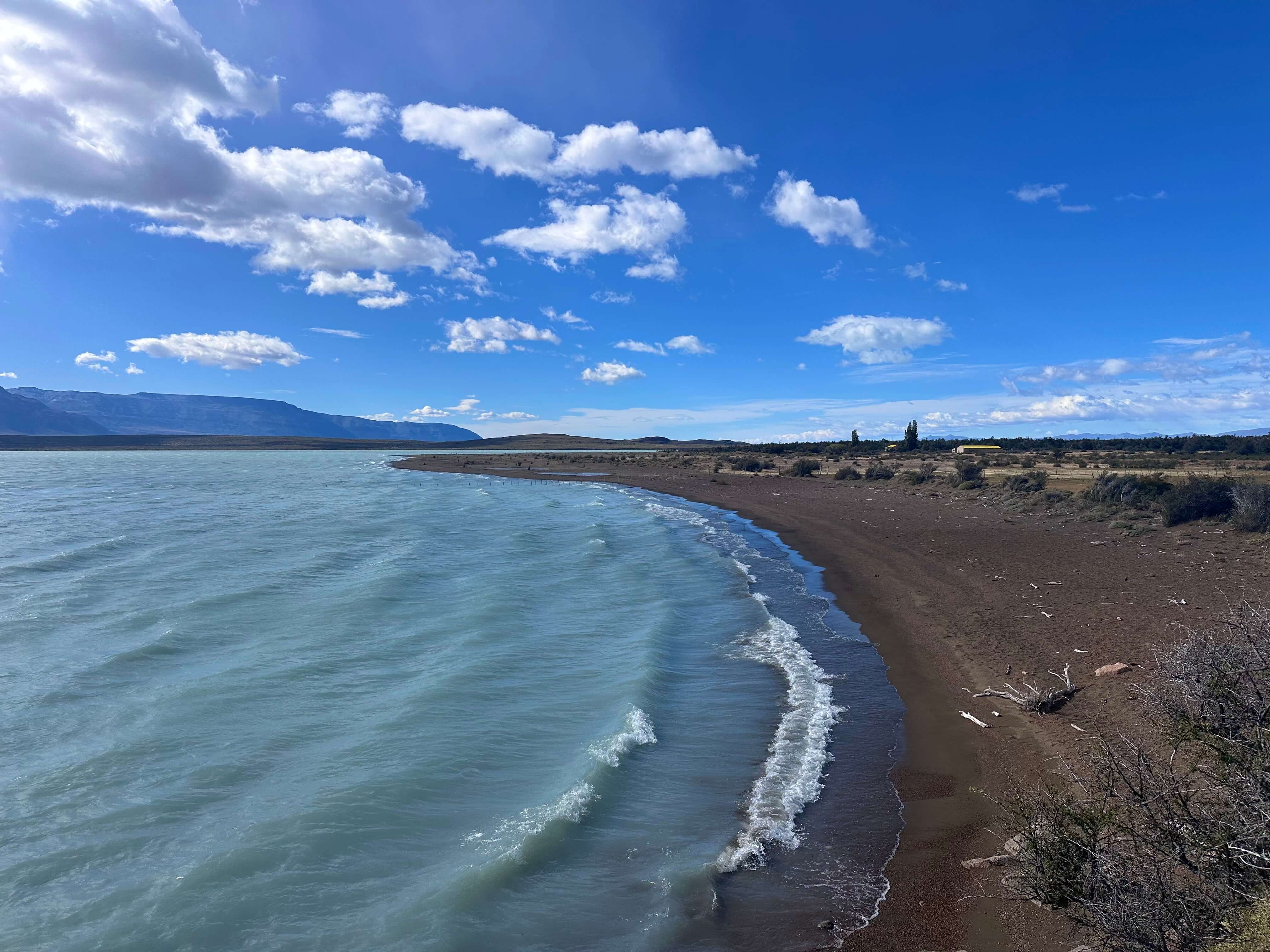
The final section went on forever. Lots of long rocky beaches, and small grassy hills. Strong headwinds felt like a treadmill, especially on the last few kilometres into town. Eventually El Chaltén appeared, bringing a warm shower and real food.
I celebrated with a burger and a pint before returning to the hostel feeling proud. That night the storm arrived and hammered the town for days. Timing wise, it couldn’t have worked out better.
Afterthoughts
The Huemul Circuit is brilliant. Probably harder than most trails in Patagonia, but not as terrifying as people make it sound. Though it shouldn’t be underestimated. There’s no signal for most of the route and rescue would be far away if something went wrong.
The tyrolean traverses, glacier travel, steep muddy descents and brutal weather all add genuine challenge. Even camping in strong winds and freezing temperatures can feel serious, but that helps make the route memorable. No one is choosing this as their first multi-day trail, but those with the experience to navigate it safely will enjoy the remote areas it brings you to.
The best part for me was how wild it felt. Compared to the crowds around Torres Del Paine, the Huemul feels empty. The final campsite beside the lake is one of the prettiest places I’ve ever stayed, and the view over the Southern Patagonian Ice Field was humbling. It just seems to stretch on forever.