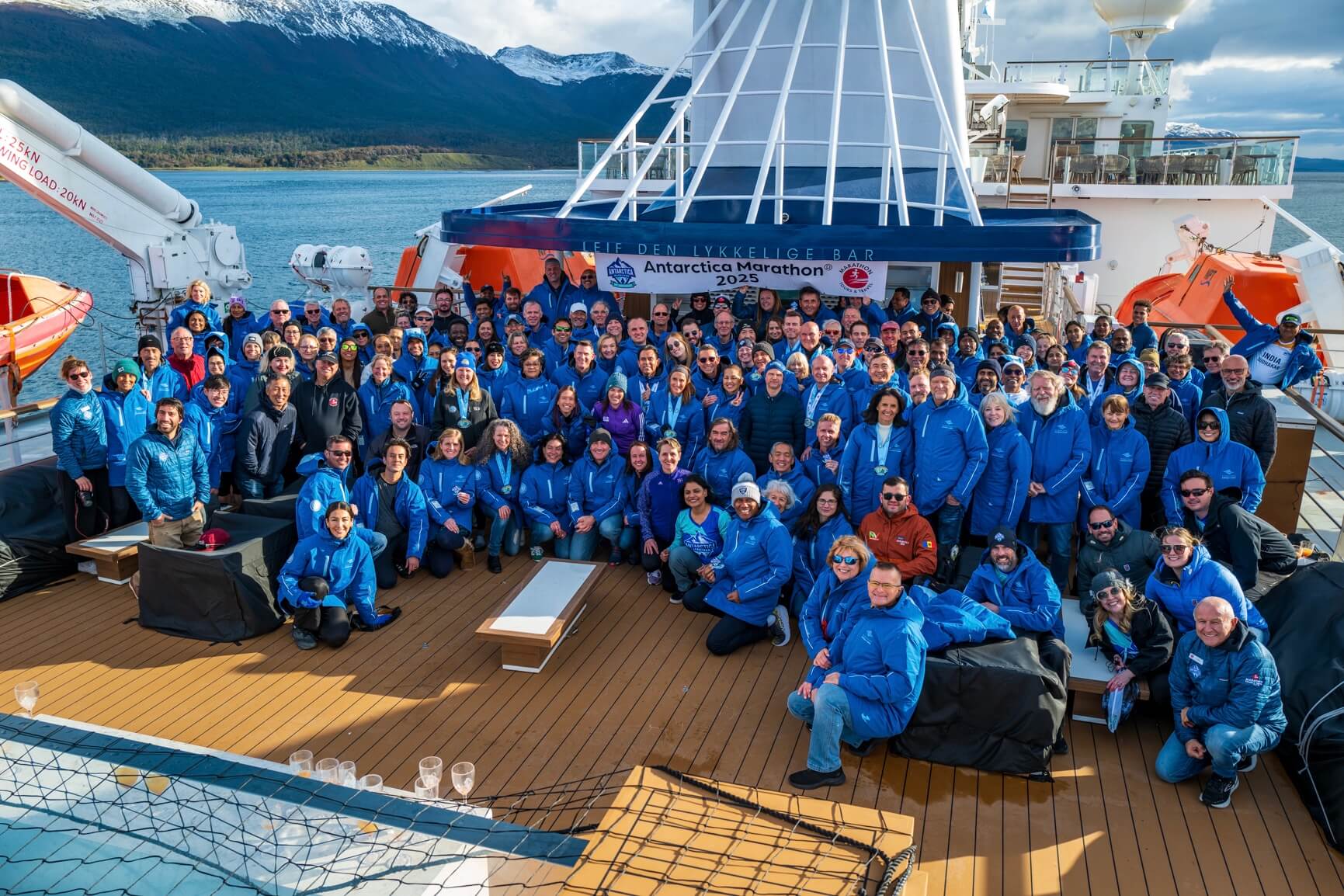

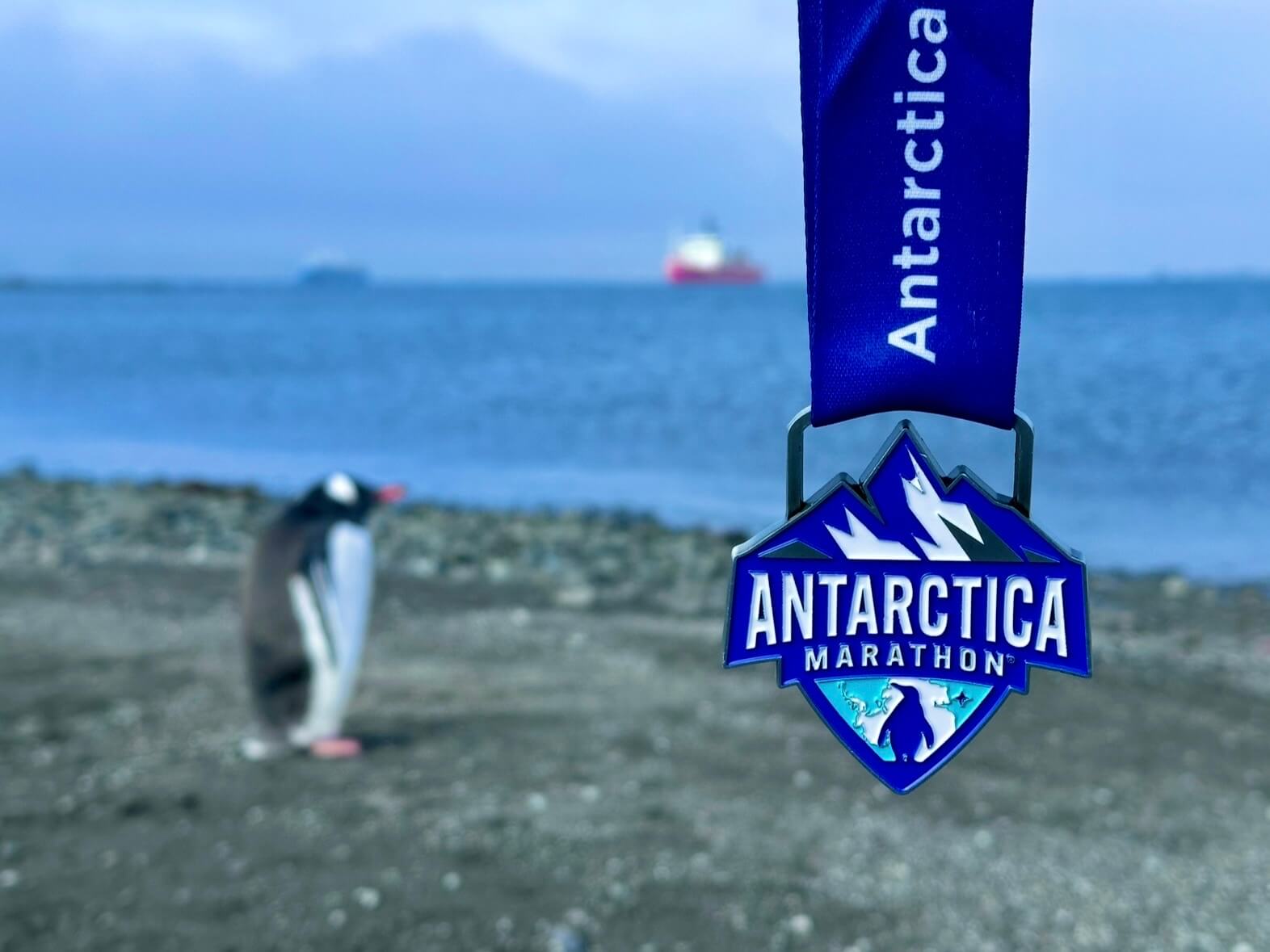
This is one of the most remote races on Earth. Every year, 100 runners sail from Argentina on the infamous Drake Passage, with hopes of favourable weather. It’s a long way to travel, but the marathon is only part of the adventure. The people, wildlife, icy swims, and all I learned is what made it special. With luck on my side I even went kayaking, having now paddled on all seven continents too!
This was the final marathon in my journey to join the Seven Continents Club.
Introduction
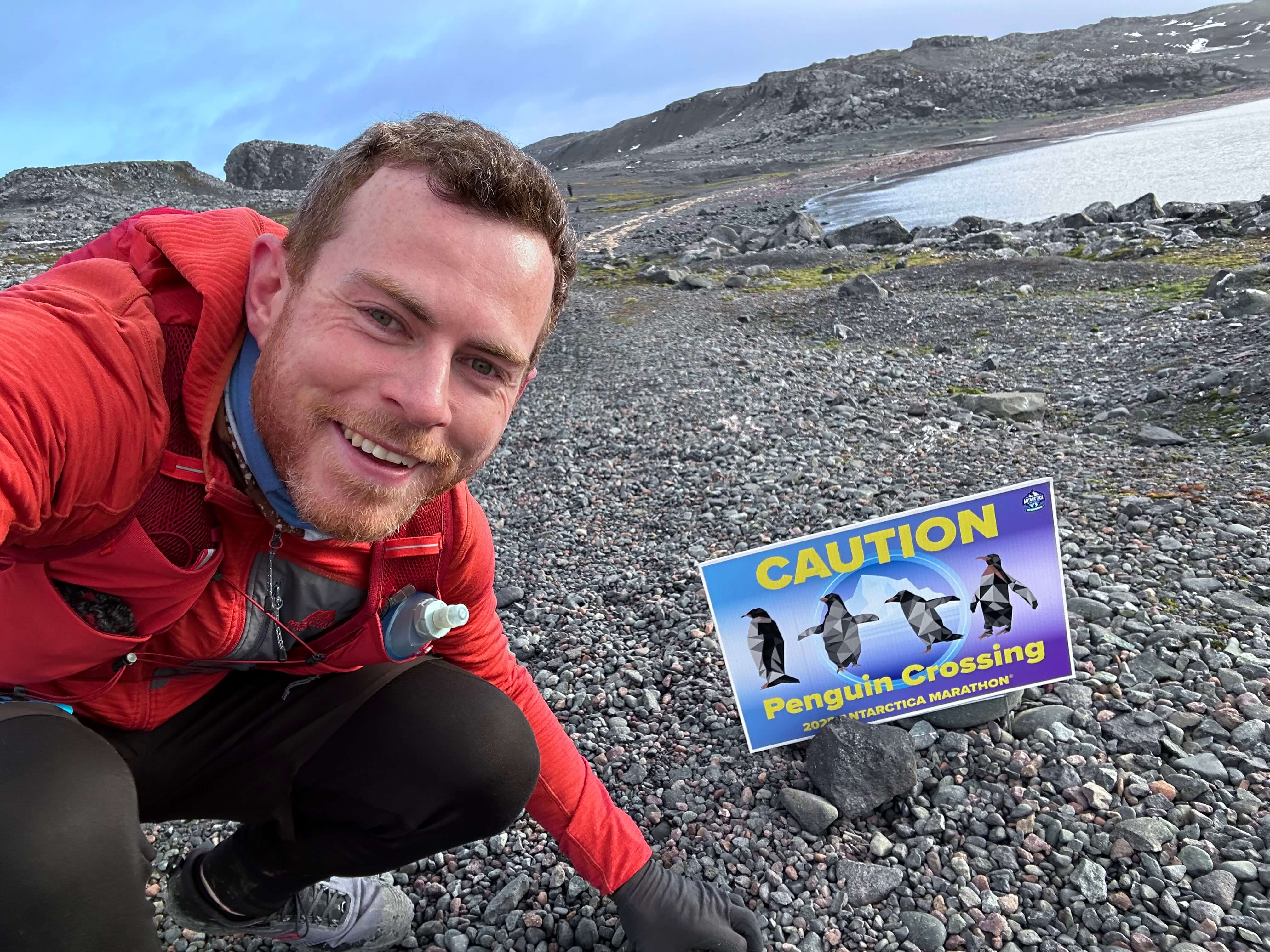
The Antarctica Marathon began in 1995 (like me), becoming the first for-profit sporting event on the continent. It’s held on King George Island on the Antarctic Peninsula, utilising rough tracks where supplies are moved between research bases. This year marked their 30th anniversary. Trips are organised by Marathon Tours & Travel, and numbers are limited by IAATO & Antarctic Treaty guidelines. The race takes place every March, which is the warmest time of the six-month Antarctic day.
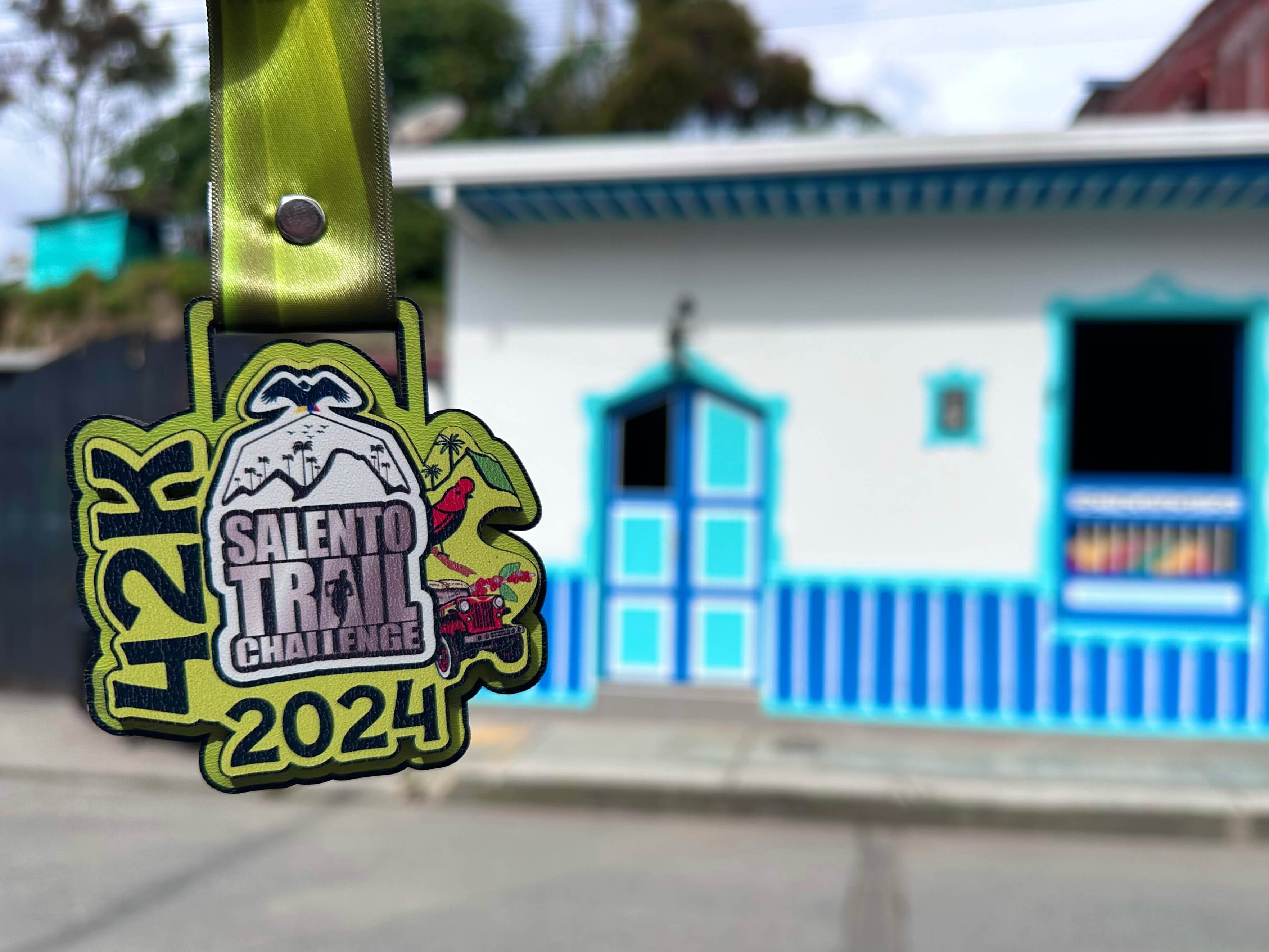
The race had a three year waiting list, which gave me enough time to gather the money and race my other six continents. I ran in Italy, Canada, New Zealand, Thailand, Morocco & Colombia. Three years ago this seemed so far away, but as I backpacked through South America it grew undeniably closer. It had been the centre of this trip, guiding my movement south since Mexico. Always on my mind while hiking on Aconcagua and in Patagonia, wondering would it all go to plan. This had been the biggest goal I aimed to achieve before turning 30 later that year.
The trip cost me $9,000 and takes 14 days. Starting in Buenos Aires, flying to Ushuaia, 3 days sailing the Drake Passage (the roughest sea crossing in the world), 3 days on the continent, and 3 days sailing back. In the time since my booking the cost rose to $10,500. I met people who got last minute spots at the new price so I felt lucky to have booked when I did. It’s still a similar cost to a standard Antarctic cruise, but many of those will stay on the continent longer.
Cruises are done via expedition ships that are built to withstand icebergs. These have large mudrooms, dry gear, and heavy zodiac ribs to take people ashore. Time on the continent consists of two excursions per day, either on the water (seeing icebergs and wildlife) or landing ashore to explore on foot. The marathon voyage uses the first day for the race, but otherwise follows the same format. My price had the most basic shared room which is still very nice, but you can spend a small fortune for anything up to a private room with a balcony.
Arrival & Warm Up
I arrived in Buenos Aires a few days early and stayed in a hostel. This gave me time to settle in, do a bike tour, wander the markets, and enjoy St. Patrick’s Day. After weeks on the move it felt nice to slow down before this trip began. When the time came, I moved to the five-star Alvear Icon hotel, where all of us runners looked a little out of place.
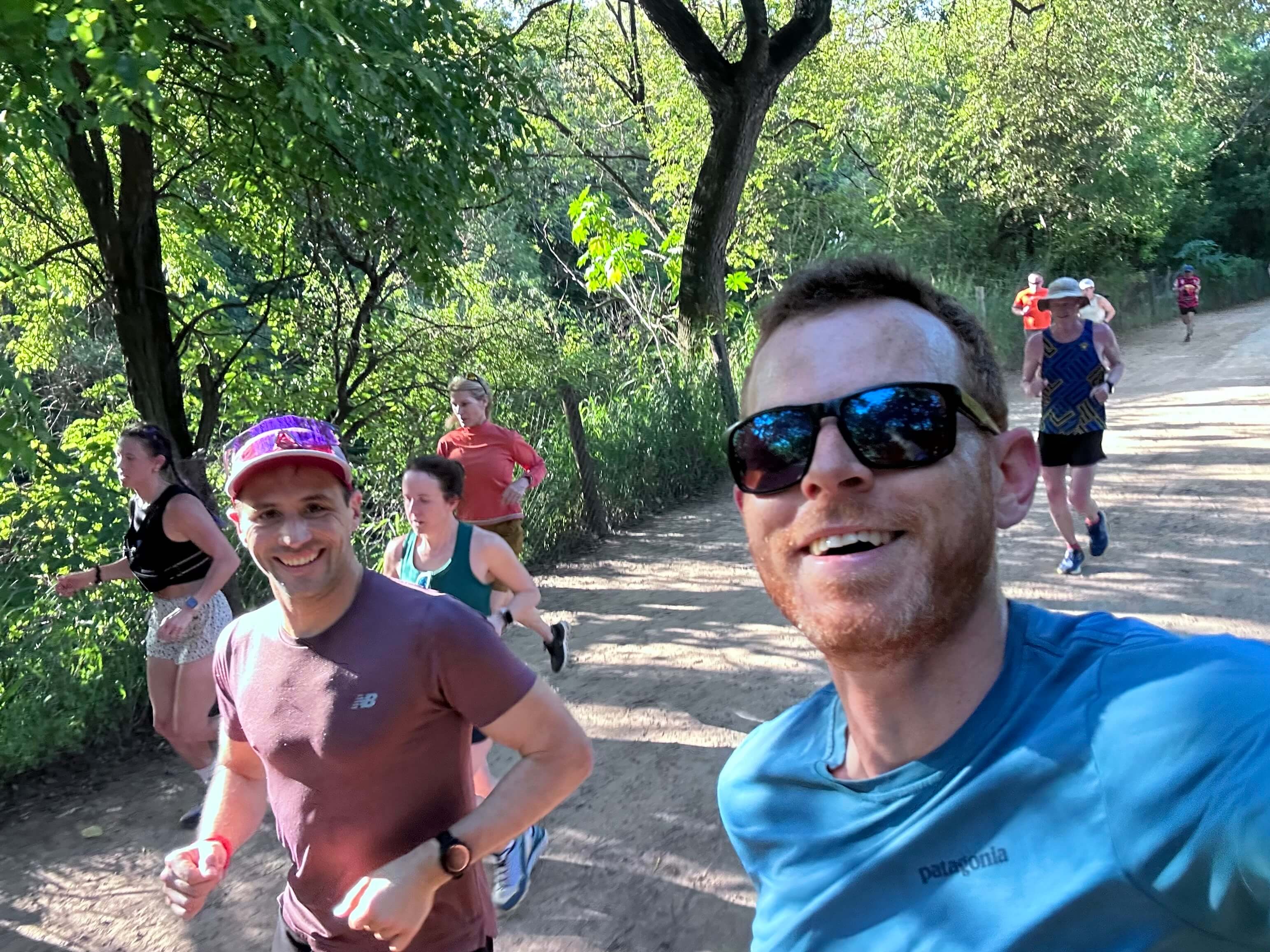
It was easily the fanciest hotel I had ever stayed in. There was a short group jog for us to meet each other where I chatted to Nick, a mountaineer, triathlete, and award-winning journalist who’s been published in National Geographic. I also chatted with some of the race organisers like Ann, Tinny, and Paul who was the expedition doctor. That evening some of us lazed in the pool, so relaxed you’d forget what’s to come.
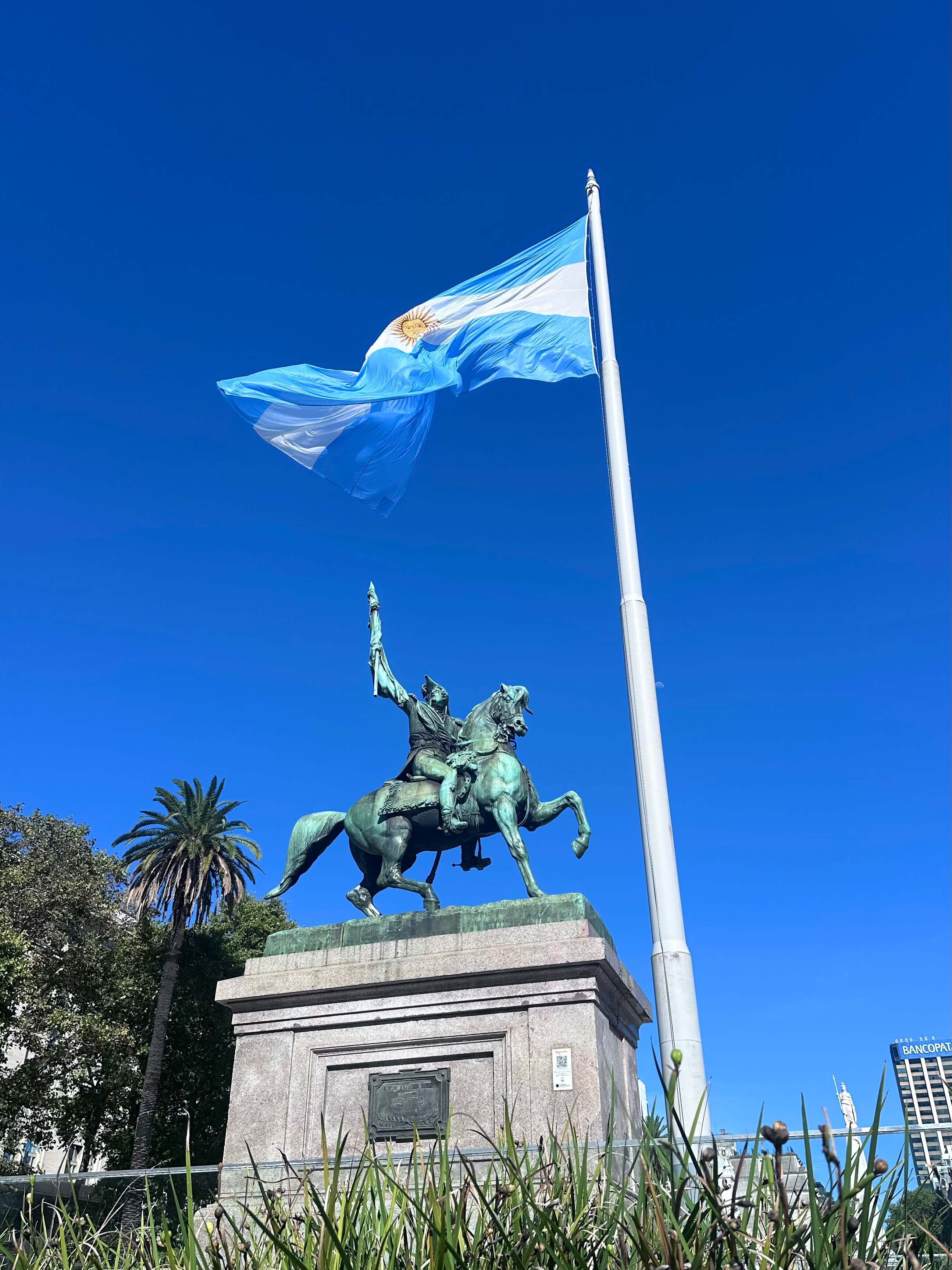
The following day we toured Buenos Aires in a convoy of buses, where I was lucky enough to have sat beside John. This trip is full of impressive people, but none more so than him. He recently placed top five in all six World Marathon Majors, running sub-three hours in every one. He held the UK over-65 marathon record, ran a 100 miler, and finished the Marathon de Sables. It seemed everyone I spoke to had an inspiring story, but John spoke so casually you could almost miss his.
That evening we had our race registration (the t-shirts were cool), followed by welcome cocktails and a ballroom dinner. It felt unique to be at a formal event, but surrounded by such outdoorsy people and stories. It was here I realised this expedition is a lot more about the people than the race itself. The organisers gave presentations on what was to come, and we all drank a bit too much free wine. The day after was a rest day to explore, so no real harm done.
The Journey South
An early flight brought us to Ushuaia, the southernmost city in the world. I was sat beside Tommy, a well-spoken librarian who was my roommate for the ship. The cold winds of the south were a nice change to the heat we had been in, and after a short bus journey we were staring up at our ship; the Ocean Albatross. I didn’t know what to expect after booking a windowless room, but it was great, and even had a small porthole (room tour here).
Captain Konstantinos welcomed us aboard, joined by his two senior officers who were Russian and Ukrainian. I explored the ship with John, finding the gym, jacuzzis, bars, sauna, library, lecture hall, zodiacs, and the mudroom where we’d prepare for landings. That night we all stood on the top deck as we set sail out the Beagle Channel, curious what the Drake Passage had in store for us.
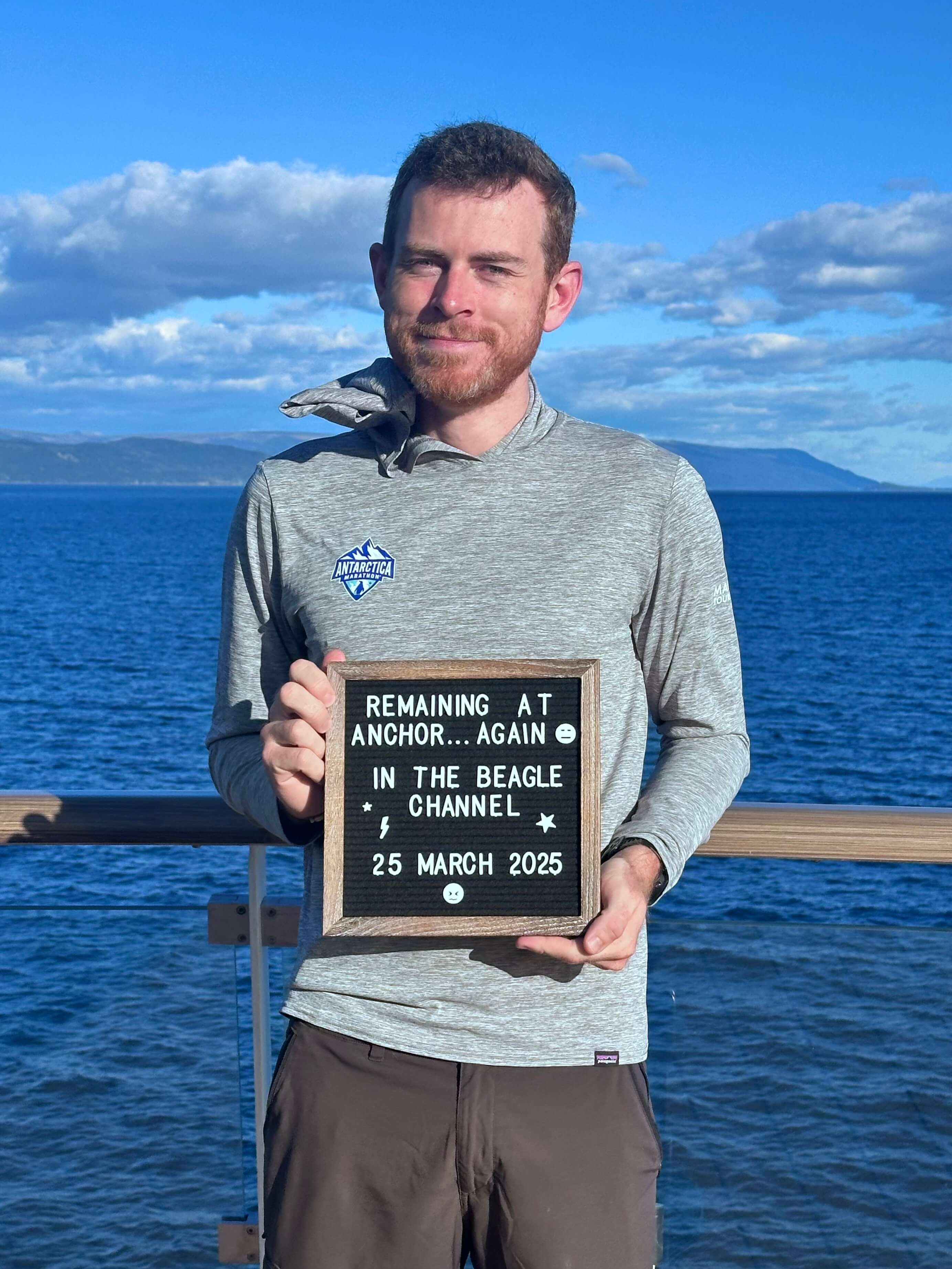
Unfortunately, nothing good. Severe weather delayed us at the mouth of the channel for three days. We got frequent weather updates from the expedition leader Mike, telling of the 100 mph winds and 12m waves that were stopping us. “You don’t have to be a captain to know you don’t sail through a Category 2 hurricane.” Videos we saw of ships caught in it at the time made us all agree.
At first nobody minded. The food was unreal and there was a packed schedule of lectures from the expedition staff. We learned about Antarctic wildlife, photography, exploration history, the importance of krill, and covered billions of years of history through geology lectures from Dr Volcano. We had biosecurity briefings about contamination, removing plastics from any food we would bring there, and scrubbing our running gear. They’re very strict on this which was good to see.
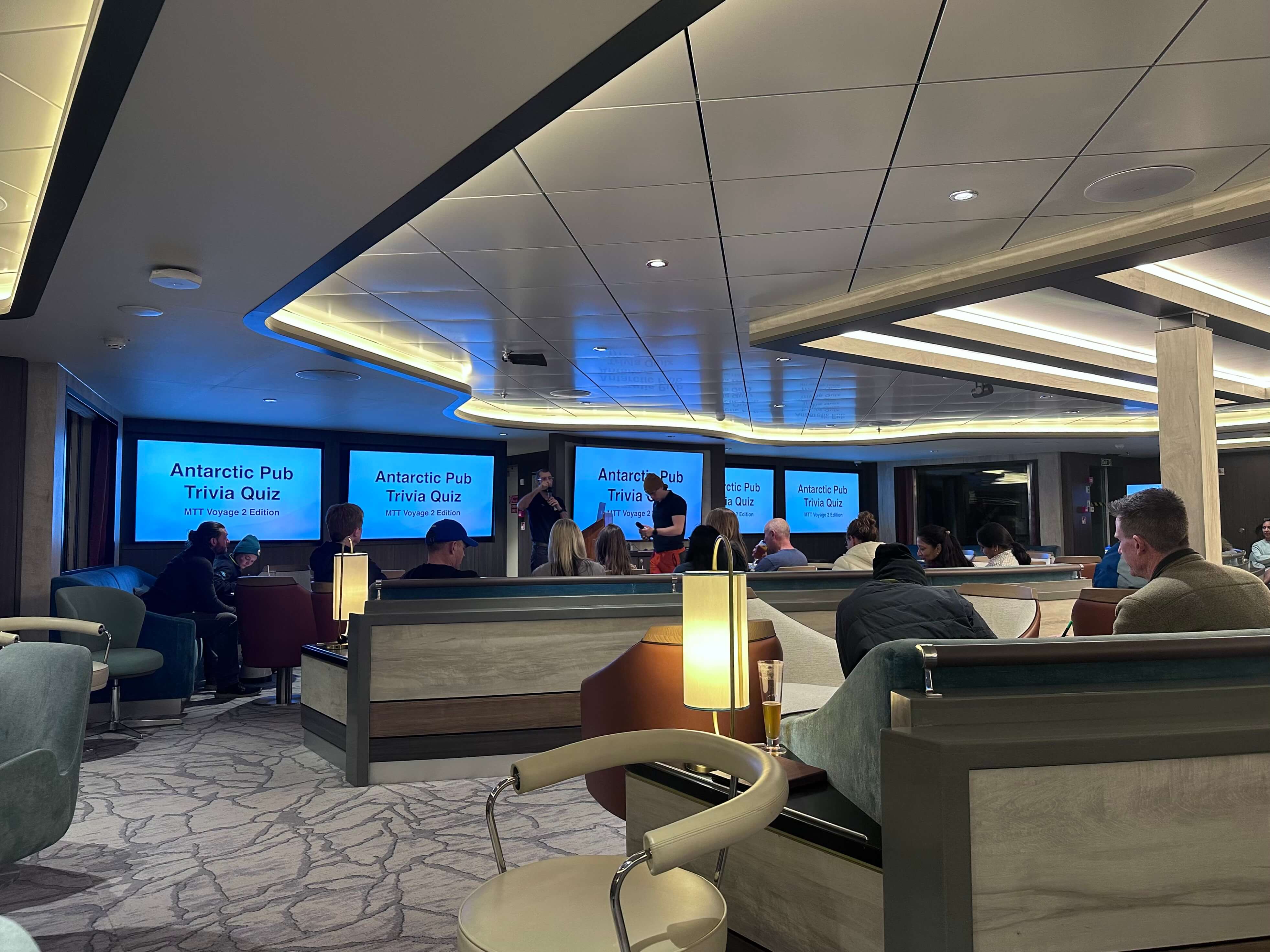
As the days passed, concern started to grow. Every day ate into our schedule and there was uncertainty over whether the race would happen. We spent evenings keeping our mind off it with karaoke and pub quizzes (we placed second with our team: Make Antarctica Great Again). Apparently there was always a queue for the treadmills in the gym, but that didn’t affect me. Despite the delay, I was enjoying every minute. The people made it easy.
After three days of uncertainty, the weather improved and we sailed south. We were told the Drake Passage would be particularly rough, and we definitely all felt it. Thankfully our rooms had a TV full of movies, and you could watch the lectures live on it, though I did try to get up for those. The best lectures were from the historian Will, one about the race to reach the South Pole, and another on the history of flights over the continent. I was also interviewed by Nick one day about my own adventures, which was later published in an article in Runners World magazine!
All the time spent at anchor had allowed us to bond and I felt very close to the people here. Constantly inspired by people who had run a marathon at the North Pole, run all the majors multiple times, or run a marathon in all 50 US States. There were people from over 30 countries, each with a unique story. One night I had dinner with a man who kayaked across Greenland, another I had dinner with a sitting US senator.
The food continued to be amazing too, always a buffet where I wanted (and usually tried) everything. We would be told of whale sightings over the intercom, prompting everyone to run for windows, usually in clumsy ways as the ship swayed. I went to the top deck a lot, looking for giant petrels and wandering albatrosses that didn’t seem to mind the rain and cold. The largest birds in the world look tiny against the endless horizon.
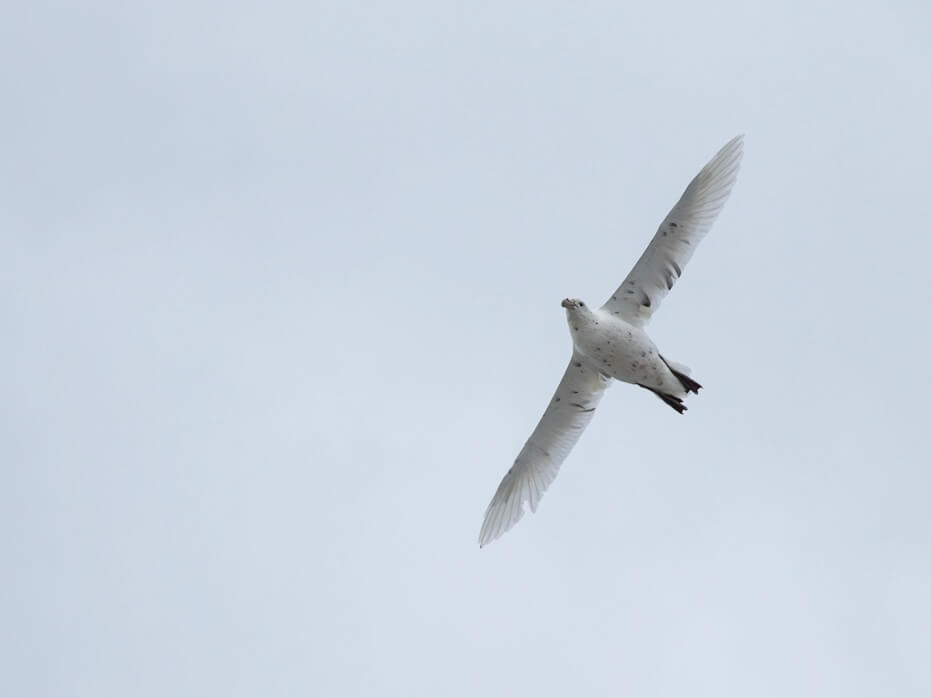
The crew drove the ship faster than usual given our delayed start, so by the second day the seas began to calm. I noticed that waves stopped crashing against our porthole, and it became easier to stop myself rolling out of bed. I was on the top deck when we passed our first iceberg, and late that evening we all gathered on the top deck to watch what was becoming visible in the distance. Land Ho!
With one more sleep before the race, we got our final briefing. The delay meant everything had to happen quickly. The marathon team would land first thing in the morning to set up the course, and we’d follow shortly after. If the winds were too high the race could still be cancelled, but for now we had our weather window.
Raceday
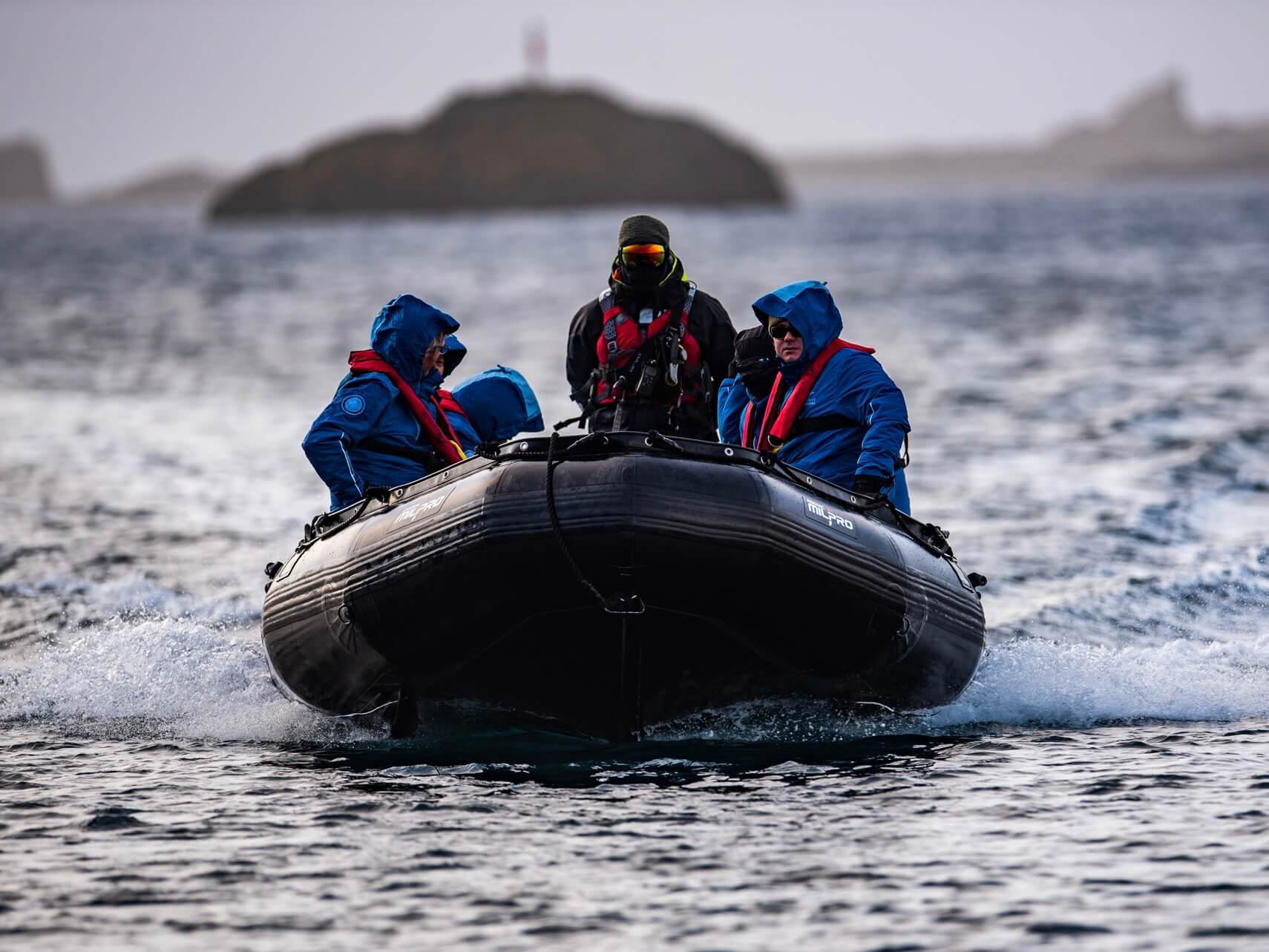
I woke early and could see mountains in the distance from our porthole. The ship rolled quietly into a bay on King George Island, where I watched the staff head ashore in black zodiacs. Soon after we were called to the mudroom, pulling on heavy outer layers, lifejackets, and wellies before climbing into our own zodiacs. The ride felt surreal. The spray was icy, the water dark and the whole thing felt more like a military operation than a marathon.
The course was based around the research stations, with the start at Bellingshausen (Russia). By March, much of the coastline is thawed so rather than snow we found mud, rock and rough ground. We arrived in running gear beneath our dry layers, using tarps to change and organise nutrition before the countdown began. Conditions weren’t too bad, never less than -2°C, but the wind was strong and would become the defining feature of the day. A small Russian orthodox church was above us on a hill, and a helicopter moved supplies overhead. Short video here.
The marathon was six laps, running from Russia to China, via Chile! The terrain made it a lot tougher than I’d expected. We had wet rock by the shoreline, sand, mud, hills, and headwinds that seemed to come from every direction. The scenery more than made up for it though, with beaches, lakes, streams and small bridges along the way. The landscape felt harsh and alien, unlike anywhere I’d ever been. I loved it!
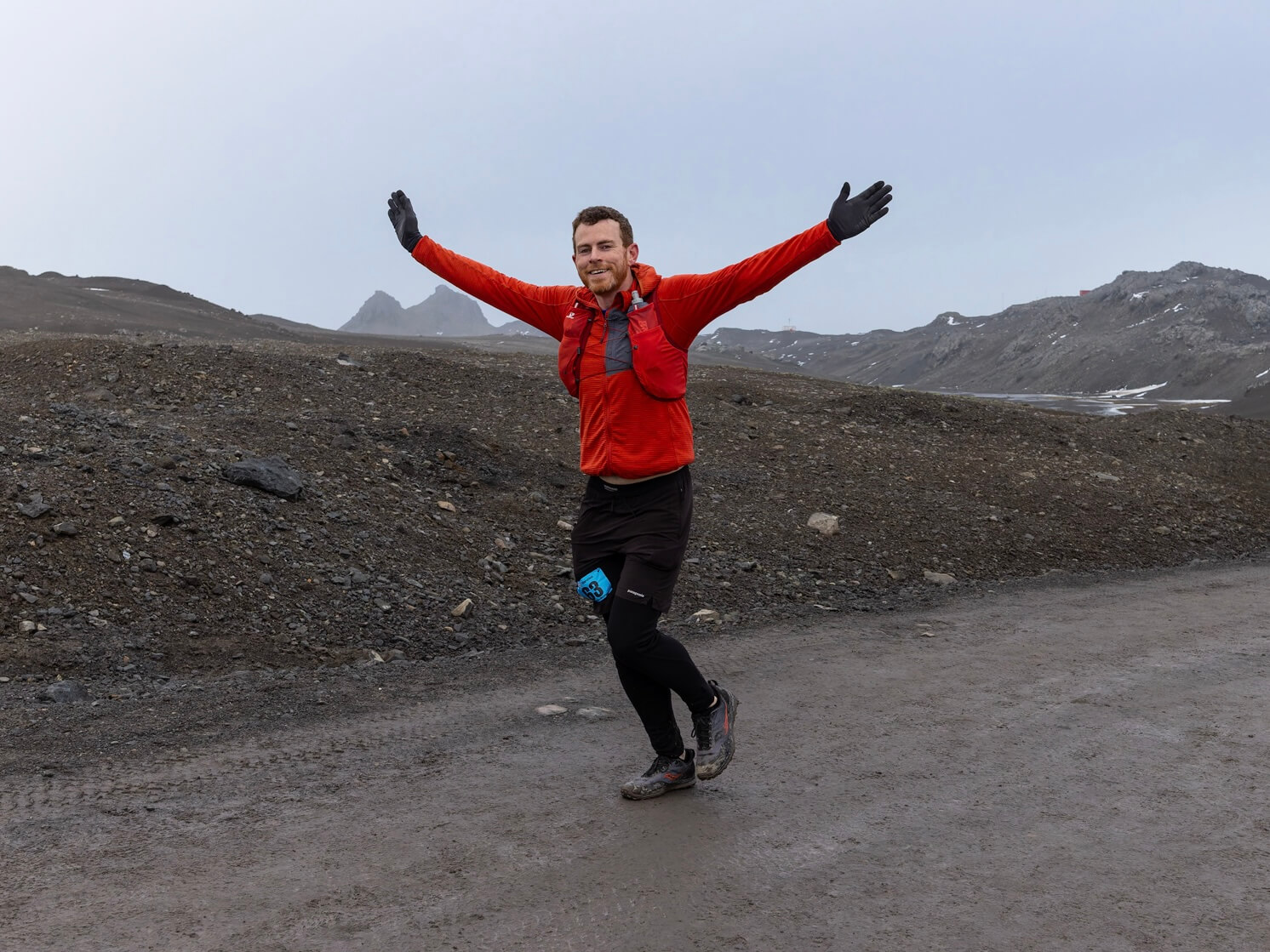
My phone connected and welcomed me to China as I ran past their turnaround at the Great Wall Station, which felt appropriately ridiculous. There was a cold breeze from glaciers in the distance, and you could see the waves getting choppier as the day went on. The changing terrain was hard underfoot, especially sand and gravel, but my body felt okay. Gore-Tex shoes kept my feet dry through the wet sections.
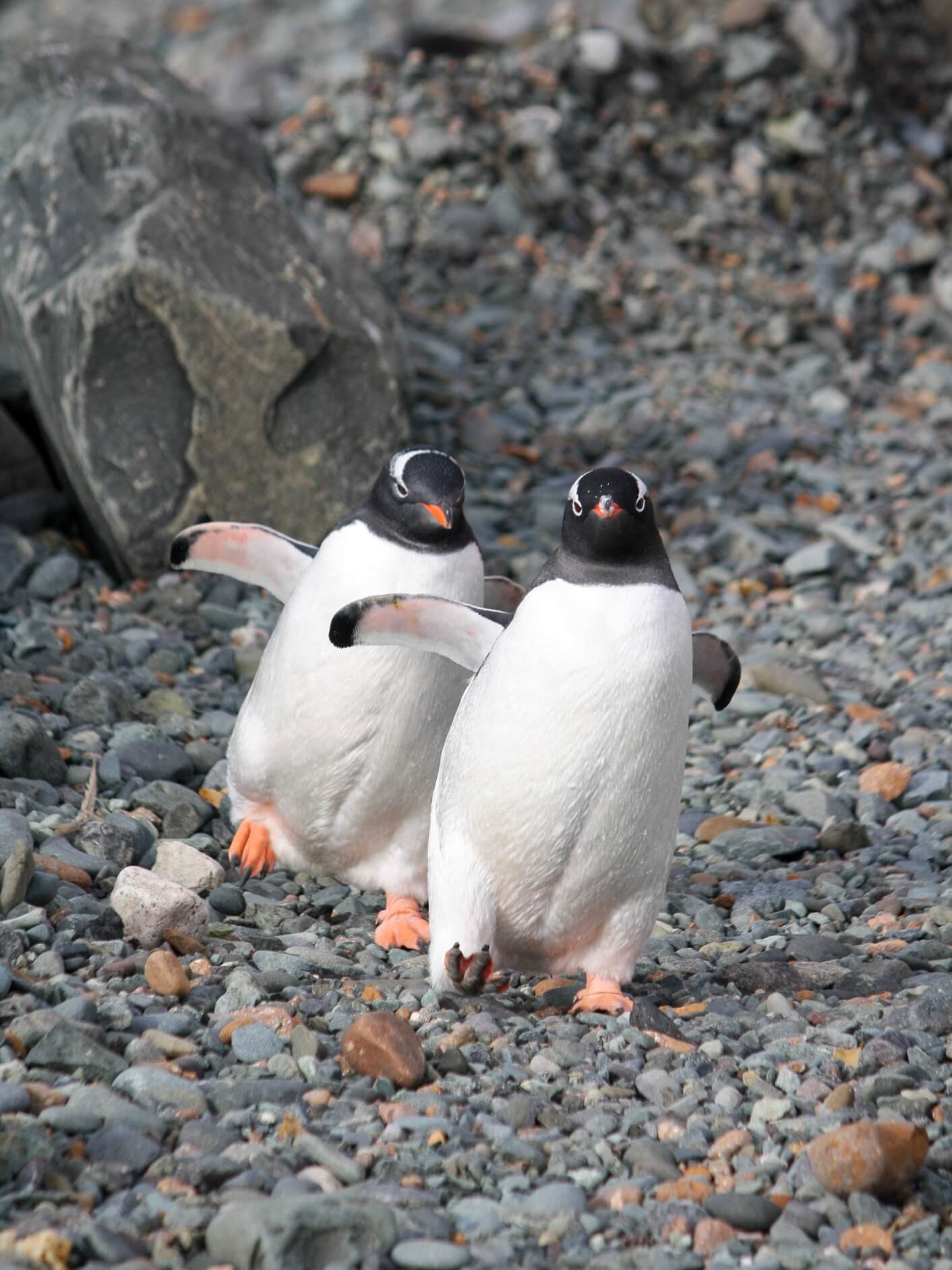
I loved how the loops let us cross paths with all the people we had gotten to know. An Australian friend would always say “Sláinte” to me, and the US Senator gave an increasingly tired “Hi Brian” every time. Nick & John looked incredibly strong, and a few people had mud all over them from slips. We all struggled with the terrain, but everyone looked happy. I slowed several times to watch our penguin supporters, so it wasn’t my fastest marathon, but it was easily my most unique.
The final lap was hard. The winds picked up all day and I worried the race would be stopped. I was tired and cold, but the final turnaround gave me confidence that I’d make it. I tried to soak up everything I could on the last return leg, studying the small churches at each base, the engineering of the utility systems, and the desolation in the distance. A helicopter whirled overhead as I ran the last downhill, feeling emotional. Crossing the line was incredible. Years of planning, and a week of uncertainty, all having paid off.
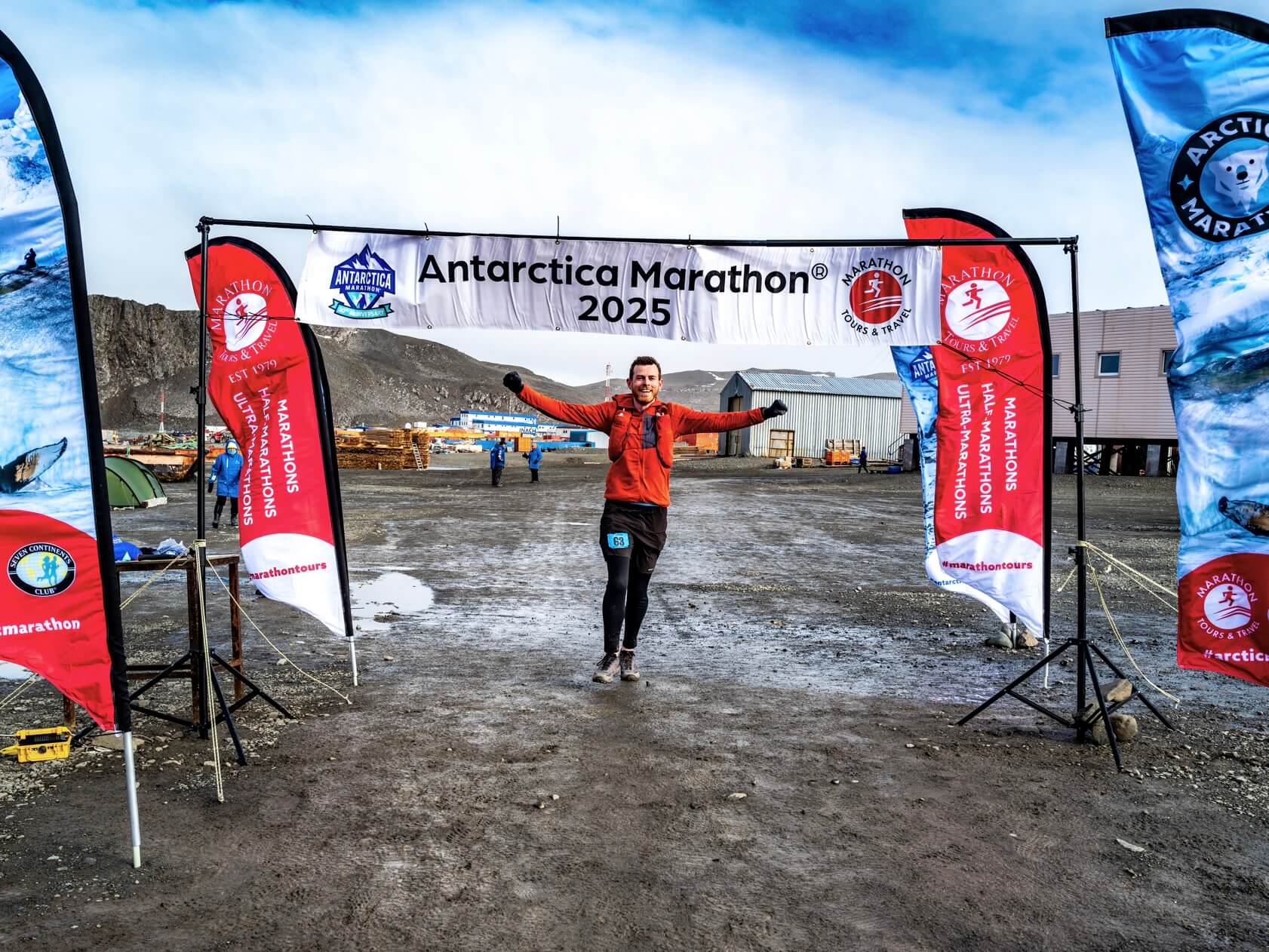
Most runners returned to the ship right away, but I stayed for another hour. Ab, our bird expert, brought me close to some nearby penguins and got us surrounded by them. I also spoke with people in the Chilean research base who were out supporting us.
Back on the ship, the hot shower felt amazing. There was such a good atmosphere at dinner that night, with celebrations all around. John and Nick had finished in second and third place, earning trophies and a huge applause. Second place at nearly 70 years old!
The Final Continent
Thankfully the crew made the call that they could run the ship much quicker on the way back as it was calmer, allowing us one more day on the continent despite our three day delay. This meant we had time for two excursions.
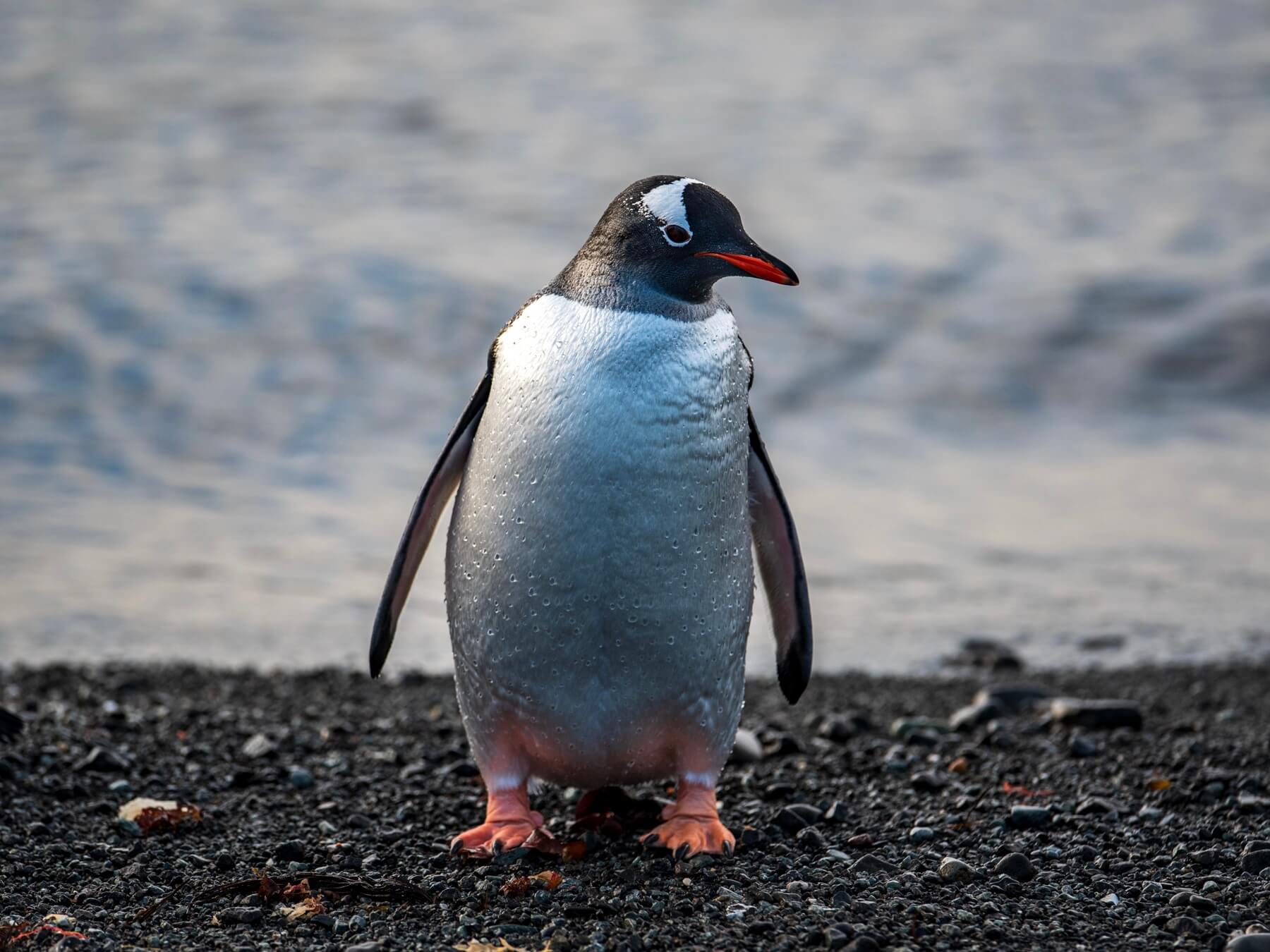
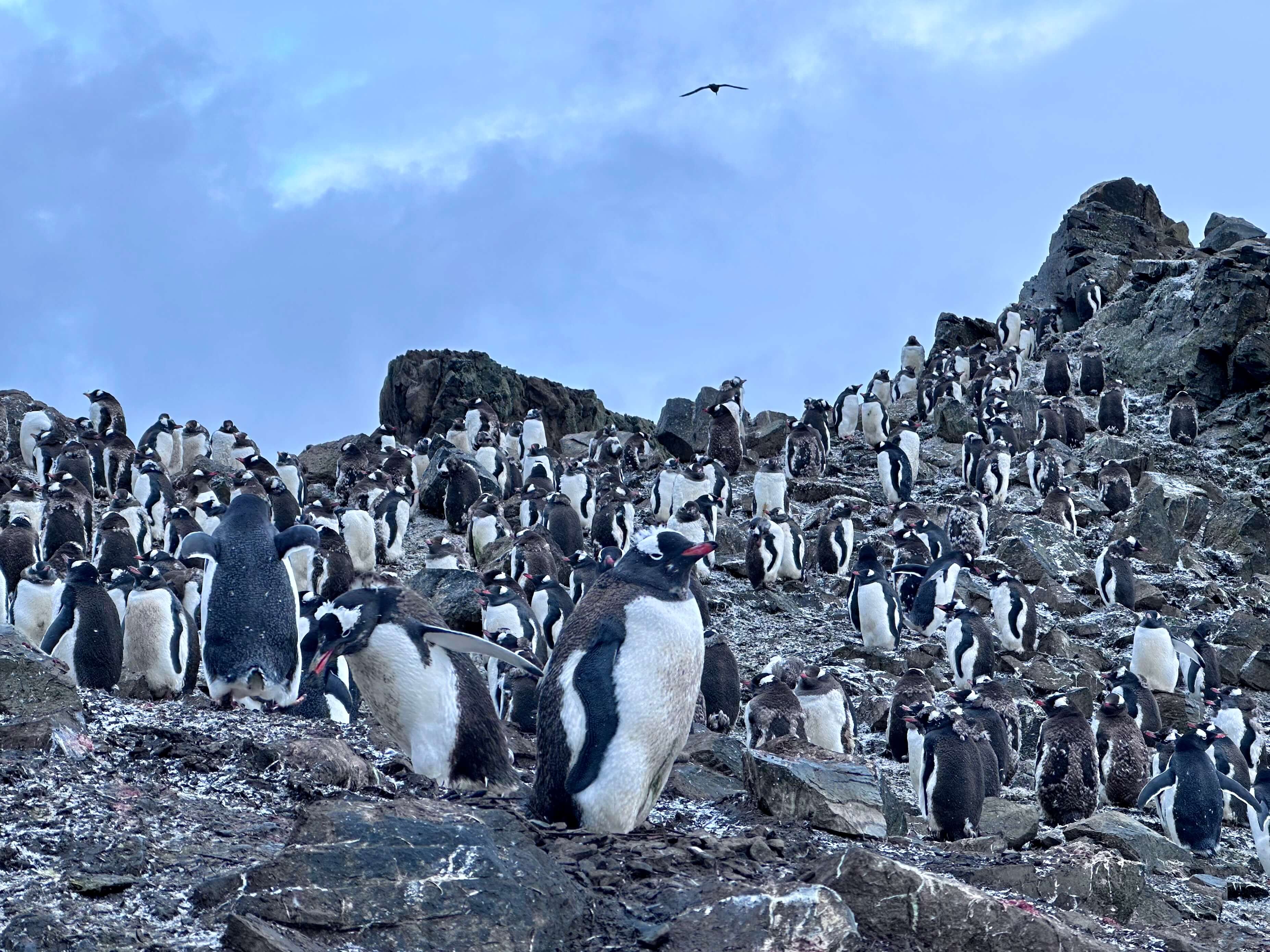
The following morning we woke at Hannah Point and headed ashore by zodiac. Huge penguin colonies covered the hillside, surprising us both by their tiny size, and their smell. Most were Gentoo penguins, with a few Chinstraps (which dive over 100m for food). The males were building nests where half searched for nice stones from the water, while the others stole from their neighbours. The resulting squabbling was entertaining to watch. Short video here.
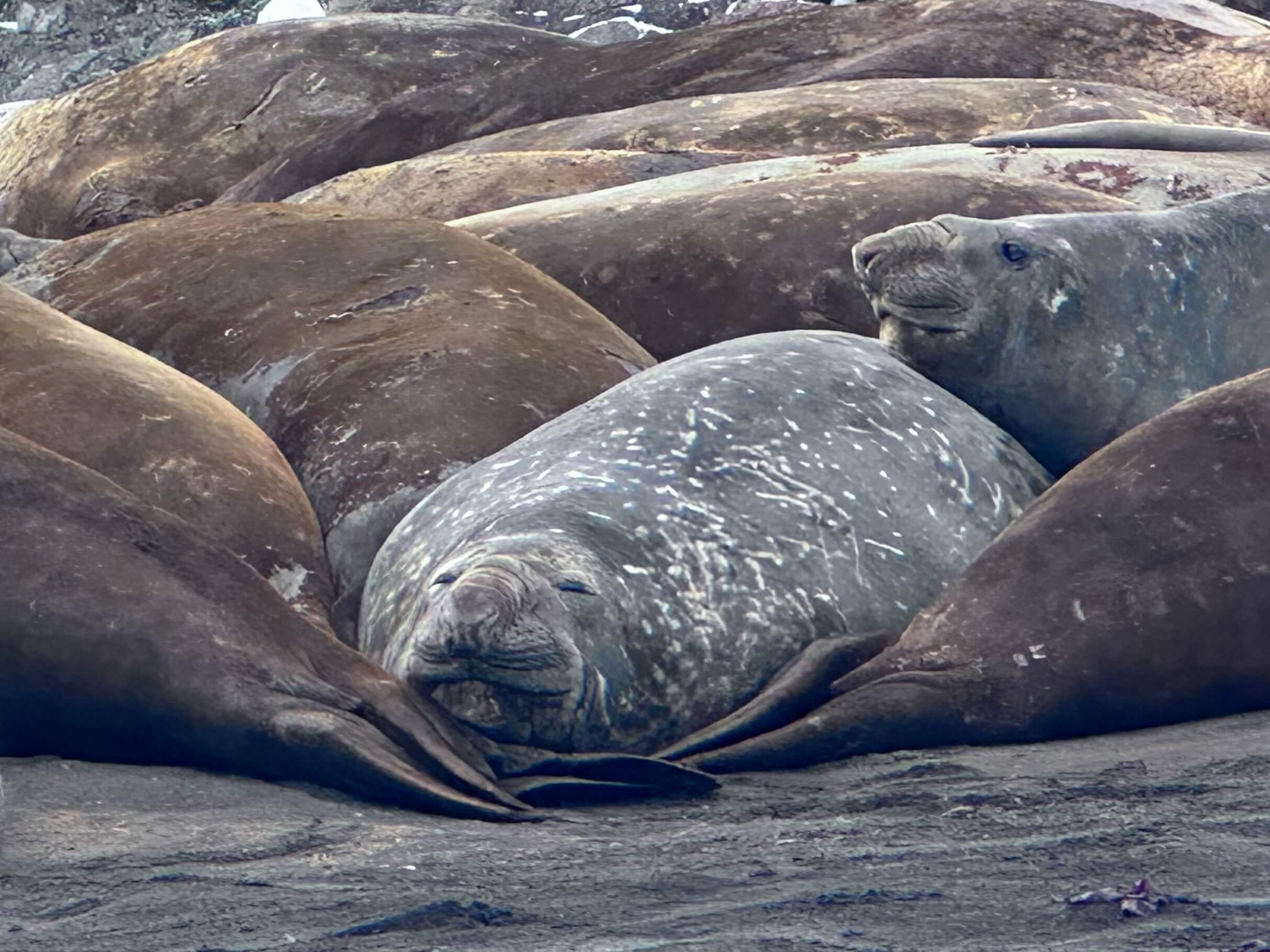
We saw huge elephant seals crawling across beaches and a big group huddled together while moulting. These move incredibly slowly on land, but can swim 2km deep when hunting for giant squid. They shut off most of their brain and have a heart rate near zero when doing this, swimming to where light can’t reach and at a depth second only to blue whales for deepest swimming mammal. They also have the largest size difference between male and females of any mammal, and their snoring sounds like farts. They’re fascinating to watch.
A highlight of the trip came later that day. I had kayaked on six continents, so I really wanted to paddle the seventh too. Unfortunately, there were only a handful of spaces and everyone wanted them. I emailed ahead, spoke to staff and the kayak guide before, but it all came down to a lottery. Luckily, I was drawn in Group 2 meaning I could swap the second excursion for kayaking. When winds cancelled the kayaking that morning, I was somehow now in the only group that would get to go.
We launched in Deception Island, a horseshoe-shaped collapsed volcano where the others would be doing an excursion to an abandoned whaling station. We left with our guide Danny & I in singles, while the other four (all beginners) were in doubles. The lead guide Ben was to follow in a zodiac, but stayed by the ship for some reason. We paddled with seals, penguins and under huge cliffs full of petrels and albatrosses for over an hour. We were guided to the narrow entrance of the horsehoe, to go outside the bay and explore more cliffs.
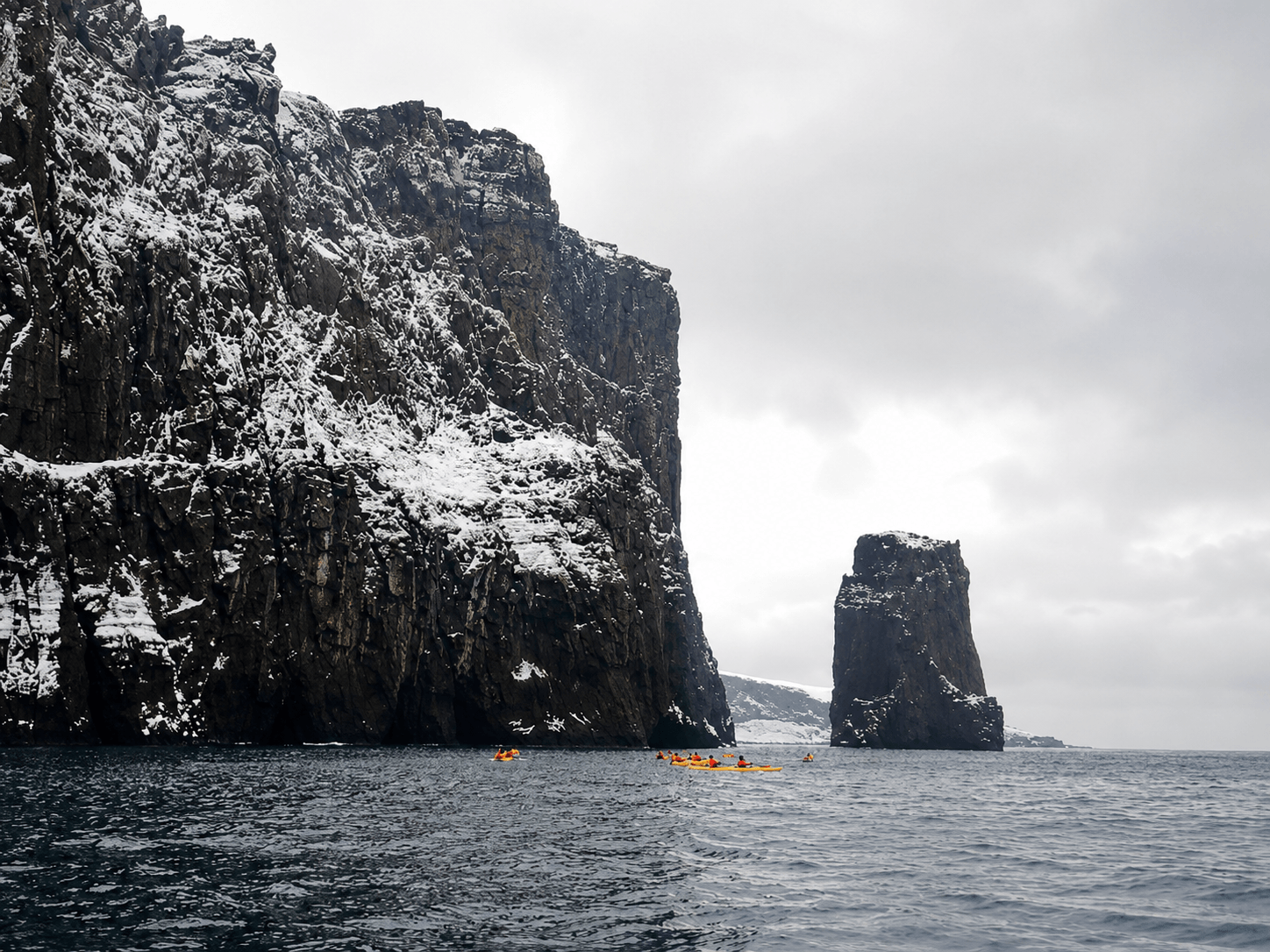
There was a strong wind funnelling in the gap which made it slow going, but it was fine. We could see that it was perfectly calm outside and were almost there. Then Ben who was nowhere to be seen radioed saying it was too windy and to turn around. I said to Danny that we shouldn’t turn the doubles here in the roughest spot and he agreed, relaying that to Ben, but Ben insisted. We turned which I said was stupid, and in doing so one double got swept against rocks at the cliff edge. I helped push them back out to the centre and get them moving again. They were very wobbly now without the speed they had.
Then Ben arrived in his zodiac and seeing the situation realised the same thing we had, that we were far closer to the calm outside. He shouted for everyone to turn around again, and paddle back out. The same double ended up crashing against the cliffs in doing so. Danny went to them, but at the same time the other double capsized and swam. I brought the swimmers on my boat to the zodiac and gathered their kayak and paddles. We all climbed into the zodiac where Danny & I emptied the full kayak, and we started returning to the ship.
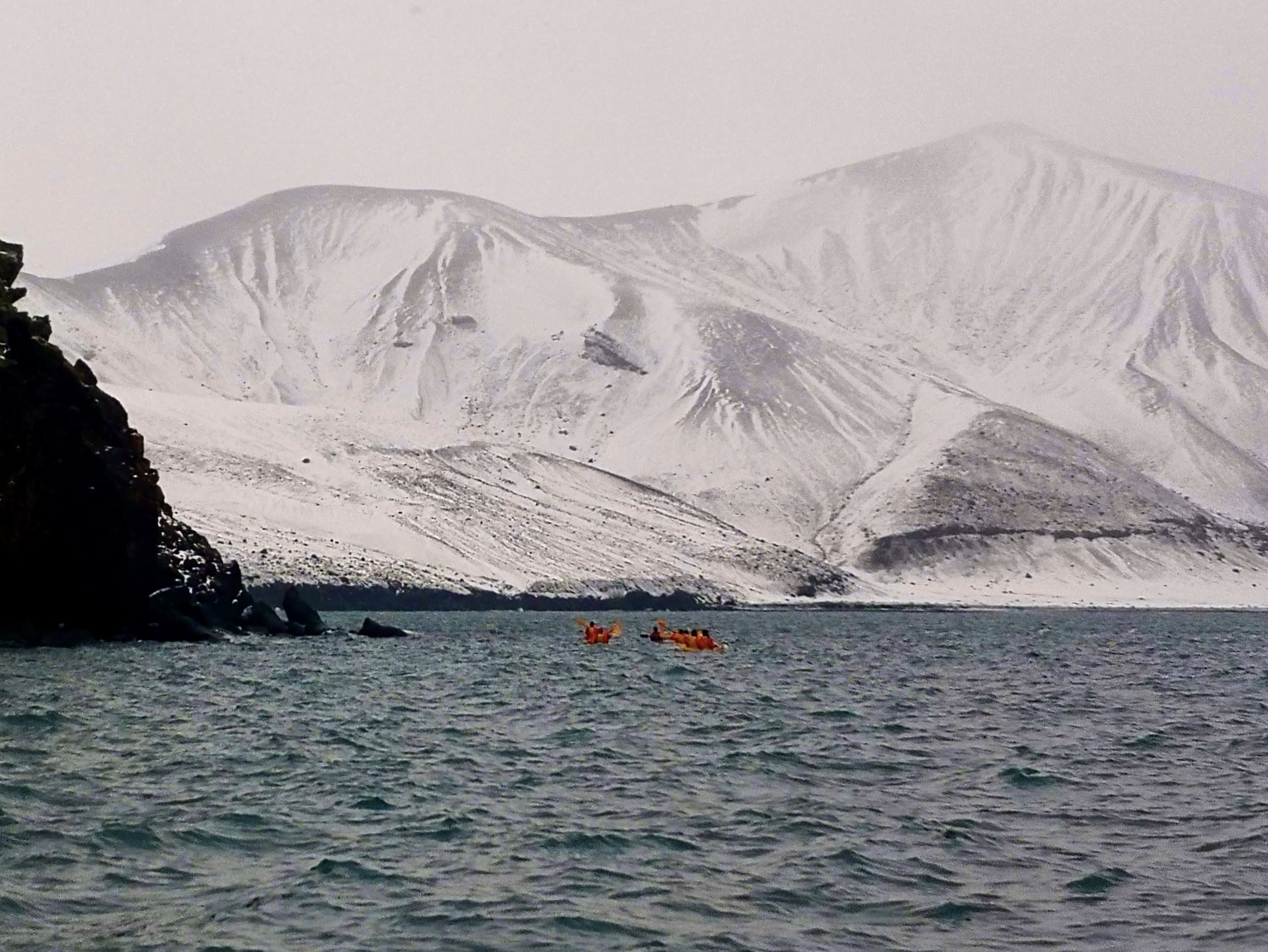
Danny & I held the kayaks on either side as directed by Ben, but they filled with water too quickly as we’d move. We stopped and emptied them which was slow. Danny wanted to put the kayaks across the zodiac which there was lots of space for, but Ben said no. We tried Ben’s way again and made it about 200m before having to empty. In the meantime the two swimmers were freezing in the wind. It took about 30 mins to crawl back to the ship in this unnecessarily slow way.
We had been told the kayaking was a $350 add on, but it was so badly handled that they waived that fee. I was happy anyway, having explored closer than anyone around the cliffs, and paddled with penguins swimming beside me. I felt sorry for Danny who got no apology from Ben. I helped Danny pull in all the kayaks and store the gear, he thanked me and offered to drop me to land if I wanted to catch the excursion, which I was delighted to do. I managed to join the last group and only missed the very start.
The whaling station was so cool, imagining the people who would have worked here hundreds of years ago. As an engineer I loved figuring out what all the heat exchangers and tanks were for. Now rusted away, full of penguins and seals sheltering inside. There were graves from a 1969 volcanic eruption, and a nearby airstrip is where the first flight over Antarctica flew from. I chatted a lot with Will & Ab, and was the very last person to leave when the guides did.
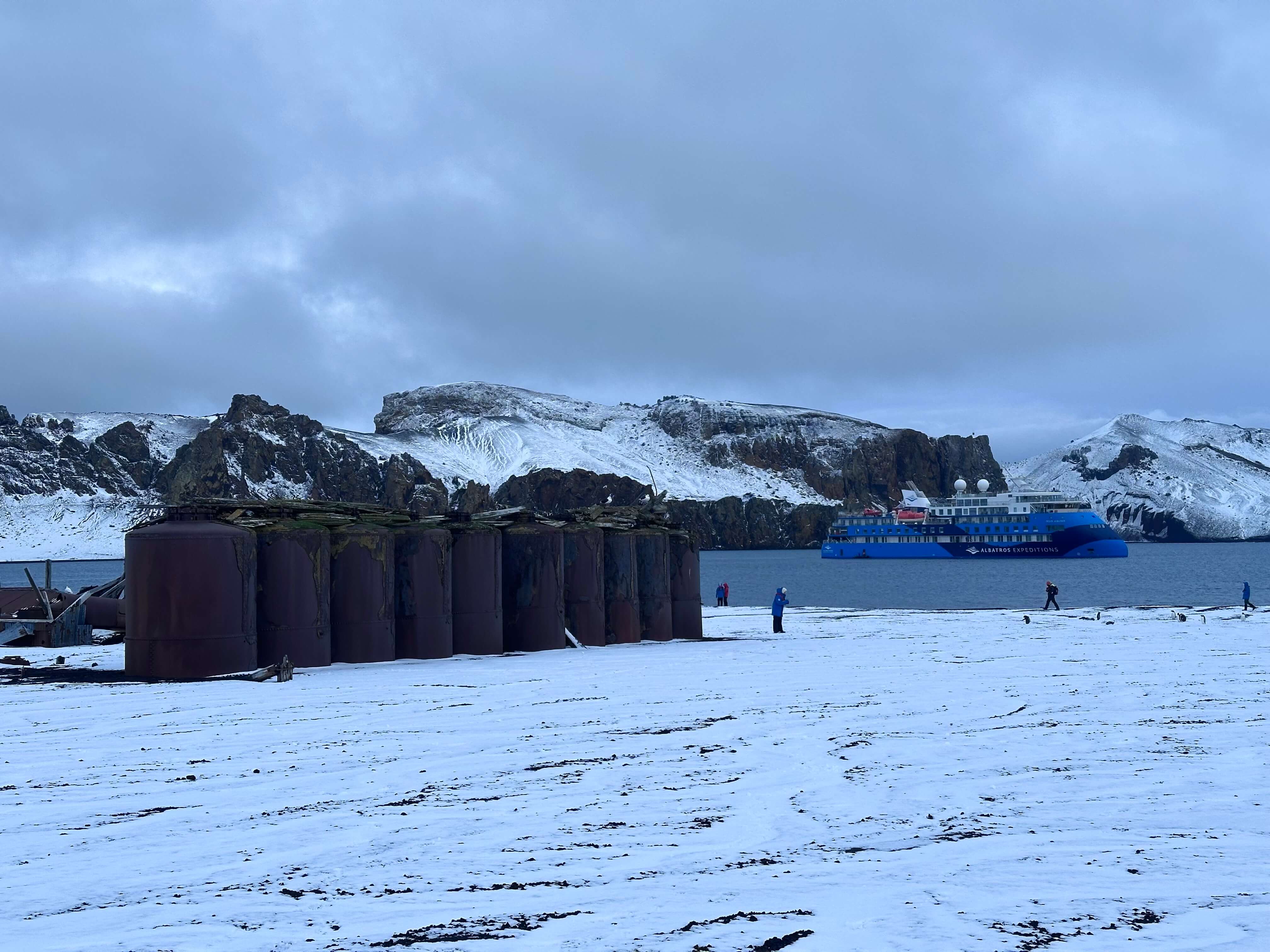
Things hadn’t gone as planned, but in a way had been perfect. Against all odds, I had now kayaked on all seven continents, and hadn’t even had to pay extra for it. I felt like I had squeezed every drop I could from the day, and that luck was truly on my side. The two swimmers were okay too by the way, once they warmed up.
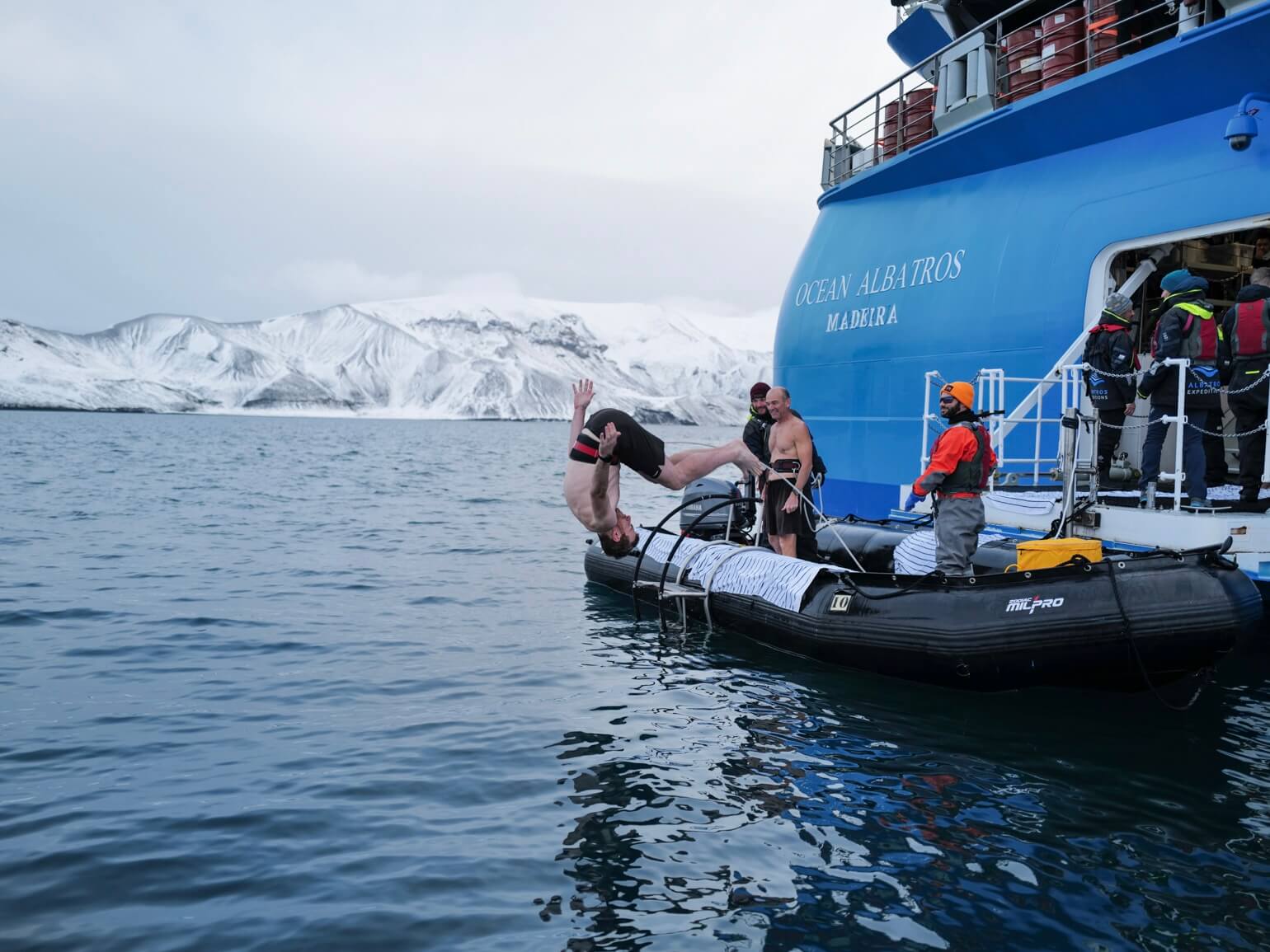
That evening we did the polar plunge, jumping from a zodiac with safety ropes around our waists. It felt like walking to a gallows, hearing the screams of those ahead. The water was freezing, but not as bad as I expected. Afterwards we were handed bathrobes, a shot of vodka and directed towards the sauna and jacuzzis. Knowing I’d probably never be back, I asked if I could jump again and became the only person who did. The second vodka really warms you up. Watching others jump below while we sat in a jacuzzi was a fitting way to end the trip.
The Journey Home
The return crossing was much smoother, more Drake Lake than Drake Shake! I didn’t take any seasickness tablets and felt fine, spending most of the time chatting with Tommy, watching lectures, and learning far more geology than I ever expected. We had lectures about life at research stations, women on the continent, more wildlife, and a final Q&A with the expedition team. As we entered the Beagle Channel and saw land again, it felt like the trip was coming to an end all too quickly.
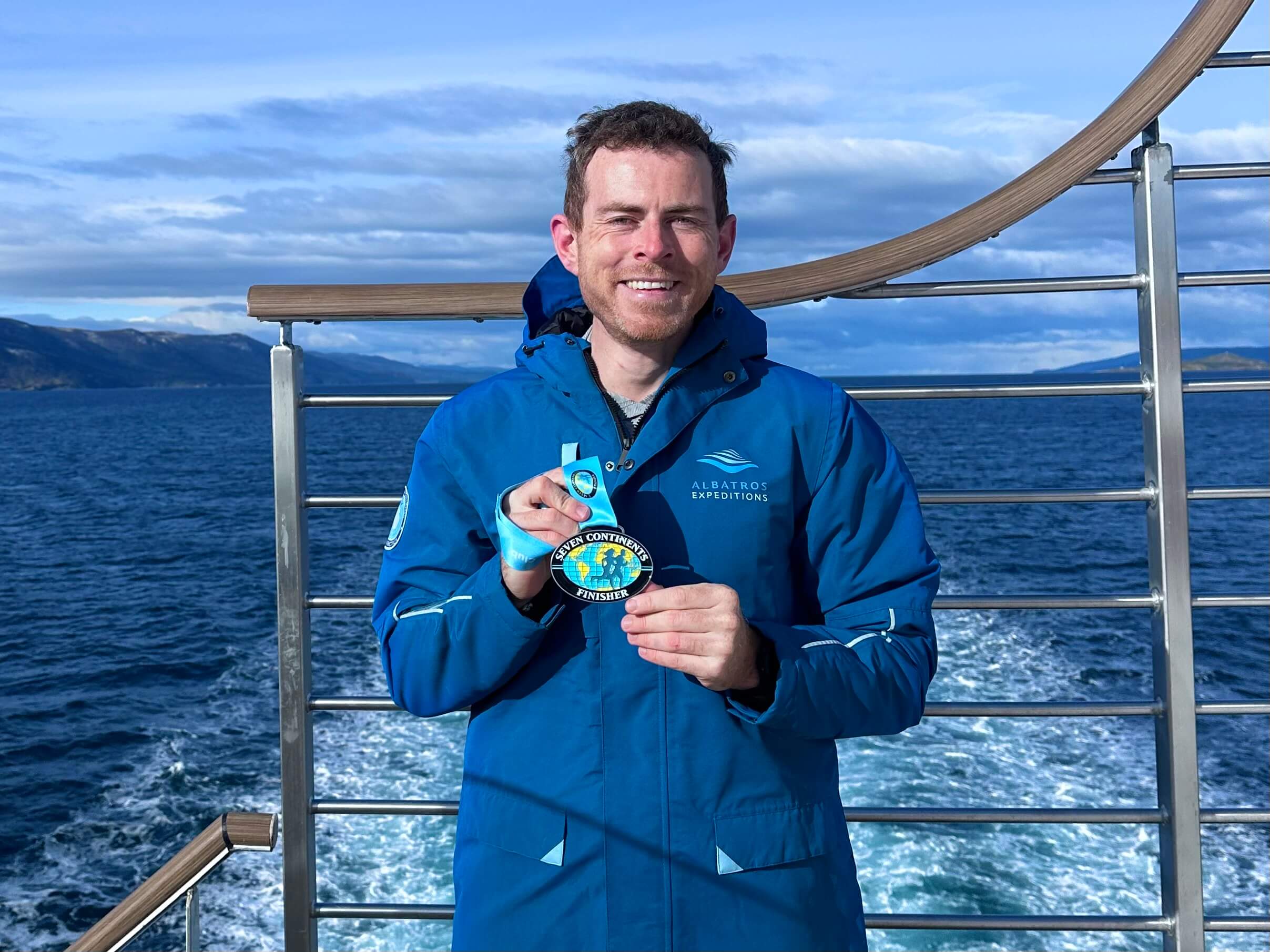
With Ushuaia in sight, we held the Seven Continents Club award ceremony. Of the 100 marathoners, 81 had finished the race, and just 16 of us received our medals for having now run on all seven continents. Something fewer than 1,000 people have ever done. It felt special. A journey that had taken years and brought so many nice memories, finally closed.
We took photos, celebrated together and enjoyed one final evening at an Irish pub in Ushuaia. Almost everyone flew back to Buenos Aires the next day, and most flew onward to home. I boarded another boat from here towards Uruguay, continuing my journey through South America. I was nearing the end of these travels, and becoming excited to soon be home.
Afterthoughts
Despite the delays, the trip exceeded every expectation I had. Antarctica was incredible in its wildlife, landscapes, and even just remoteness. The marathon was unlike anything I had ever done, and kayaking the seventh continent made it even more special. Standing amongst glaciers and penguins in a place like that is something I’ll never forget, and the memories are all the better for who I got to share them with.
A race like this draws an interesting and inspiring range of people that I’m proud to now know, especially John, Nick & Tommy. I was the second youngest at 29, and a few were in their 70’s at the other end. People tended to be a little older because of the price, but for me having booked three years before I saw that as enough time to save the money. It is prohibitively expensive, but for a life goal it’s achievable.
The crew who made it happen were amazing. Marathon Tours put on a great race, and everyone working on that ship was fantastic. The expedition staff stole the show though, making days of delays and rough seas just as enjoyable as Antarctica itself. The expertise of each person, their ability to teach, and the way those lectures fed into what we did on the continent felt so well orchestrated. You really become an Antarctica expert, rather than just seeing it.
I think everyone should visit Antarctica. The marathon was perfect for me, but a normal expedition cruise is suitable for anyone. You get all the same luxuries, lectures and experiences, with excursions, kayaking and polar plunges. Some cruises give up to 8 days on the continent, and I’ve heard of people getting deals below $5,000 for last minute spots. If Antarctica is on your bucket list, give yourself as much time there as you can, and please just go.
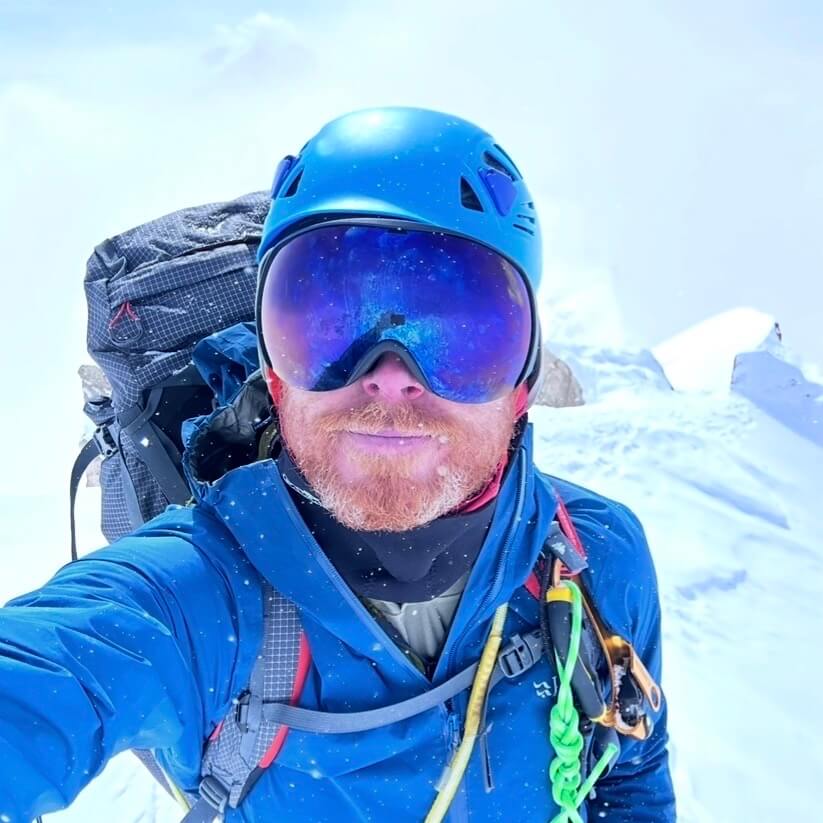
Becoming one of the few people in history to have run a marathon on every continent was the proud achievement I hoped it would be. A fitting send-off to my 20’s and one which came with lasting memories. I still had one more big challenge before I could find out what adventures the next decade would bring though. One more cold expedition, this time in remote Alaska for something even bigger: Denali. That write up is coming soon.
Thank you for reading,
Brian