

This is a writeup of my three-month backpacking trip through Mexico, Belize, Guatemala, Honduras, El Salvador, Nicaragua, Costa Rica & Panama, following what’s known as the Gringo Trail. Throughout the trip I got to learn about the people, scenery, food and cultures that make the area famous with backpackers. Trying to understand the complex history helps explain the distinct local identities, all of which I’ve tried to include here.
Below is all I learned from every long bus or awkward border crossing, and the experiences that made them worth it. Stories like swimming with sharks, caving to a sacrifice chamber, seeing lava up close, jumping from uncomfortable heights, exploring temples, sliding down an active volcano, learning to surf, watching baby turtles hatch, kayaking in the jungle, chilling with sloths, and eventually sailing between continents. Look out for links in bold to see short videos of all of these.

The Gringo Trail
Just as South East Asia has the Banana Pancake Trail, Central America has its own well-trodden backpacker route; the Gringo Trail. It isn’t a fixed path, nor is it officially marked on any map, but if you travel through this part of the world, you notice the same towns appear in hostel conversations, shuttle bus routes, and travel blogs. Follow them in sequence and you find yourself moving with a lively community of travellers all chasing the same promise of adventure.
The trail winds its way through colonial cities, surf towns, jungle outposts, and volcanic landscapes. One week you can be hiking above the clouds at sunrise; the next you’re learning to surf or crammed into a chicken bus, rattling towards the next border. It attracts a mix of backpackers, some travelling for months with no fixed plans, others squeezing as much as possible into a few weeks. All drawn by the region’s beauty, affordability, and slightly unpredictable nature.
Unlike its Asian counterpart, the Gringo Trail can feel a little less polished and occasionally more chaotic. Border crossings test your patience, roads can be slow, language barriers are the norm, and plans change often. Yet that friction is part of the appeal. Travel here demands a touch more flexibility, a willingness to lean into the unknown, and a sense of humour when things inevitably go wrong. For those prepared to embrace it, the rewards are immense: dramatic landscapes, generous people, and the quiet satisfaction that comes from earning each new destination. Below is the route I followed from Mexico to Panama. None of these countries require a visa for Irish travellers.

Mexico
Cancún
Cancún is the sun-soaked gateway to Mexico’s Caribbean coast, where all-inclusive resorts and spring-break energy meet turquoise water, white-sand beaches, and easy access to Mayan ruins and cenotes (natural water holes, now used as public pools). The coastal areas are very touristy, but there’s still a little culture left in the city, very close to the stalls that charge $1 for five tacos! It would have been nice to start my trip in Mexico City, but flights were a lot cheaper to here, and it suited my route as I wanted to move toward Belize.
After a quick stopover in Toronto to see Niagara Falls, I arrived into a heat and humidity that made my jumper useless for months. I stayed in a downtown hostel, beside a large plaza that always had street food, music and shows. I explored the city with Ludwig, eating our way around the colourful streets and along the beaches of the Hotel Zone. Cancún is a place many avoid as it almost feels like a caricature of a Mexican town, but it was a nice stop for me to cure my jetlag, eat lots of burritos, and meet like-minded people who were keen to pass on the highlights of their own trips.

Valladolid
Valladolid is a laid-back colonial town in Yucatán; the province named for what invading Spanish observed locals saying, now known to mean: “I don’t Understand”. Moving three hours inland brings a greener landscape, an intense heat, and a one hour time difference. I met a nice group in the hostel, with whom I explored the quiet plaza, cathedral, food hall and swam in Cenote Zaci. Evenings by the pool were great, and I really enjoyed Casa de los Venados (a private art collection in an old manor) and the Convent of San Bernardino de Siena. This was built over a cenote that gave direct access to water from their kitchen, and now houses artefacts from the Castle War of 1847. But the main reason people come to Valladolid is to see nearby Chichén Itzá; one of the Seven Wonders of the World.
Mayans lived in Mesoamerica for 3,500 years before the Spanish conquest. Their Preclassic Period saw the formation of early farming societies. Their Classic Period brought powerful city-states like Tikal with monumental temples, writing, and astronomy; ending suddenly in 900 AD when a theorised drought almost destroyed the civilisation. The following Postclassic Period saw power shift north, where smaller cities were built near freshwater cenotes. It was a time of decline because of fragmentisation, but new technology also brought the most modern and intricate Mayan architecture. The best preserved example of this is Chichén Itzá.
This awe-inspiring archaeological site dominates its jungle landscape. The day I visited was hot, and crowded, but still amazing. I spent the day exploring the surprisingly large number of temples, climbing the observatory, learning about the ancient ball games that only use hips (you may remember it from The Road to El Dorado) and staring up at the El Castillo Pyramid whose steps echo a bird sound when you clap. We saw the huge cenotes that provided drinking water, and on the way back stopped in Cenote Ik-Kil. This was great to cool off by jumping from jungle into the deep, quiet sinkhole.
Cozumel
Cozumel is a relaxed Caribbean island known for world-class scuba diving, reef-lined turquoise waters, and a slower pace that feels far removed from the bustle of the mainland. I got the ferry from Playa Del Carmen (where I saw the Danza de los Voladores) and spent a few days snorkelling, enjoying the cool breeze, and walking the long beaches. This is where Kristian Blummenfelt had recently broken the Ironman World Record, which appeared to be a source of pride with my accommodation being on Ironman Street.
Ancient Cozumel was a site for pilgrims seeking blessings from Ixchel, the Goddess of Fertility. When the Spanish brought smallpox, the population fell to near zero and the island spent over a century as a hub for pirates. Abraham Lincoln attempted to buy it as a home for newly freed slaves, fearing having them live alongside previous owners, but Mexico refused and around that time began to resettle. I loved the museum in the town, which had great displays about all this, as well as the sea life and conservation efforts that are central to the island.

Tulum
Tulum blends beach culture with dramatic cliff-top Mayan ruins and a cenote-dotted jungle. It was my favourite stop in Mexico, and is where I met Kevin; a cheerful fashion photographer from Texas on his own one month trip. We spoke briefly in Cancún and Valladolid, both times one of us rushing somewhere, so when I saw him at my hostel again I knew we were supposed to be friends. Bonded over cheap margaritas, the best birria tacos of the trip, and Carls Jr ice-cream we quickly became inseparable.
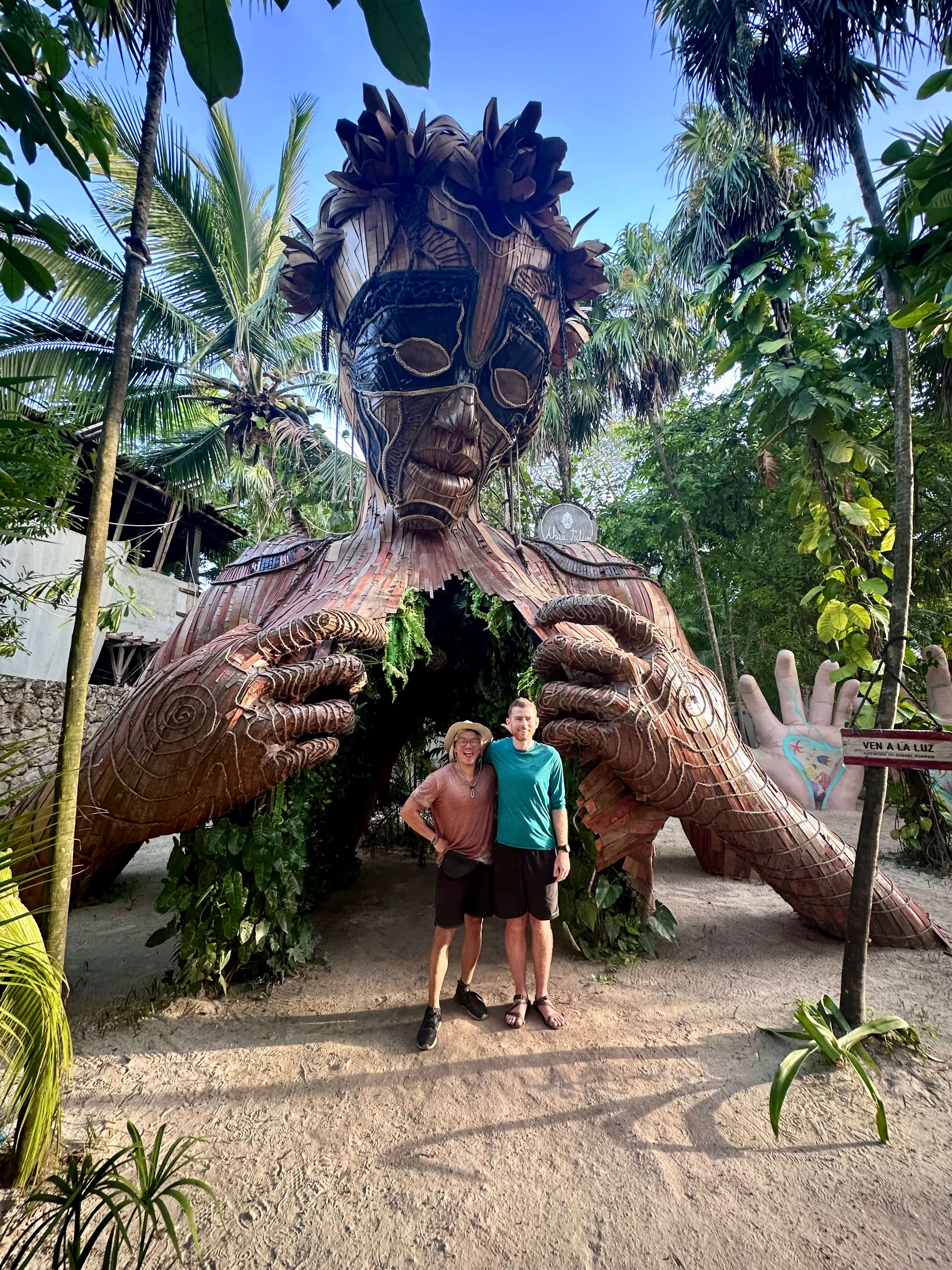
We rented bikes and cycled 50km along the beach road to Sian Ka’an Nature Reserve, in 40°C heat! Despite broken handlebars, seats and brakes, we reached the Boca Paila Bridge, saw families of manatees, and watched a barracuda attack. On our return we stopped at picture perfect beaches and cured our heat exhaustion playing checkers in a cafe. We got photos with the famous Come Into Light sculpture, swam to a small island for sunset, and returned for drinks and more cheap tacos with friends from the hostel.
The next day we got a colectivo (local minibus) to the Tulum Ruins which sits impressively on a cliff, saw more beaches, and spent most of the day swimming in Cenote Calavera, which had an addictive jump into the Underworld. All cenotes are unique, but this was the best one I came across, and it had a cocktail bar!
Bacalar
Bacalar is a tranquil lagoon town near the Belize border, famed for its Lake of Seven Colours. It has impossibly clear freshwater and sun-drenched days that make it one of Mexico’s slowest and most peaceful backpacker stops, except for Wednesday which is party night! Kevin hadn’t intended to continue south as he had a flight home from Cancún in a week, but convinced himself to continue for now. We joined a large group here which was a nice change. Highlights of exploring the town were an all you can eat local breakfast, and getting tacos from someone’s house at 2am.
Bacalar began as a Mayan trade hub named Bak Halal, meaning ‘Surrounded by Reeds’. It became a target for 17th-century pirates, leading to construction of the Fort of San Felipe to protect against raids. It’s now a piracy museum with great views. The best thing is Los Rápidos; a lazy river where you walk boardwalks to the top and float back down, with breaks spent at the bar and sun loungers beside. This was a perfect day. Aside from that we spent our time as you should; with all you can eat tacos (I had 15), a mojito class, lazy time in hammocks, and jumping from the hostels pontoon. This peaceful lake seems to consistently keep travellers longer than they plan.
From here Kevin headed north for his flight, as I boarded a bus to the border. There’s a $30 exit fee when leaving the state of Quintana Roo, which is paid by card and went smoothly. Some people talk their way out of paying, but no one today. Belize is the only English speaking country in Central America. They have the British Queen on their money, and their food is distinctly different to the rest of the region. I noticed the houses changing as we drove towards Belize City, where I boarded my ferry.

Belize
Caye Caulker
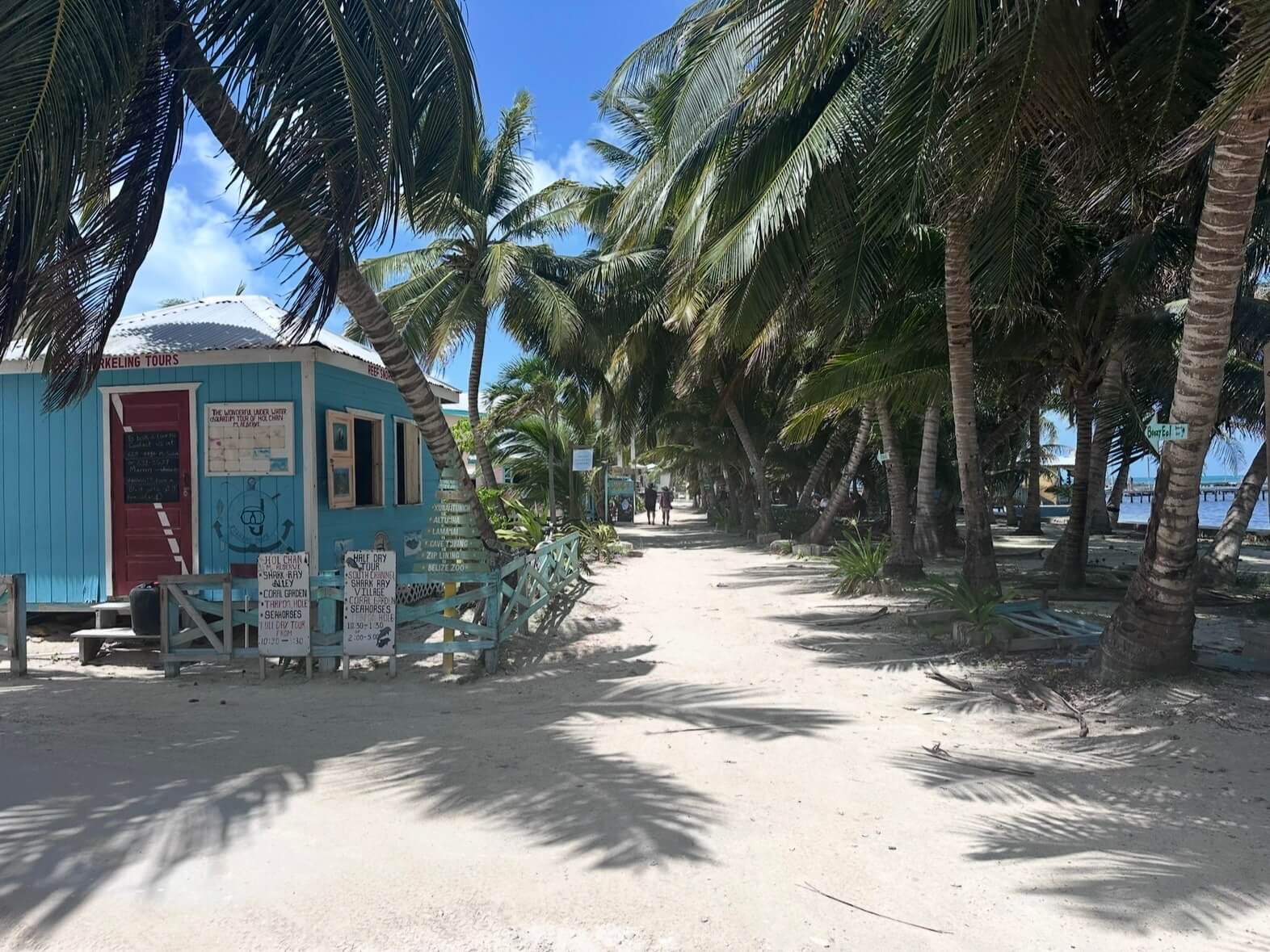
Caye Caulker is a tiny Caribbean island where golf carts replace cars, the motto is Go Slow, and days revolve around snorkelling, rum punch and sunset swims. In 1961, Hurricane Hattie divided the island in two, leaving a narrow channel called The Split which is the best place to spend evenings at the bars and diving boards. I stayed in a small, beach style hostel that was so hot in the day that it forced you to go explore. I walked a lap of the island, thinking every iguana in the mangrove was a crocodile, and marvelling at the walls made of shells. Cocktail bars overlook beautiful piers and a creepy stingray beach where they swim over your feet. The nightlife was really fun too, spent with nice people from the hostel, fresh coconut curry, and 50 cent bottles of rum.
The real draw is the Belize Barrier Reef; second largest after Australia. I spent a day snorkelling in the Hol Chan Marine Reserve which manages and protects it. We swam with 50+ sharks and a manatee, saw turtles, lobsters and sea horses, learned about the bright coral, swam through an underwater tunnel looking for sea snakes, and I got the fright of my life from a jumping tarpon. It’s the perfect way to spend a hot day, topped off with jerk chicken and Marie Sharps hot sauce while watching the sunset. Being on the island made me understand the Go Slow mentality, especially when their favourite fried breakfast of fryjacks leaves you in a food coma.
San Ignacio
San Ignacio is a rugged inland town, historically used for extracting mahogany and gum trees. Now known for jungle hikes, caving expeditions, and off grid Mayan ruins that offer a wilder contrast to Belize’s Caribbean coast. Most pass through on route to Guatemala, but I was glad to spend time here, and it gave a chance to learn some local creole (which sounds Jamaican). The town is quiet, mostly just nice markets and restaurants. The hostel was a lot of fun with chill evenings of guitar, hammocks and movies. It was close to surprisingly good gyozas and a bar with live music.
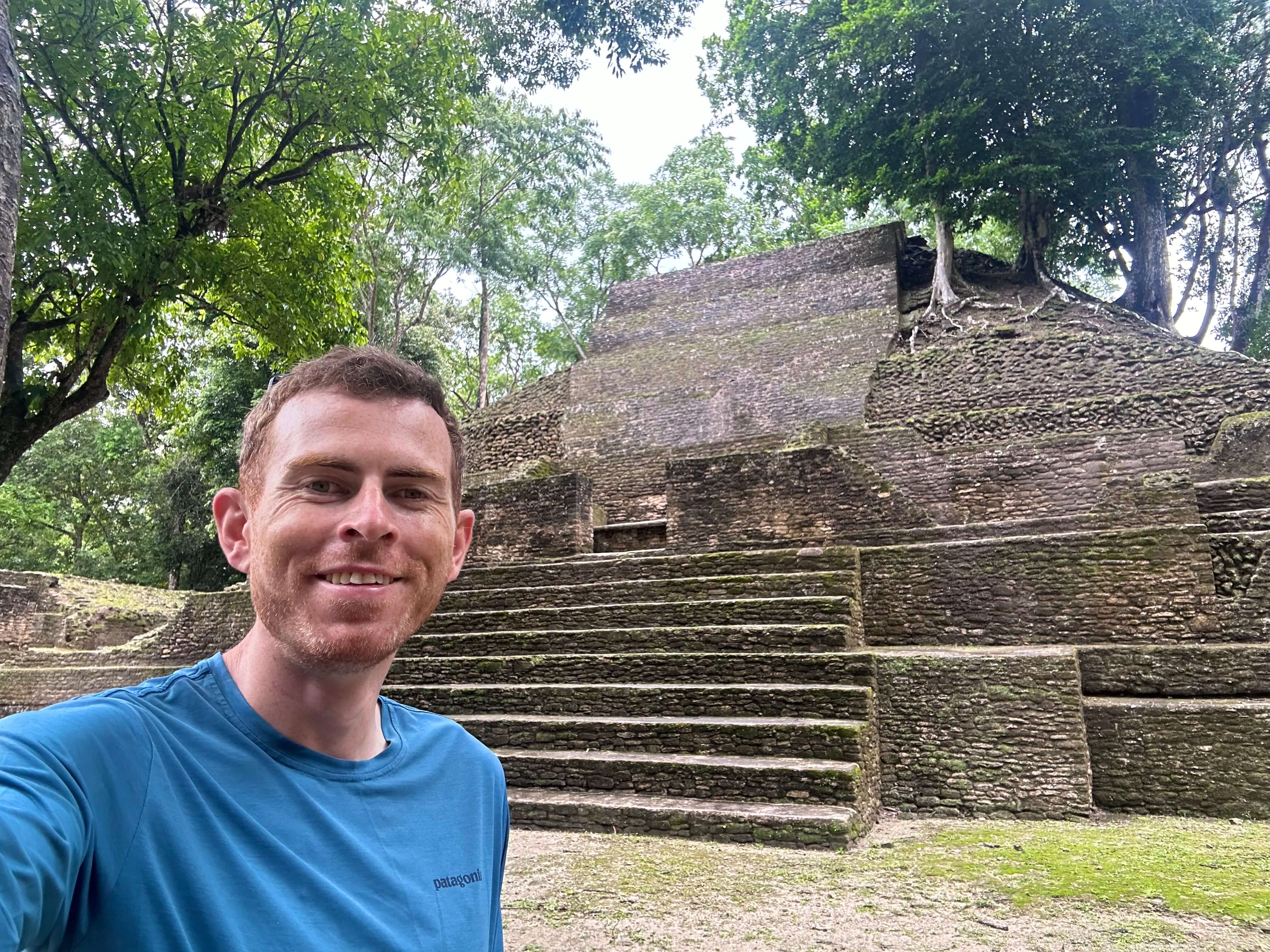
I visited the Mayan ruins of Cahal Pech, where I climbed eerily steep steps and could see a clear distinction in the Classic Period style, before being hit with biblical rain! The Iguana Conservation Project is a nice visit too, learning about the overpopulated Red Iguana that eats walls and foundations, contrasted to the endangered Green Iguana which struggles to survive alongside. The babies are exceptionally tiny, and their tails are razor sharp.
ATM Caves
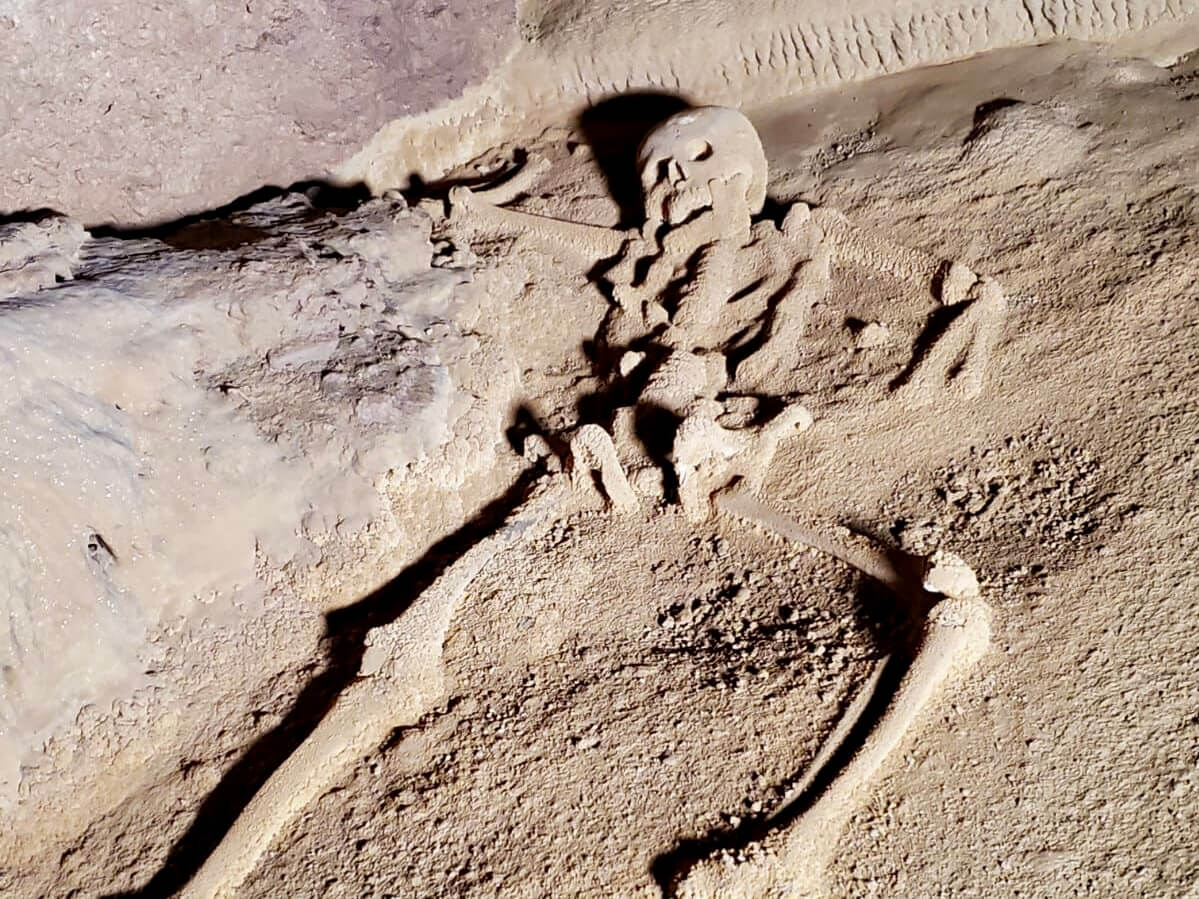
Despite being tiny, Belize has thousands of caves, with over 90% containing Mayan artefacts. So much that it’s been deemed impossible to move to museums. Caving is popular, and people are trusted to not interfere with items. In rare cases they’ve found human remains, the most famous being the 14 skeletons found in the ATM caves.
Actun Tunichil Muknal is incredible. Hours of swimming and climbing through pitch black passages to reach huge rooms with pillars that look like cathedrals. Thousands of pots contained grains, water and blood, in what was likely offerings. Carbon dating places everything between 800 to 1000 AD, corresponding with the drought which would have dried the entrance and made access possible. Cave paintings and carvings also depict Chaac, the god of rain.
The main chamber is a solemn place where shoes are left outside and pockets must be empty to protect what’s within. It’s a huge room that makes you feel tiny. Our small group were alone in the cave as we sat with the most well preserved skeleton, calcified but unmoved for 1,000 years. It was an experience I’ll never forget.
Guatemala
Flores
Two hours of nice roads and another easy border crossing brought me to my third country. The exchange rate and low value notes in Guatemala has everyone carrying thick stacks of money and feeling like a millionaire. The streets are loud from chicken buses, which are donated school buses from America that have become the main public transport in the region. I noticed a lot more big brands and chains on the road, even seeing a Walmart.
Flores is a colourful island town set on Lake Petén Itzá, with picture perfect cobbled streets. It was once known as Nojpetén meaning ‘Great Island’, and was the last Mayan settlement to fall to invading Spanish in 1697. A colonial town was built in its place and a bridge now joins to the mainland, where there’s a nice mall and market. There’s not a lot else to do here so evenings revolved around cafes, street food, ice-cream and watching a volleyball tournament that was on, which ended with a big festival. Flores is most famous for being the gateway to the ancient Mayan cities; the most famous being Tikal.

Tikal
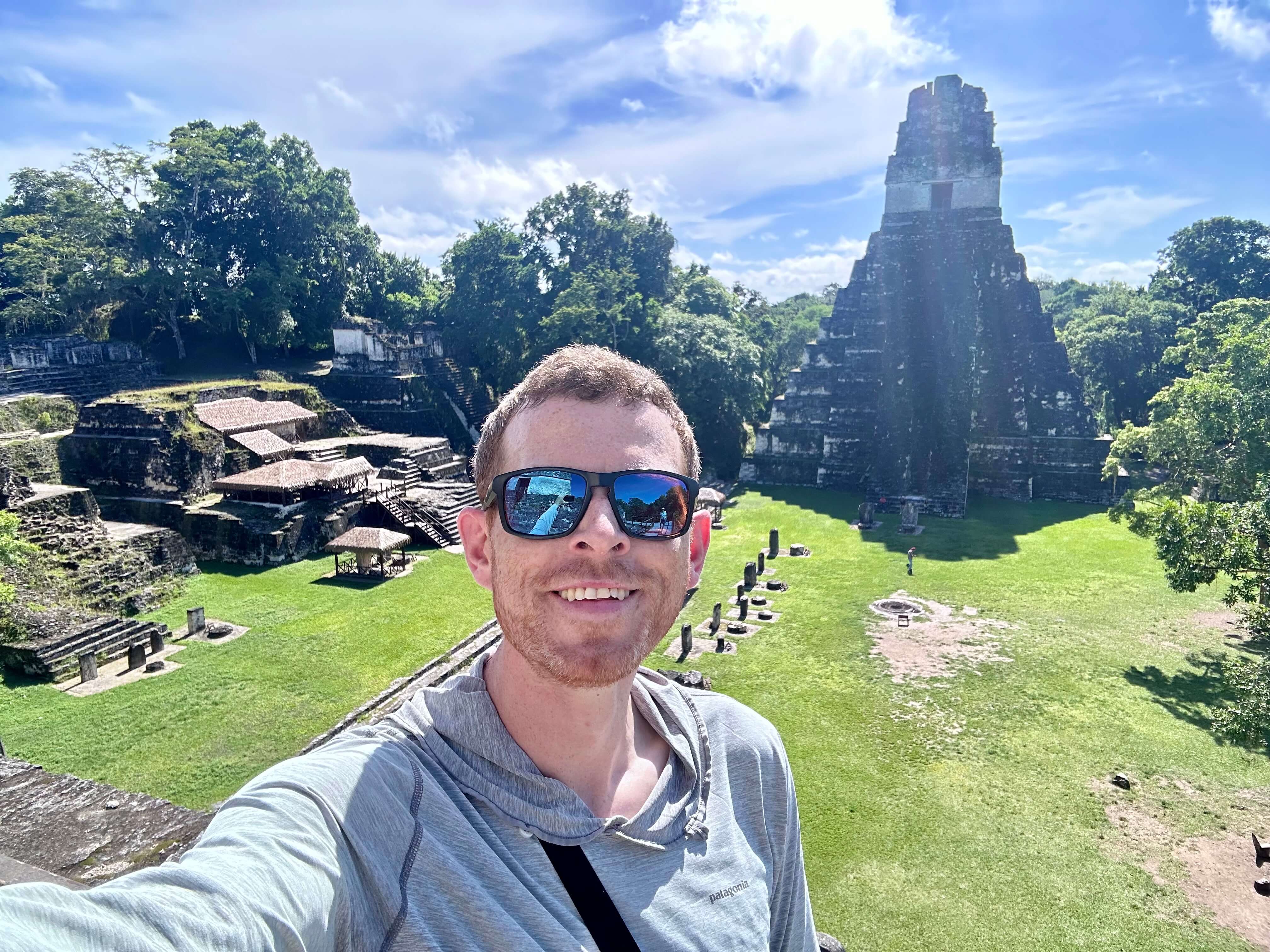
Tikal was the capital and largest city of the Mayan Civilisation, peaking with a population of 100,000 before its abandonment in 900 AD. It has over 3,000 structures including towering limestone temples, palaces and plazas. Also sophisticated urban infrastructure like causeways, reservoirs and water filtration systems. Only 20-30% has been excavated, with most mapped only by lidar scanning of the jungle. It feels like a hidden city that’s been reclaimed by nature. It’s all preserved in a 575 square kilometer national park full of spider monkeys, crocodiles, toucans and elusive jaguars. There’s a feeling of exploration here. It seems more authentic and significant than Chichén Itzá in many ways.
I visited as a day trip with Molly & Martine who I’d travelled with since Bacalar & Caye Caulker. Our guide was native Mayan and grew up in Tikal. He had a deep pride in the area, and an interesting insight into the positive impacts of global attention and archaeology. Meandering through jungle reveals glimpses of uncovered towers. As we walked we learned about the local plants and animals, stopping when the guide spotted a baby tarantula (a mother would be three times larger). From the top of the towers you get a real idea of the scale, seeing the full panorama.
Semuc Champey
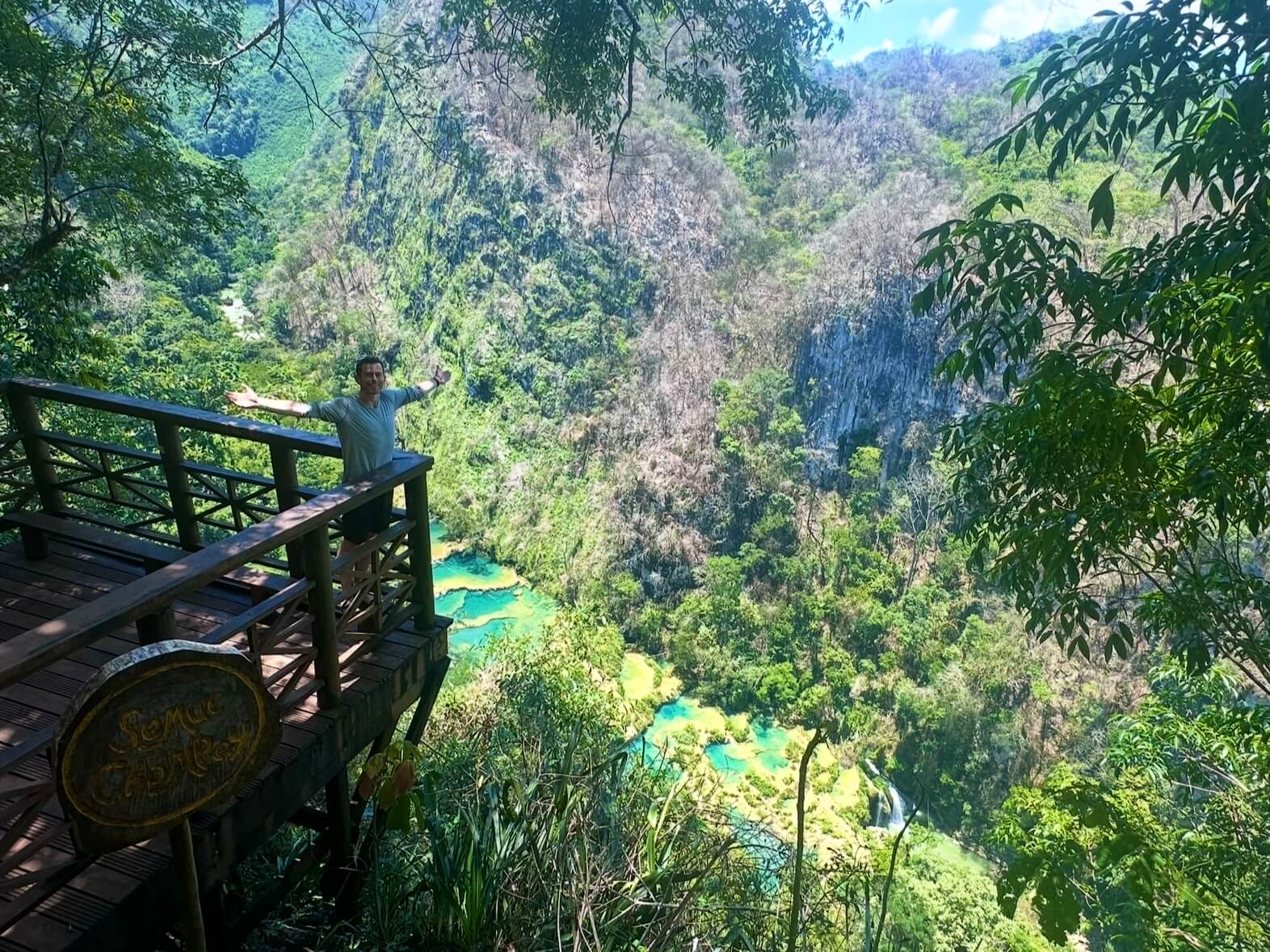
Semuc Champey is a remote jungle paradise known for turquoise limestone pools that cascade above an underground river. It’s a long journey on terrible roads, but definitely worth visiting. I stayed in nearby Lanquin, which is tiny but scenic. At my hilltop hostel I met Joe & Charlotte, with whom I played a lot of pool and dominos. No light pollution means the stars are incredible here. Evenings were well spent watching sunsets from the pool, surrounded by the glow of fairy lights and an endless jungle. The national park was thirty minutes away, which we reached by hitch-hiking.
The park sits where the Cahabón River disappears into deep limestone caves. This looks terrifying in person and gives Semuc Champey it’s name; translating to ‘Underground River’. I did all the touristy things; caving through tight passages by candlelight, the giant rope swing, swimming under a waterfall and tubing down the river. Then the steep hike to the main viewpoint, and finally relaxing in the many pools. It’s a fun place to explore, jumping and swimming your way around the ledges and waterfalls to see all it has to offer.
Antigua
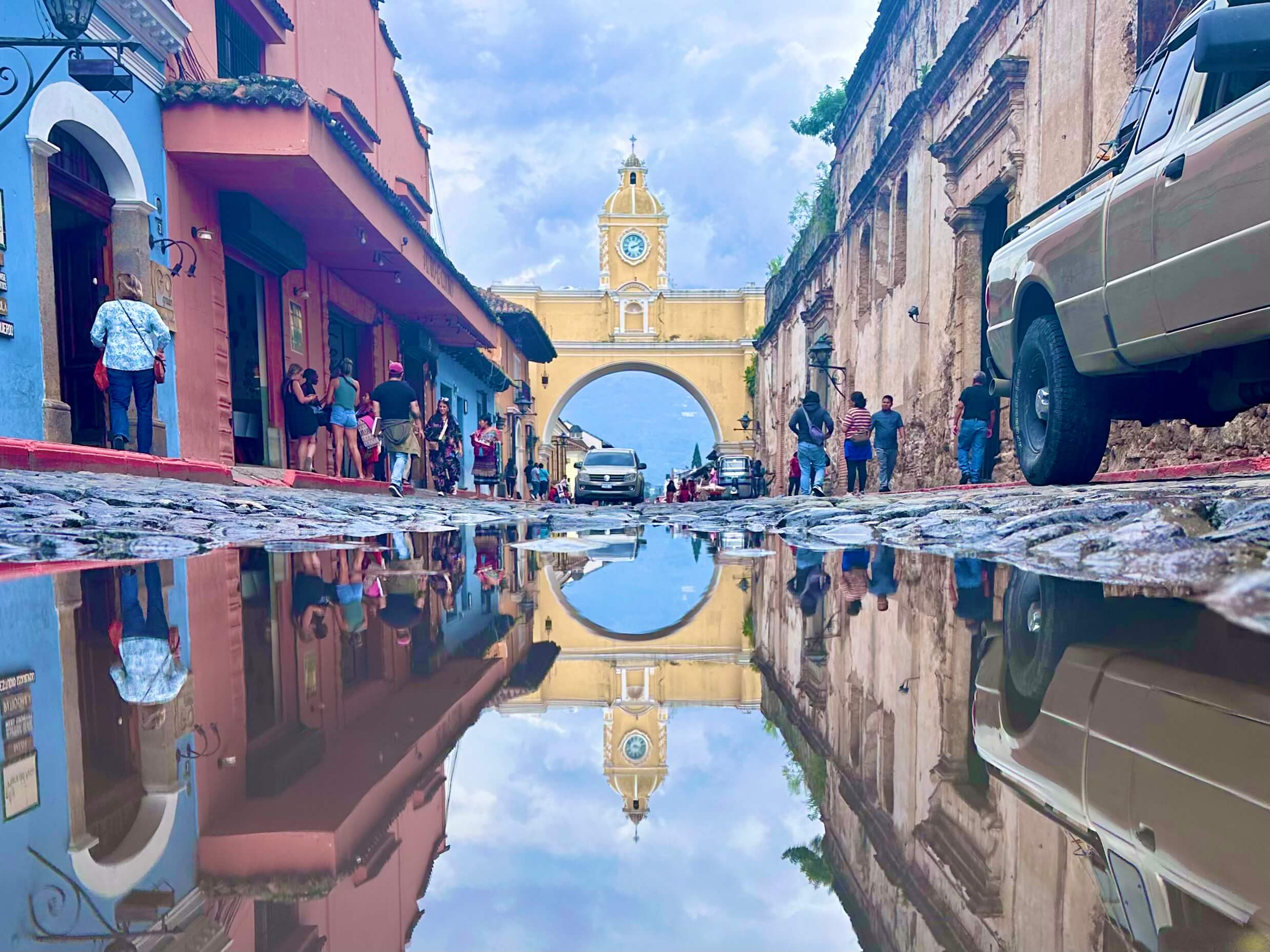
Antigua is a beautifully preserved colonial city framed by huge volcanoes that dominate the skyline. The town is very popular with backpackers because of its great food, pretty cobbled streets, pastel facades, and many rooftop cafés. It was here I reunited with Kevin, who had changed his flights to extend his trip. In all we stayed a week here, feeling at home as we kept meeting lots of old and new friends at our hostel, which served free communal dinners. The cool breeze from the mountains was a welcome change for me too.
Days in the town included a walking tour, several parfaits, local markets, churches, and walks to parks and viewpoints. Antigua has the ‘World’s Most Beautiful McDonalds’ which did look very nice, but we preferred the equally beautiful Taco Bell, complete with actual bell. There’s a great nightlife here, in the quirky local bars like Café No Sé, or in Reilly’s bar which sold an Irish stout called Gennioss, and where Kevin got two bullseyes in a row to win his first ever game of darts. The great food and homelike familiarity of Antigua had a recharging effect on me, making it my favourite stop in all of Central America.
Acatenango & Fuego
Acatenango (3,976m) is an overnight volcano trek that rewards hikers with views above the clouds, and of neighbouring Volcán de Fuego (3,763m). Fuego is the most active volcano in Central America, erupting with gases and lava every fifteen minutes. Camps on Acatenango are positioned where you can watch the eruptions glow through the night from the comfort of your campfire. Hikers can optionally climb to within 200m of Fuego’s summit where you feel the rumble below your feet, and also can summit Acatenango for sunrise. Both of which Kevin & I did.
I loved this hike, especially as you reach camp and get your first view of Fuego. The elevation makes it quite challenging for most people, but it’s a good trail all the way up. The optional hikes are much tougher, with a volcanic sand that’s hard to walk on, and in our case very poor weather. When we stood on Fuego we could feel the eruptions, but only saw eerie glimpses of lava beside us through a dense fog. A sudden lightning storm forced a quick retreat to camp, and we had similar bad luck with the weather at sunrise. All was made up for though as we sat in camp with hot chocolate, watching the lava rain down through the night. Better weather is advisable, but this hike was unforgettable.
Lake Atitlán
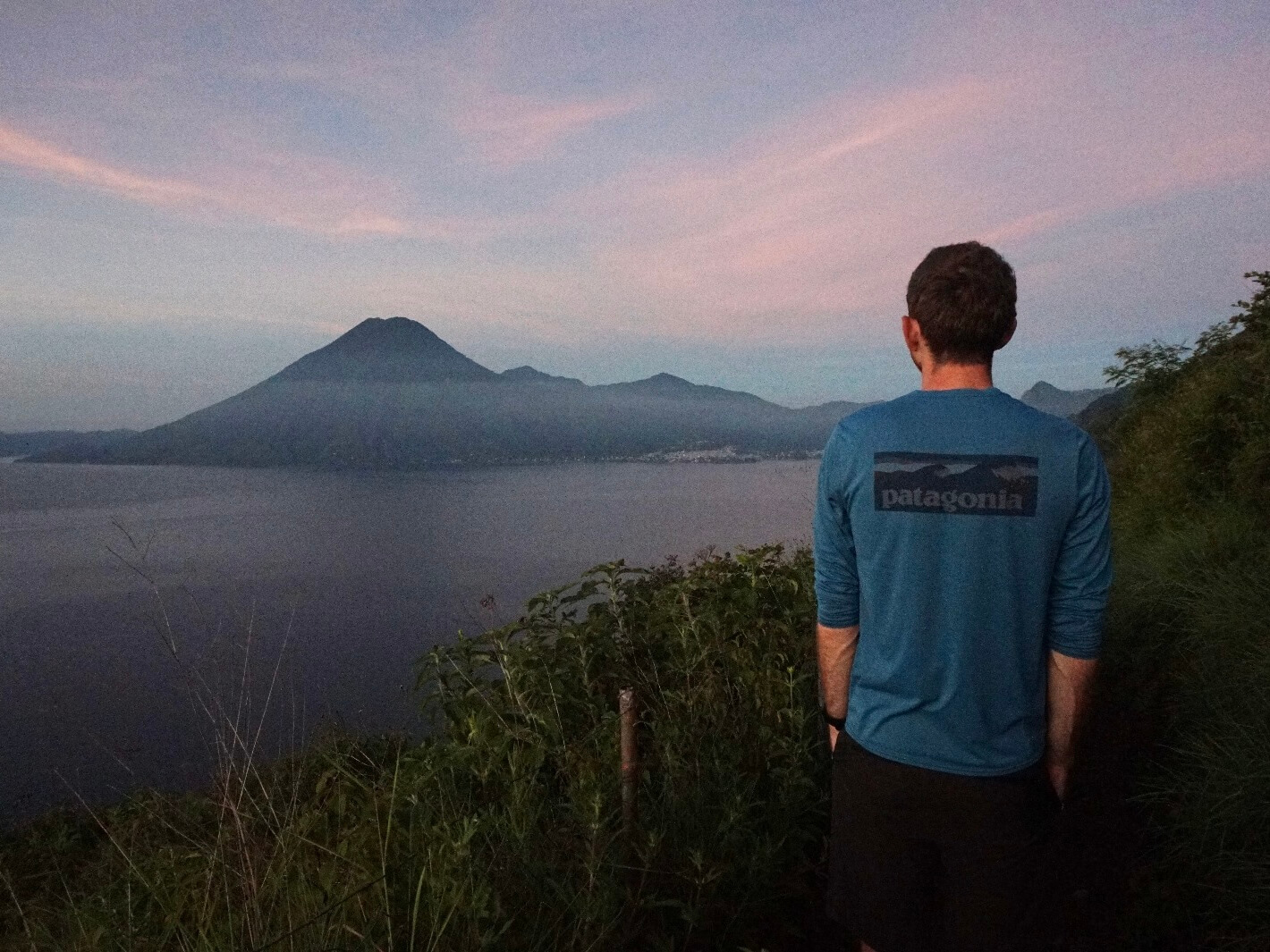
Lake Atitlán is a volcanic lake ringed by dramatic peaks and traditional Mayan villages, where slow boat journeys connect colourful towns, each with a distinct character and rhythm. The Mayan people who lived here were some of the most isolated, which helped in preserving their languages, traditions, and customs. Kevin & I spent two nights in San Pedro, and two nights in Santa Cruz; small towns on opposite ends of the lake. It’s a very calm place, where you meet lots of backpackers doing Spanish courses to benefit from the particularly slow and clear speech in Guatemala.
We did two sunrise hikes, including the Indian Nose, and spent quiet days exploring the markets, churches, cafes and restaurants. We took the ferry to San Marcos, a vegetarian town which feels like a hippie commune. They have amazing food, and are famous for this iconic 12m diving platform. It scared the crap out of me, but I’m glad I did it. The nature reserve here is the best thing about the lake, spending hours in the sun practicing our dives. We got last minute cancellations for Free Cerveza Hostel, which books out months in advance and was unbelievably fun. Finally we explored the largest town of Panajchel, where quiet lake life returns to the real world. The rooftop of a nice Indian restaurant is where I said goodbye to the lake, and to Kevin for now.
There was a lot of talk about Honduras lately, with most people skipping it due to safety concerns. I was nervous about their major cities, and wasn’t interested in the scuba diving hub of Roatan off its coast, but I did want to experience something of Honduras and form my own opinion. I chose to spend four nights in Copán Ruinas, which was six hours from Antigua on local buses. I arranged that I’d meet Kevin in El Salvador after, and off I went. The border was slow and not the most friendly, but went without issue.
Honduras
Copán Ruinas
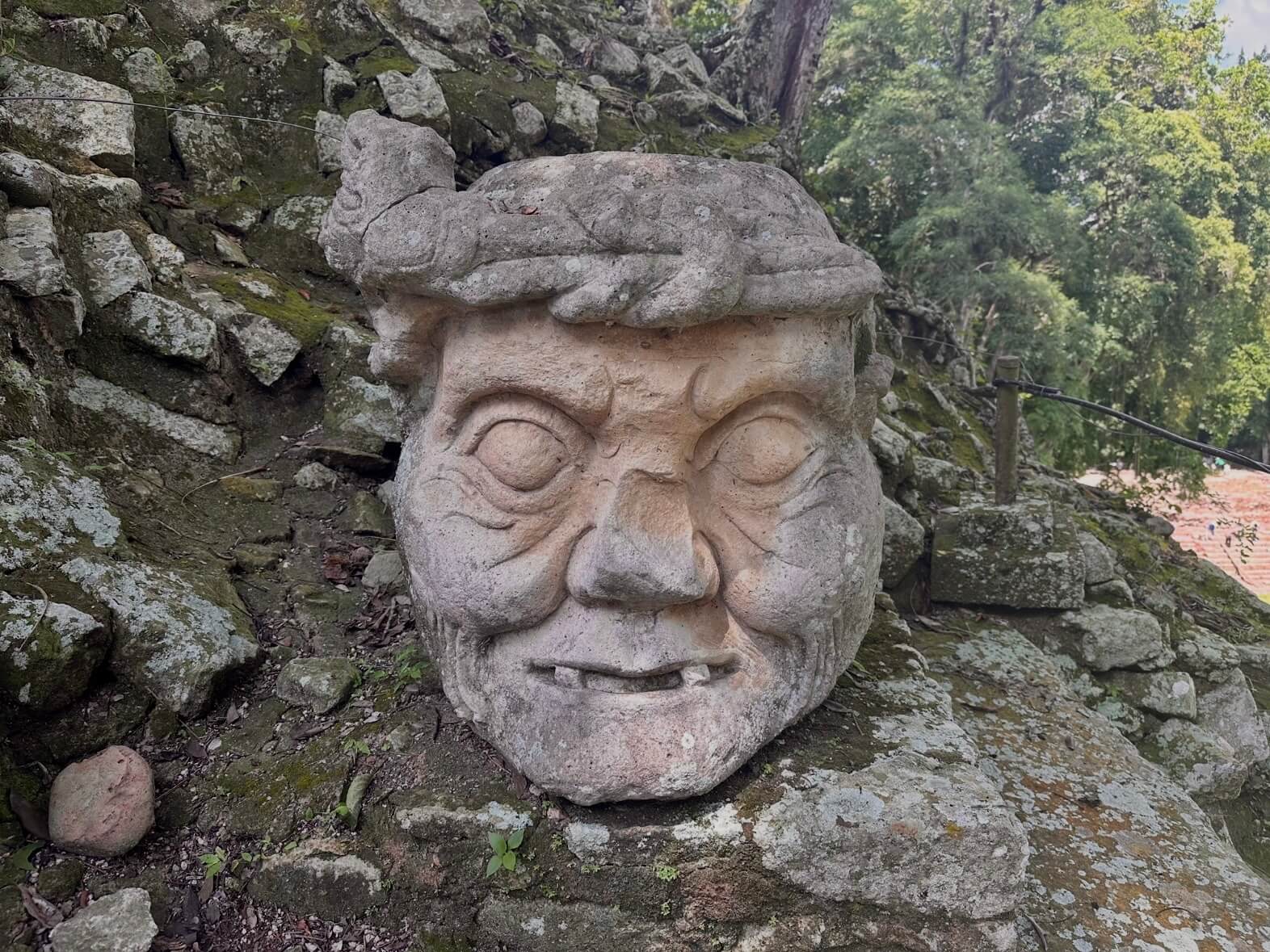
Copán Ruinas is a quiet colonial village situated on an intricate system of Mayan ruins. It’s one of Central America’s most unique and rewarding archaeological stops. The town itself is bright and colourful, full of cafes and ice-cream shops. The local food of baleadas are incredible, like savoury stuffed crepes. There was a lot of energy around, with music and parades to mark their Independence Day. The town and its people are particularly friendly.
The ruins are amazing too, accessed from town by a scenic walking trail. What’s unique is that new temples were built over previous ones, which didn’t happen elsewhere. Tunnels go underneath to show the different building styles and carvings. They also have the largest known Mayan inscription. It was normal for hieroglyphs on the bottom step of a stairs to say what a building is. Here they filled 63 large steps with the entire history of the city and gossip about its many rulers. I explored the residential areas of Las Sepulturas and all over the hilly site, walking below the constant screech of their national bird; the scarlet macaw.
My hostel was cosy and quiet, with a small sign saying: ‘Smile, you’re on the fun side of Trumps wall’. The owner told me lots about life in the country, and how tourism took a setback after recent bad publicity. I met nice backpackers as they moved through, who were finding it safe with the usual precautions. Corruption can be an issue, but the 95% of towns that are away from gang areas seem to be fine. Hopefully tourism gets back to what it once was.
Each day, my door had a note on it with names of incoming guests. One day it said 2x Spanish, another day it said Mairéad. In a small town like Copán, new people stand out. So when I saw an Irish person in a cafe that day, I confused her by correctly guessing her name.
Mairéad was a vet from Dublin on a six month solo trip. So far she had paddled the Yukon in Canada, almost died from food poisoning in Mexico, sailed the length of Belize, camped in the jungle in Guatemala and surfed in El Salvador. Now she was making her way towards Panama and Grenada to volunteer, and to visit Rihanna’s house in Barbados. We bonded as we explored the quiet restaurants, bars and lookout towers of the town. When the day came time to go our separate ways, we made a plan to meet in Nicaragua as we overlapped there next. She headed deeper into Honduras, and after a final baleada, I boarded a bus to El Salvador.
El Salvador
Santa Ana
Santa Ana is a lively colonial city with easy access to the turquoise crater lake of Santa Ana Volcano. Kevin had been here two days so he knew the best hostel and restaurant for pupusas; the national dish of thick stuffed pancakes. He also introduced me to Little Caesars pizza, which always has a queue out the door. The town is nice to explore, and the country is currently the safest in Central America, but this wasn’t always the case.
El Salvador was the murder capital of the world a decade ago. This came from a young, orphaned population after the 1992 civil war, combined with 4,000 deported gang members from MS-13 & Barrio 18 in California. They essentially ran the country, imposing curfews, murdering at will (once 62 people in one night), and controlling every layer of police and media. They had 60,000 members, or 1% of the population, and ran a huge drug trade that benefitted from the country using the US Dollar.
In 2022, President Bukele opened a 40,000 person megaprison and gave life sentences to gang members, most of whom had distinct face tattoos. Within a year, the zero tolerance approach stopped all violent crime. He’s faced criticism in western media for the conditions in these prisons, which he argues are necessary for dismantling gangs. Several documentaries have been filmed inside to show both sides, but he’s definitely correct when he says; “by imprisoning thousands, we’ve freed millions”. The country has transformed, with Bitcoin now a national currency, and several multinationals companies moving in, including a new Google headquarters.
Kevin & I did a walking tour with a local woman named Fátima who told us about having family members killed, being robbed multiple times, and seeing a dead body at ten years old. To her Bukele was a hero, and he had just been re-elected for a second term with 90% of the vote. Another candidate ran on a policy of free all prisoners. It got almost no support, but did scare her.
She was very proud of her country, especially now. She showed us the national theatre, library with 400 year old books, and the city hall which gives free classes in language, art and music. It’s a place that’s healing admirably. She explained how bars and restaurants still keep doors closed and you knock for entry, now out of habit rather than safety. In one of these she drank and recommended a local drink of half orange juice, half coffee. Kevin got one. It was not good.
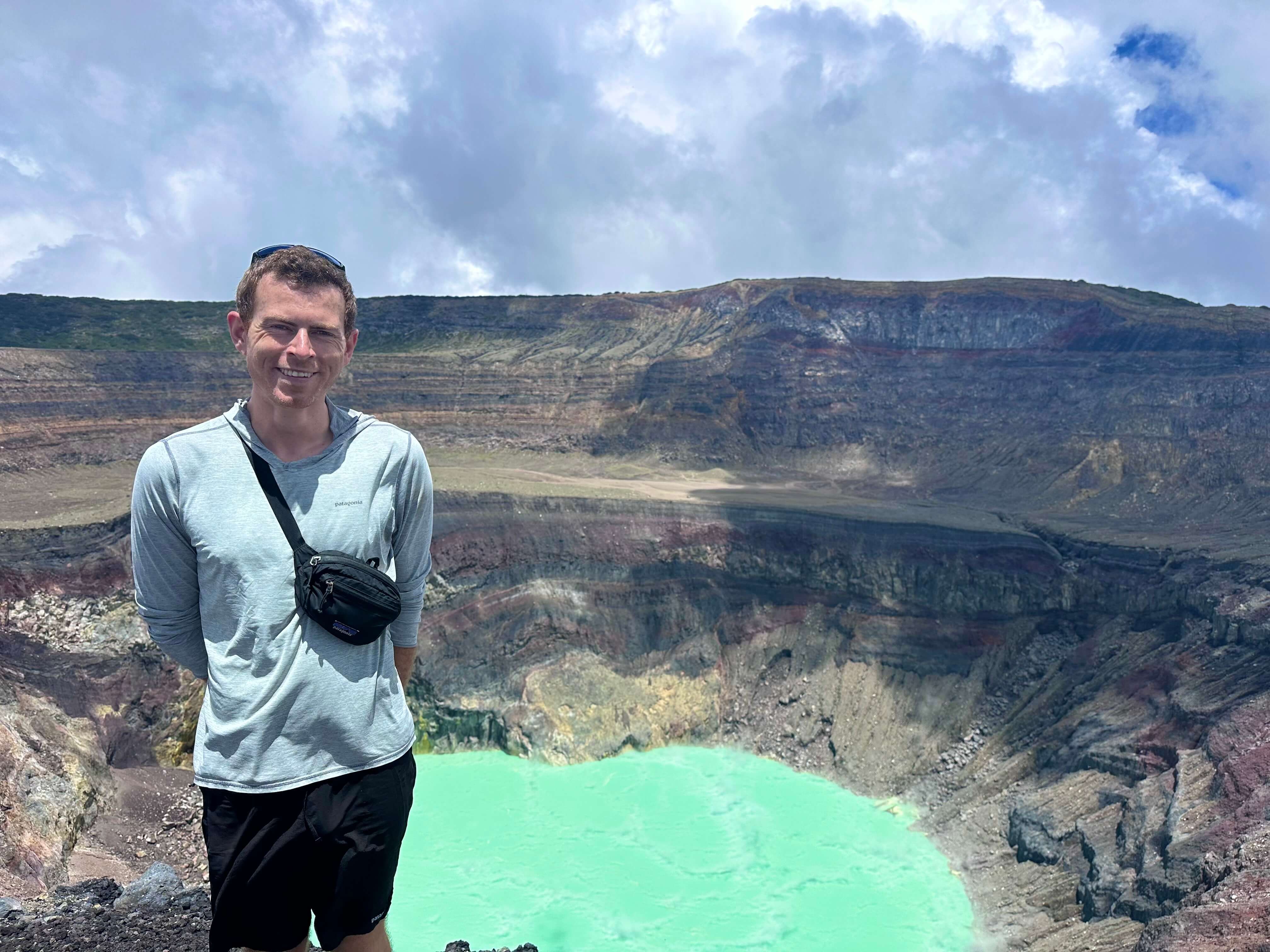
One day we took local buses to hike Santa Ana Volcano. The top is spectacular, with a bright colour that’s become a symbol for the country. A man selling chocolate frozen bananas got a lot of business in the heat. After that we went to Lake Coatepeque with people from the hostel, for an evening of drinks and lake jumping. Getting around is cheap, with a thirty minute Uber costing $5.
Another day we did the Seven Waterfalls Hike in Juayúa. This involved going offroad in 4x4’s to where we’d walk and swim our way through natural pools, float through caves, and climb up several 20m waterfalls. We had a lot of fun this day, and also saw the largest spiders of our lives! Back in Santa Ana we climbed the cathedral for a final panorama view, ate a few more pupusas, and boarded a bus to continue south.
San Salvador
San Salvador is an energetic capital set beneath dramatic volcanoes. It gives a glimpse of modern Salvadoran life by looking like a US city in places, while still holding reminders of the country’s past. We stayed on the outskirts near the national craft market, some great restaurants and Republik Bar, which had GAA jerseys and the Irish proclamation on the wall. In the city we saw a hedge maze, a mini eiffel tower, the KM.0 centre of the country, the National Palace, and the most impressive library I’d ever seen.
We took a cheap Uber to El Boquerón, which has a volcanic crater in its volcanic crater. We walked all the trails of the national park, then made our way to Volcatenango; an old theme park overlooking the city with games, rides, slides and a mini Hobbiton. Further down the mountain we had the best burgers of the trip, then found this rainbow slide, which felt way faster than we expected.
This was the end of the road for Kevin, needing to finally fly home. We said our goodbyes and I boarded a local bus that drove overnight through Honduras to Nicaragua. This was the worst experience of the trip. Endless traffic, chaos at the Honduras border, corrupt police pulling us over to hassle people, an even worse border into Nicaragua (they’re a dictatorship which is extremely suspicious of journalism), and all through my very broken Spanish. I was so happy when I finally reached my hostel and collapsed into bed.
Nicaragua
Léon
León is a gritty and characterful colonial city known for its revolutionary history, student energy, and the rush of volcano boarding. I reunited with Mairéad here, who arrived the day before me. She was able to give a tour of the markets, church, sunset rooftop bars, and brought me for dinner at a very local restaurant with her friends from Honduras. My only addition was to introduce her to the ice-cream at Carls Jr. There wasn’t much to the city, with the streets being quiet and unusually dark. Mostly people are here for the same thing. Cerro Negro; the world’s youngest active volcano.
Joined by a surprising amount of Mormons, we made the trip to the jet black volcano that’s risen from an otherwise green landscape. We carried awkwardly sized boards to the top, enjoyed the view, donned boiler suits and face coverings, then did what’s arguably the most iconic thing in Central America; volcano boarding. You get filthy, and it feels faster than it looks with some losing control and flipping, but it’s so much fun. Easily a highlight of the whole trip.
Public transport is surprisingly good in Nicaragua. We took a chicken bus to nearby Telica another day to hike the most active volcano in the country, joined by Cap who we’d met at Cerro Negro. We had constant wind, rain and fog that meant we saw nothing on the summit. We did see some cool bubbling mud pits, that had a strong smell of sulfur. It was definitely not worth it, but maybe type two fun.

Granada
Granada is a colourful colonial city on the shores of Lake Nicaragua. Known for grand Spanish architecture, lively plazas, and picturesque boat trips through nearby islands. The boat trip with Jorge was fun, and the long walks by the lake too. I did a walking tour of the markets, plazas and churches where I learned about the rivalry between Léon & Granada. It led to the capital city being placed halfway between in the odd choice of Managua to keep both happy. We also went to a chocolate factory and ate weird plantain burgers.
The town was great for street food like the local shaved ice called raspado. There’s good pizza and ice-cream everywhere, and evenings were always interesting spent with people from the hostel, one night at a salsa class. I went to the famous tree house party in the jungle on the Friday, where I seemed to bump into everyone I’d met on the whole trip. Then did some final exploring of the town which included climbing the tallest tower.

Ometepe
Ometepe is a figure-8 shaped island formed by twin volcanoes rising from Lake Nicaragua. It’s known for jungle hikes, waterfalls, and quiet lakeside villages. The slow ferry gives a lot of time to see the towering peaks of Concepción and Maderas. We stayed first in the largest town of Moyogalpa, then moved to Santa Domingo on the narrow strip of land that joins the volcanoes. Our hostel was well placed and cosy, with nice food and easy beach access. This is the only lake in the world with bull sharks though, so we didn’t swim too much.
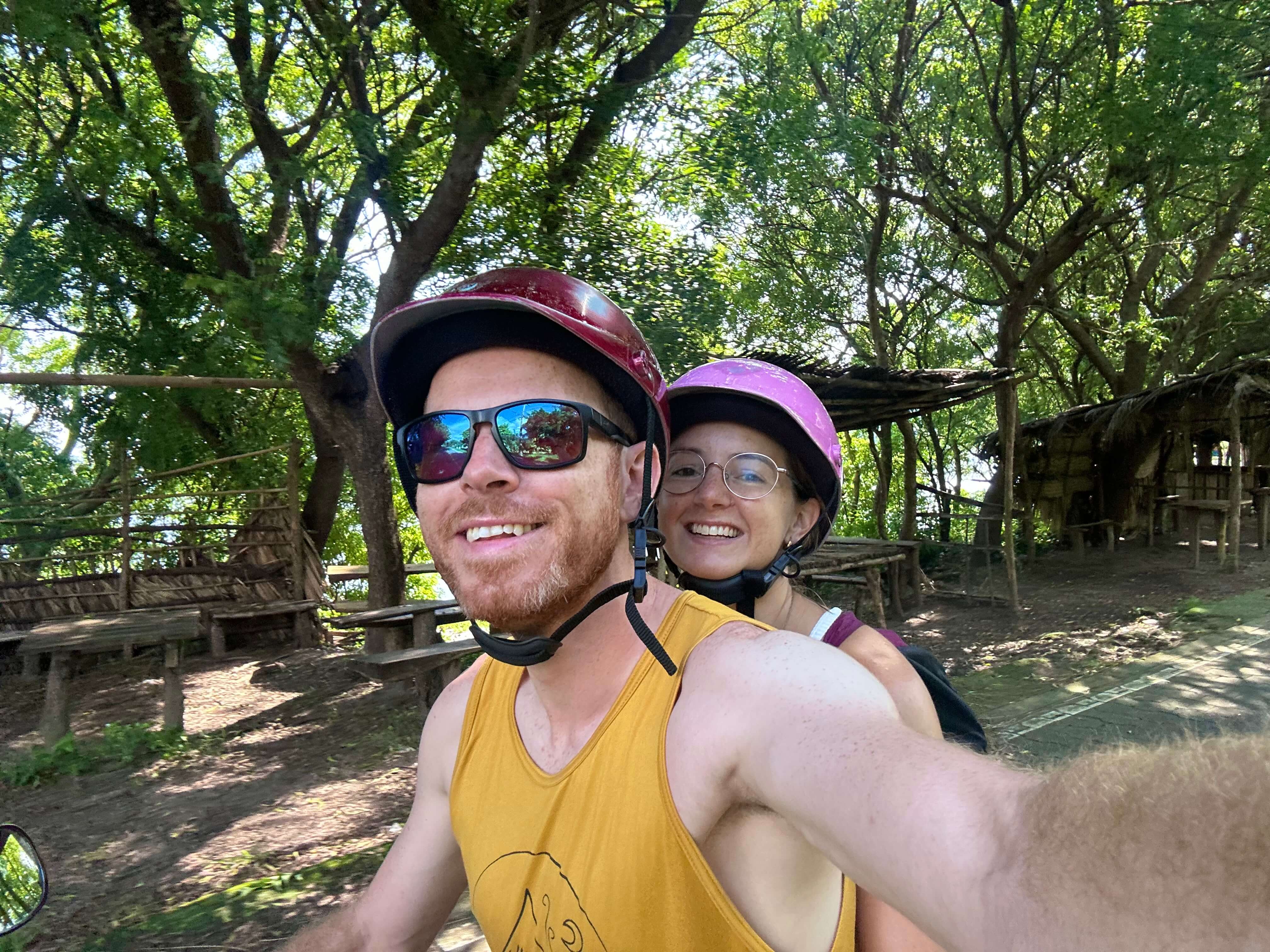
We rented a scooter and explored both sides of the island, which was perfect on these empty roads. We hiked up Maderas until the muddy trails and leaf cutter ants forced a retreat, then drove the coast to San Ramón instead. We jumped across boulders in the water, ate constant good food (lots of Italian), climbed a huge treehouse, and the highlight was swimming in the natural springs of Ojo de Agua. Also, the best food is in the town of Balgue.
San Juan del Sur
San Juan del Sur is a lively surf town known for golden beaches and rolling waves. It was my first time reaching the Pacific coast, and I did two days of surfing on Playa Remanso that went surprisingly well. The first being taught by Gabriel, and the second trying to pass on my new knowledge to Mairéad. The town is full of outdoor shops, nice restaurants, and cocktail bars that overlook the water. It’s a chilled out place to spend a few days, where I had the best tacos since Mexico.
What I remember most is the dramatically bright sunsets, best viewed from either peninsula that surrounds the town. On one side is a surprisingly big Christ the Redeemer statue. I did a very steep run to this to see the sky light up like it was on fire. Another night, Mairéad and I hiked the other peninsula to a lighthouse, with a great view back over the town. We were surrounded by fireflies for the walk back, then got piña coladas on the beach. What a life!
A lot of backpackers skip Costa Rica because it’s become so expensive from US expats. $10 beers, $25 dinners, $50 hostels and $75 buses, in a region where things usually cost ten times less. It was definitely pricey, but was worth it. We took a short bus to the easy border crossing, then three more buses to our first stop.

Costa Rica
La Fortuna
La Fortuna is an adventure hub beneath the perfectly conical Arenal Volcano, where rainforest hikes, waterfalls, hot springs, and wildlife encounters make it one of Costa Rica’s most popular stops. We did the hike around Arenal, seeing fields of hardened lava from the 1968 eruption, and the strikingly green; Red-Eyed Tree Frog. The other pricey but unmissable things were swimming below La Fortuna waterfall, and spending an evening at a thermal bath. The hottest pool was near boiling and had a slide into it that made for hilarious moments of shock.
Our hostel was nice and quiet, with a guitar for the evenings. You meet a different demographic in Costa Rica, doing more short holidays and less long term travel. Public transport can be frustrating too, as everything runs via the capital of San Jose. Buses to our next stop (a remote boat dock) were near impossible until I found a hack. A rafting company in Tortuguero offers free pick up and drop off from anywhere in the country if you do a days rafting, which is $150 with dinner. We shuttled the entire width of the country to the east, where we stayed and rafted, then the entire length of the country south. Compared to buses it was a steal.

Tortuguero
Tortuguero is a remote jungle village hidden in a maze of rainforest canals, where boat safaris reveal monkeys, sloths, and crocodiles in one of Costa Rica’s richest wildlife habitats. The name means ‘Land of Turtles’ and it’s the best place in the country to watch giant sea turtles nesting, and if you’re lucky see the eggs hatch. The shuttle dropped us to our boat, then we winded through the canals to the tiny village.
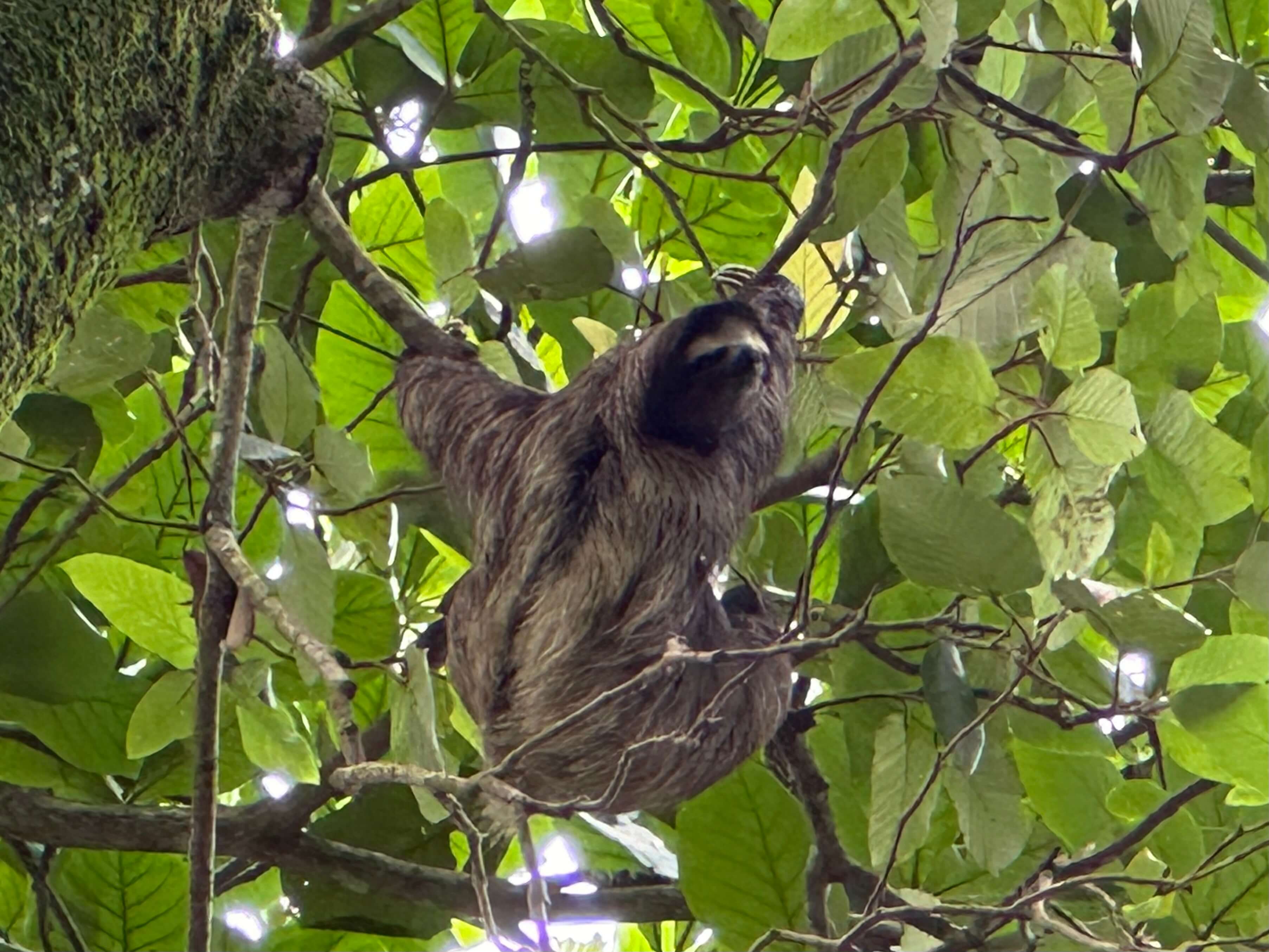
It’s a basic but pretty place, with no roads and public water tanks on every path. On one side is endless beaches, which are covered in turtle trails every morning. The other is dense rainforest, where we took a boat one day to nearby Pococi to climb the areas highpoint and see another town. That day we saw huge spiders, bats, fighting fire ants, red poison frogs, and finally a sloth! The amount of wildlife around is why I almost got a heart attack from a cat that jumped onto my bed one night.
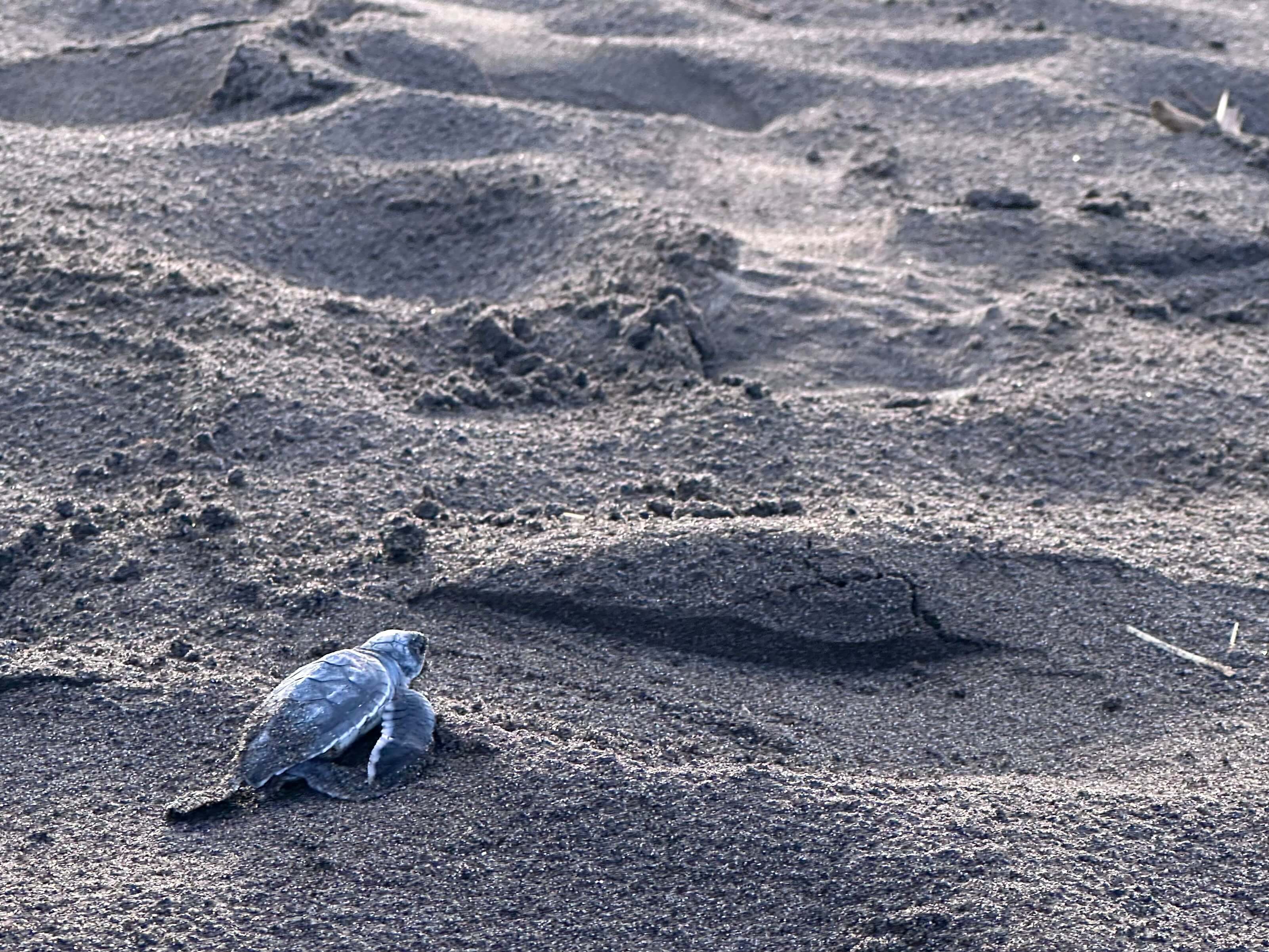
The town had nice food and beer, which you could eat on the beach while building forts and watching sunsets. We cooked a bit to save money, but that was fun too in our little jungle kitchen. Every morning we walked the beach hoping to see turtles hatching before it gets too warm. On one lucky day we saw this little guy make a run for it. We bought turtle bracelets to mark the day that haven’t come off yet.
When it came time to leave, we got a boat to the mainland and headed to raft a flooded Pacuare River. This is a steep, big-water Grade 4 run, all through dense jungle. I talked my way into a kayak while Mairéad was in a raft with other clients. It was a pushy but very fun day, some of the rapids reminding me of India. Off the water we were given a dinner and driven all the way to our next destination.
Puerto Viejo
Puerto Viejo is a laid-back town known for reggae and Afro-Caribbean culture. It’s just above Panama, surrounded by palm lined beaches and national parks. The term Banana Republic first applied to Honduras, whose lands were run by the United Fruit Company (now Chiquita). That companies second biggest exploit was here, and the current population are the descendents of immigrants that worked on banana plantations and railroads. Mainly Jamaicans, who survived the mosquitos better than most.
The abundance of wildlife is definitely what makes Costa Rica special. Walking from the town we saw green poison frogs, hundreds of spider monkeys, and several sloths. We explored Talamanca Viewpoint (which gave me vertigo) on the way to Cocles Beach, where we swam and tried odd local drinks. Back in town we tried pizza rolls that an Italian man assured were authentically Italian, ate yet another pizza and enjoyed the fun hostel.
From here, it was a short bus to the final country of Central America. Just over the border we boarded a boat to our island.
Panama
Bocas del Toro
Bocas del Toro is a lively archipelago of jungle-covered islands, where backpackers hop between beaches, coral reefs, and overwater hostels. The islands were a pirate hub, then had a banana boom, and now suvive off tourism and conservation. The area gets hit hard by storms and was rebuilding while we were there. Every hostel in Panama offers ‘free breakfast’ in the form of pancake powder. We ate a lot of pancakes while this was still novel. Long walks across the island brought us to nice beaches, a pool, yet another pizza, and cheap bottles of Cerveza Panama by the sunset.
One day we did a boat trip around Zapatilla Island. This included snorkelling at places like Dolphin Bay and Starfish Beach, seeing sloths and turtles, and exploring small islands for hours. Some had trails, others were just rings of beach where you could wander and find natural pools or quiet ocean all to yourself. They were likely the most picturesque beaches I’d ever seen. Back in Bocas we watched a local parade, sang terrible karaoke, and played darts equally badly. Then boated back to the mainland to catch our bus.

Boquete
Boquete is a cool mountain town surrounded by cloud forest, coffee plantations and Barú Volcano. It’s great for hiking, and was actually cold which made it feel cosy. We were finally becoming sick of the free pancakes, so made use of the nice restaurants in town with meaty BBQ’s and huge platters from Dale Pues. There’s nice parks and walks along the Caldera River, and we visited a chocolate factory and some cool souvenir shops.
There’s an easy local bus up the valley, which we used to access the Lost Waterfalls Trail. It was a little muddy and cold, but worth it to see the three huge drops. I swam in them all for a birthday video I was making, and Mairéad braved the best one. There were friendly dogs and cool bridges on the route, and we had it all to ourselves due to it being freezing cold up there.
This was the end of the road for Mairéad & I, taking buses in opposite directions. We made plans to meet again, but neither of us realised how soon that would be. We said our goodbyes for now.
Panama City
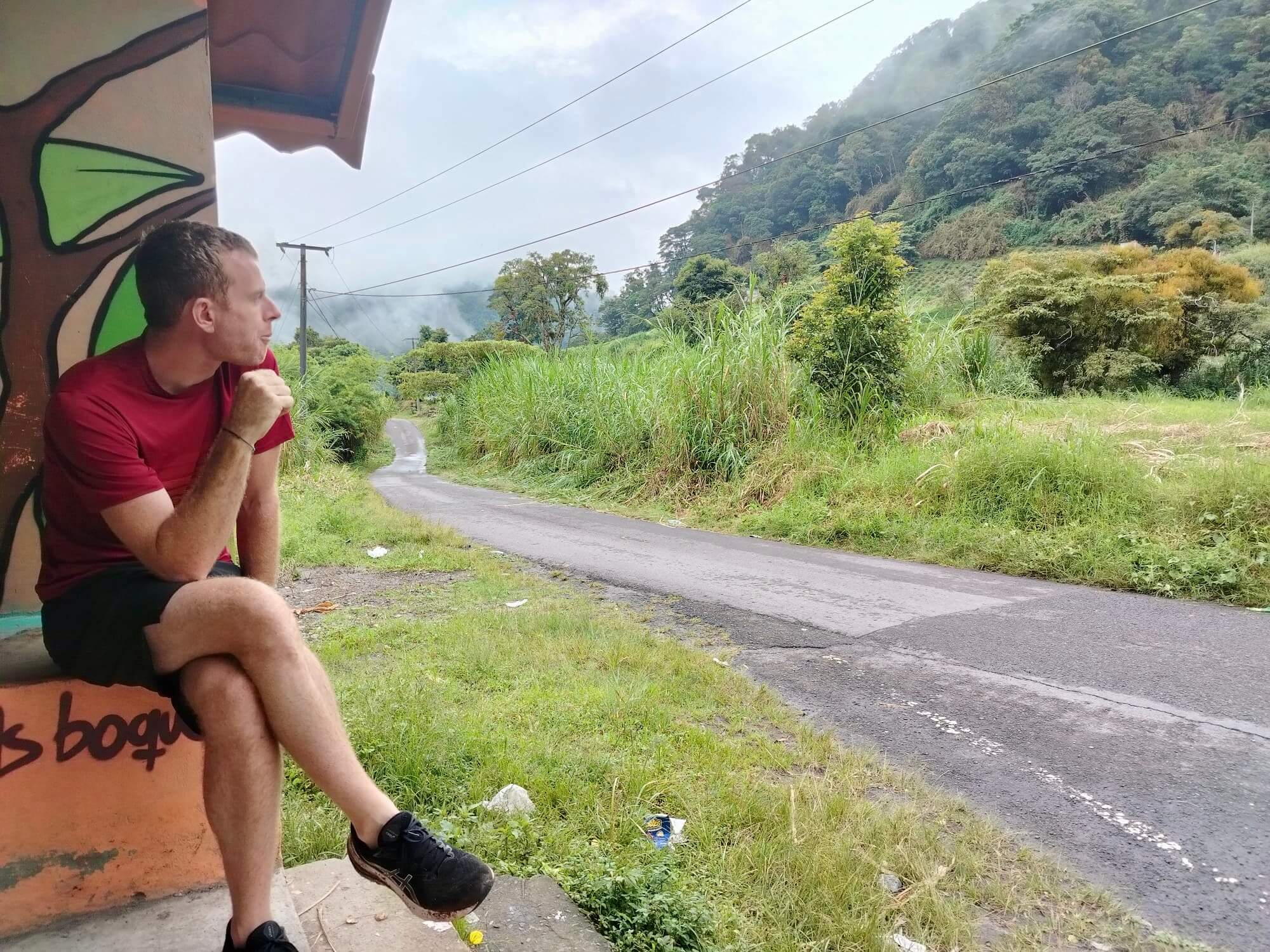
Panama City is a modern capital with a glittering skyline over colonial streets, and home to the engineering marvel of the Panama Canal. The weather was horrible while I was here, so a lot of time was spent in shopping malls, but I did see the main streets and ate in the worlds only Coca Cola Cafe. The oldest cafe in the country, which was built for canal workers. The hostel was fun, and I seem to be improving at playing pool.
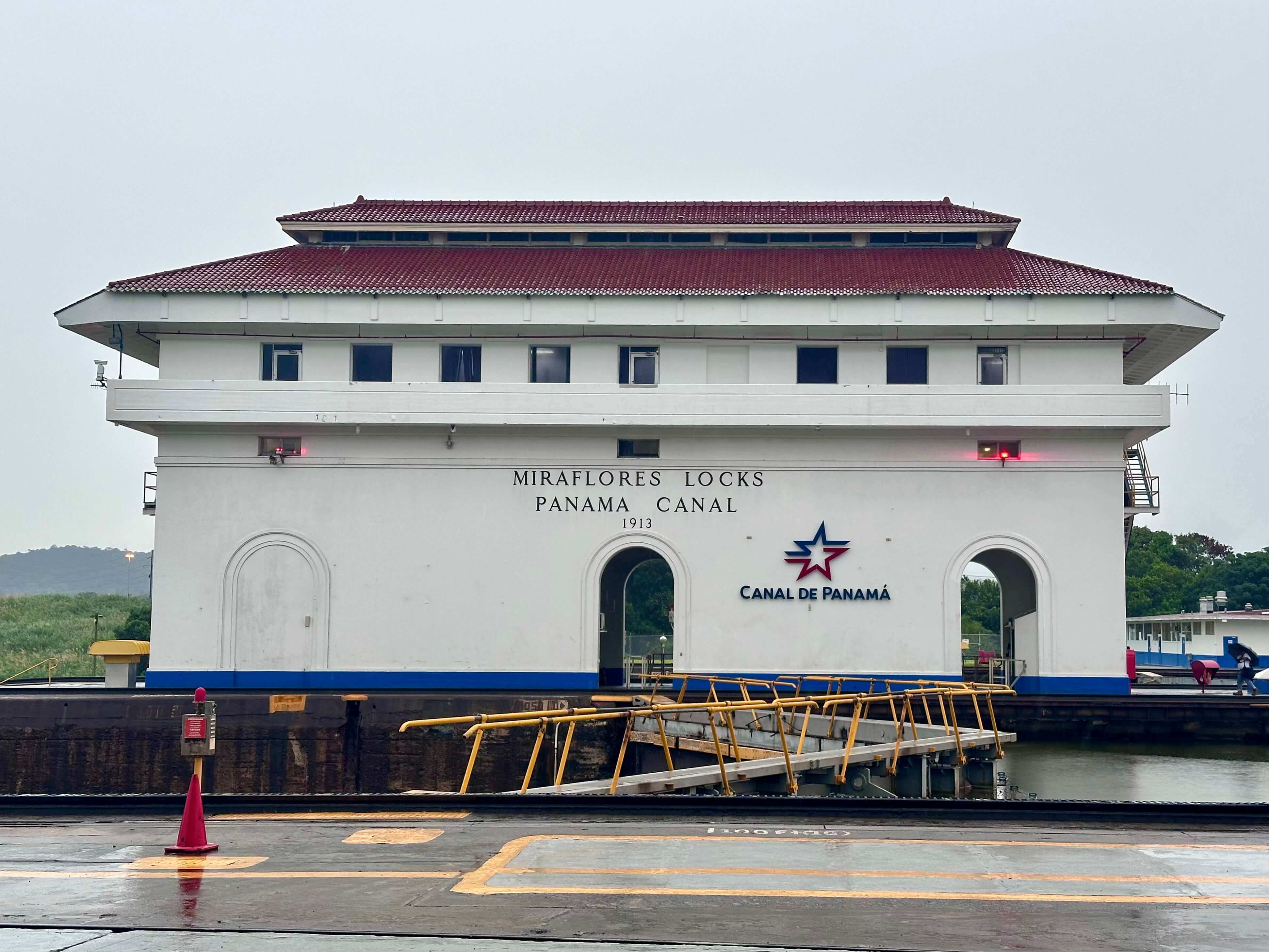
In the few hours of clear weather, I took a bus to Miraflores Lock to see the ships passing through the canal. Viewing decks make it a fun visit, and the story is narrated by Morgan Freeman in an IMAX cinema. Being there gave context to just how crazy the project was. The 25,000 people who died in construction, the issues of swampland, and the shear scale of it all. I found it incredibly interesting, especially the previous failed attempts through Panama and Nicaragua.
For trips down Central America, this airport can seem like the end point, but it definitely is not. I heard countless times that sailing to/from Colombia was either peoples highlight, or if they skipped it their biggest regret. Sailing boats take four days to go from here to Cartagena via the San Blas Islands. I booked the four day crossing on a ten person yacht with Blue Sailing, and it was incredible.
San Blas Islands
This remote chain of islands is known for palm trees, sandbars, turquoise water, and local Guna communities that make up the regions most untouched tropical location. Joined by the nicest group I could have hoped for, and in the good hands of Raul & Captain Original, we spent our days exploring the tiny islands. We’d swim, snorkel and kayak our way to remote shores, then return to the boat for amazing food and the fun atmosphere that comes from having no internet.
Under constant sun, we jumped from the boat and snorkelled through huge reefs. As we sailed we were surrounded by excited dolphins. On tiny islands we’d play volleyball and one night had a barbeque and campfire. By night the milky way lit up the sky, and lying on the roof we watched the SpaceX Falcon 9 rocket fly overhead. The small rooms and sailor showers (shampoo then jump in) can be uncomfortable, but it was easily one of the best experiences of my life.

After a particularly rough crossing on the Caribbean Sea, we felt the waves begin to settle. Everyone gathered on the front of the boat to watch the sun rising over a new land. Almost all of us were about to step foot on a new continent for the first time. I didn’t know what to expect, but in the moment I couldn’t be more excited for backpacking South America.
Thank you for reading and happy travels,
Brian